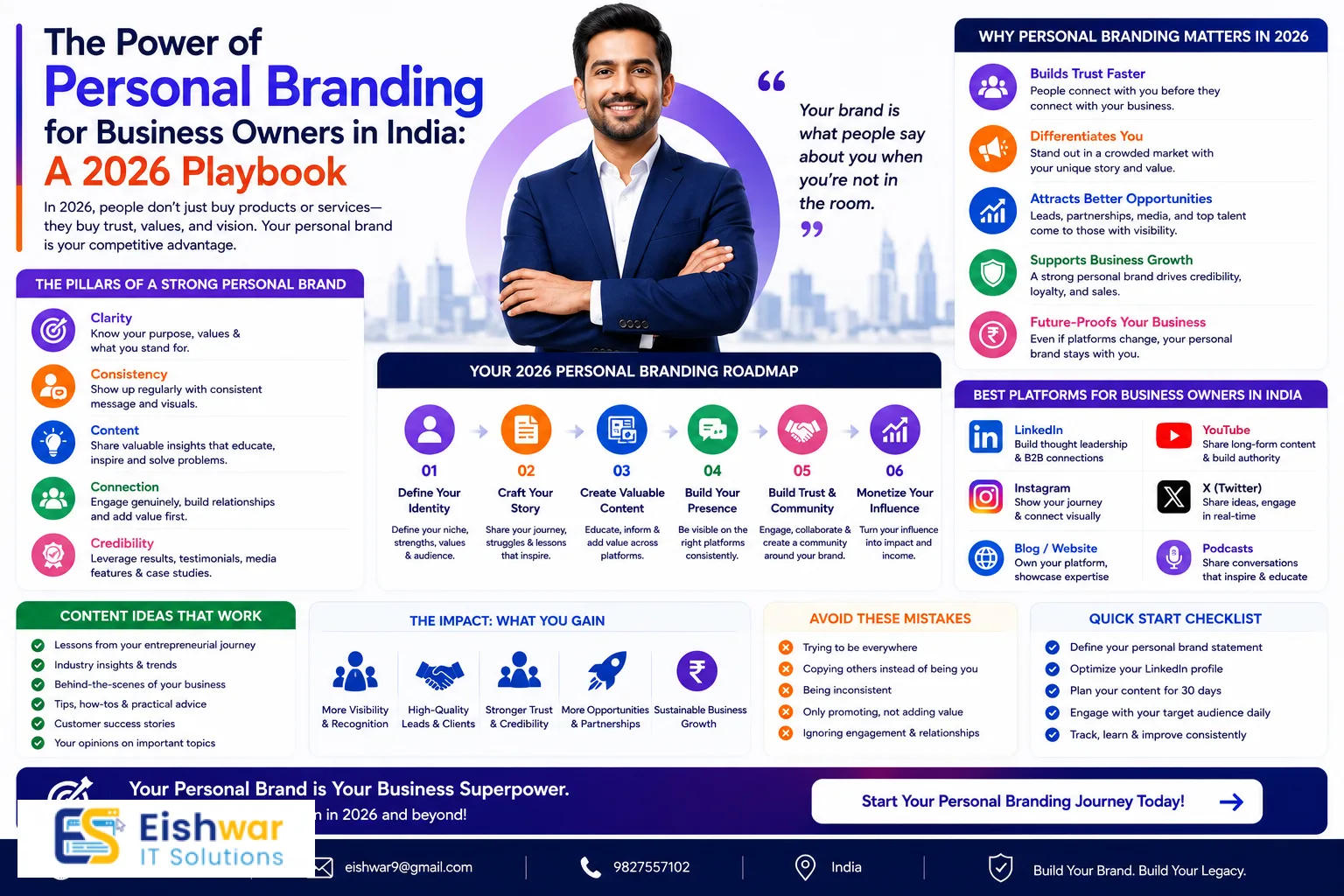
The Power of Personal Branding for Business Owners in India: A 2026 Playbook
Introduction
In 2026, your business is no longer just about your products or services—it's about you. As an Indian business owner, your personal brand is your most valuable asset. It builds trust, attracts customers, and sets you apart in a crowded market. Whether you run a small manufacturing unit in Gujarat, a tech startup in Bengaluru, or a consultancy in Mumbai, personal branding can transform your business. This playbook will show you how to leverage your unique story, Indian values, and modern digital tools to create a personal brand that resonates with your audience. No fluff, just actionable steps.
Consider the story of Priya, a second-generation textile exporter in Surat. When she started sharing her journey of modernizing her family’s 40-year-old business on LinkedIn—posting about sustainable fabrics, her father’s legacy, and her struggles with digital transformation—her engagement skyrocketed. Within six months, she landed three international clients who cited her authenticity as the deciding factor. That’s the power of personal branding in action.
Main Section 1: Why Personal Branding Matters More Than Ever in India (2026)
India's digital landscape is booming. With over 900 million internet users and a vast majority on social media, the opportunity to connect personally with your audience is immense. But here's the catch: trust is at an all-time low. People are tired of faceless corporations. They want to buy from people they know, like, and trust. A strong personal brand bridges that gap. It humanizes your business, showcases your expertise, and creates a loyal community around you.
For example, look at successful Indian entrepreneurs like Ritesh Agarwal (OYO) or Falguni Nayar (Nykaa). Their personal stories and public personas are deeply intertwined with their brand's success. You don't need to be a celebrity—just authentic. In 2026, authenticity is the new currency. Your personal brand can help you attract better clients, charge premium prices, and even weather business crises with grace.
Practical tip: Start by auditing your current online presence. Google yourself. What do you find? If the results are sparse or outdated, that’s a red flag. A strong personal brand ensures that when someone searches for you, they find a consistent, compelling narrative. For instance, a small business owner in Pune who runs a cloud kitchen might share daily behind-the-scenes videos of food preparation, customer feedback, and lessons learned. This builds a loyal following that translates into repeat orders and word-of-mouth referrals.
Main Section 2: Building Your Personal Brand Step-by-Step (The 2026 Way)
Let's get practical. Here’s a step-by-step framework tailored for Indian business owners.
Step 1: Define Your Core Narrative
What's your story? Why did you start your business? What are your values? Indian audiences love stories of struggle, resilience, and family. For instance, if you run a traditional textile business, share how your grandfather started it and how you're modernizing it. This creates emotional connection. Dig deeper: What specific challenges did you overcome? Did you face skepticism from family or peers? How did you pivot during the pandemic? These details make your story relatable and memorable.
Example: Raj, a third-generation jeweler in Jaipur, started a blog titled 'From My Grandfather’s Workshop to Your Home.' He shared anecdotes about learning the craft, the ethics of sourcing gemstones, and his commitment to fair trade. This narrative not only attracted customers but also positioned him as a thought leader in ethical jewelry.
Step 2: Optimize Your Digital Presence
Your LinkedIn profile, website, and other social channels should reflect your personal brand. Use a professional headshot, write a compelling bio (including your mission), and regularly share insights. For EishwarITSolution, you could share behind-the-scenes of your tech projects or client success stories. Remember, consistency is key. Ensure your profile picture, banner, and bio are aligned across platforms. For example, if you’re a consultant, your LinkedIn headline should clearly state your niche, like 'Helping Indian SMEs Scale with Digital Marketing | Founder at XYZ'.
Practical tip: Use a tool like Canva to create branded templates for your posts. Include your logo, a consistent color palette, and a professional font. This reinforces recognition. Also, update your 'About' section to include a personal touch—mention your hobbies, family, or community involvement. People connect with people, not just professionals.
Step 3: Create Valuable Content
Content is the engine of your personal brand. Write blog posts, record short videos, or host webinars on topics you're passionate about. Focus on solving problems for your target audience. For example, if you're a marketing consultant, create a series on 'Marketing Mistakes Indian SMEs Make'. Use platforms like YouTube and Instagram Reels—they're huge in India. Don’t just talk about your services; provide actionable advice. For instance, a financial advisor could create a weekly video series on 'Tax Saving Tips for Small Business Owners' during the filing season.
Tip: Repurpose content. A single blog post can be turned into 5-10 social media posts, a short video, and an infographic. This saves time and ensures consistency. Also, engage with comments and messages promptly. This builds a two-way relationship.
Step 4: Network Authentically
Attend industry events (virtual or in-person), join relevant LinkedIn groups, and collaborate with other professionals. Don't just sell—build relationships. Comment on posts, share others' work, and offer help without expecting immediate returns. For example, if you’re a software developer, join a group like 'Indian Tech Entrepreneurs' and contribute to discussions. Offer free advice on common coding challenges. This positions you as a generous expert.
Practical tip: Set a goal to connect with three new people in your industry each week. Send a personalized message—mention something specific from their profile. Avoid generic requests. Over time, these connections can lead to referrals, partnerships, and mentorship opportunities.
Main Section 3: Leveraging Indian Culture and Trends for Personal Branding
India is a diverse, culturally rich country. Use that to your advantage. Incorporate local languages, festivals, and regional nuances into your content. For instance, posting a Diwali greeting that reflects your brand's values can go a long way. Also, tap into trending topics like 'Vocal for Local' or 'Digital India'. Show how your brand aligns with national movements. For example, a manufacturer of handmade soaps could create a campaign around 'Support Local Artisans' and share stories of the craftspeople behind the products.
Another tip: highlight your community involvement. If you support local artisans or run CSR initiatives, share that. Indian consumers value businesses that give back. Your personal brand should reflect your commitment to society, not just profit. For instance, a restaurant owner in Delhi who provides free meals to underprivileged children can share these stories on social media. This builds goodwill and attracts customers who care about social impact.
Practical example: During the 2024 elections, a small business owner in Tamil Nadu created a series of posts explaining how government policies affected local entrepreneurs. This not only showcased his expertise but also engaged his audience in meaningful conversations. Use cultural moments to humanize your brand—share how you celebrate festivals, support local causes, or navigate regional challenges.
Expert Tips
- Be Consistent: Post regularly, but quality over quantity. A weekly LinkedIn article or a daily Instagram story can work wonders. Use a content calendar to plan ahead. For example, schedule posts around industry events, national holidays, or product launches.
- Show Vulnerability: Share your failures and lessons learned. It makes you relatable. For instance, a startup founder might write about a product launch that flopped and what they learned. This builds trust and shows growth.
- Use Video: Video content has higher engagement. Even simple smartphone videos can be effective. Record short tips, behind-the-scenes clips, or Q&A sessions. For example, a fitness coach could do a 60-second workout demo daily.
- Monitor Your Reputation: Set up Google Alerts for your name and respond to feedback professionally. If someone leaves a negative review, address it publicly and offer a solution. This shows accountability.
- Invest in Professional Branding: Hire a photographer for headshots, or use tools like Canva for visuals. A consistent visual identity—logo, colors, fonts—makes you look polished and credible.
- Collaborate with Others: Partner with complementary businesses for joint webinars or social media takeovers. For example, a wedding planner could collaborate with a photographer for a live session on 'Planning the Perfect Indian Wedding'. This expands your reach.
Common Mistakes
- Being Too Salesy: Personal branding is about building trust, not hard selling. Avoid constant promotion. Instead, focus on providing value. For example, instead of 'Buy my product,' share a case study of how it helped a client.
- Inconsistency: Changing your message or style confuses your audience. Stick to your core narrative. If you’re known for tech insights, don’t suddenly post about cooking unless it’s relevant.
- Ignoring Feedback: Listen to your audience. If they ask questions, answer them. If they criticize, learn from it. Use polls and surveys to understand their needs.
- Copying Others: Be original. Your unique perspective is your strength. Don’t mimic successful brands—find your own voice. For instance, if you’re a quirky entrepreneur, embrace humor in your posts.
- Neglecting Offline Networking: Digital is great, but face-to-face connections still matter in India. Attend local business meets, industry conferences, and community events. Follow up with new contacts on LinkedIn.
- Overcomplicating: Don’t try to be everywhere at once. Start with one or two platforms and master them. For example, if your audience is on LinkedIn, focus there before expanding to Instagram.
Future Trends
By 2027, personal branding will become even more integrated with AI. Tools like AI-powered content creation and personal brand analytics will be common. For example, AI can help you analyze which topics resonate most with your audience or suggest optimal posting times. Also, niche communities (like WhatsApp groups for specific industries) will grow. Indian business owners should prepare by building a strong foundation now—authenticity, consistency, and community. The rise of the 'creator economy' will also blur lines between personal and business brands, so start owning your narrative today.
Practical tip: Experiment with AI tools like ChatGPT for drafting content ideas or Canva’s AI features for design. But remember, the human touch is irreplaceable. Use AI to enhance, not replace, your authenticity. Also, consider building your own community—a WhatsApp group or a private Facebook group for your customers. This fosters deeper connections and loyalty.
FAQs
What is personal branding and why is it important for business owners?
Personal branding is the practice of marketing yourself and your career as a brand. For business owners, it builds trust, differentiates you from competitors, and attracts loyal customers. In India, where relationships matter, a strong personal brand can be a game-changer. It’s about showcasing your expertise, values, and personality to create a lasting impression.
How can I start building my personal brand with little budget?
Start with free tools. Optimize your LinkedIn profile, write blog posts on platforms like Medium, and engage in relevant online communities. Use your smartphone to create video content. Consistency and authenticity are more important than budget. For example, a daily 30-second video sharing a business tip costs nothing but can build significant credibility over time.
How long does it take to see results from personal branding?
It varies, but typically you can start seeing engagement and opportunities within 3-6 months of consistent effort. Building a strong reputation takes time, so be patient and focus on providing value. For instance, a consultant might see their first client inquiry after 4 months of regular LinkedIn posting. Track metrics like profile views, connection requests, and inbound messages to measure progress.
Should I separate my personal and business social media accounts?
It depends on your industry. For small business owners, using your personal account to share professional insights can be effective. However, if you want to keep a clear boundary, create a separate professional page. Either way, maintain a consistent brand voice. For example, a freelance graphic designer might use their personal Instagram for both personal projects and client work, but a lawyer might prefer a separate professional page to maintain decorum.
What are the best platforms for personal branding in India?
LinkedIn is the top platform for professional branding. Instagram and YouTube are great for visual storytelling, especially for lifestyle and creative businesses. For B2B, consider Twitter and industry-specific forums. Choose platforms where your target audience spends time. For instance, if you’re targeting young entrepreneurs, Instagram Reels might be more effective than LinkedIn articles.
Can personal branding help during a business crisis?
Absolutely. A strong personal brand builds a reservoir of trust. When a crisis hits, your audience is more likely to support you if they feel personally connected. Use your brand to communicate transparently and empathetically. For example, during the pandemic, many business owners who had built personal brands were able to pivot quickly and retain customer loyalty by sharing their struggles and solutions openly.
How do I measure the success of my personal branding efforts?
Track metrics like engagement rates (likes, comments, shares), follower growth, website traffic from social media, and direct inquiries or referrals. Also, monitor qualitative feedback—are people recognizing you as an expert? Are you getting speaking invitations or collaboration requests? Use tools like LinkedIn Analytics or Google Analytics to measure impact. For example, if your blog post on 'Scaling Your SME' gets 500 views and 20 comments, that’s a positive sign.
Conclusion
Personal branding is not an option anymore—it's a necessity for business owners in India. It's your ticket to standing out, building trust, and creating lasting impact. Start small, be authentic, and stay consistent. Remember, your personal brand is a long-term investment that pays dividends in credibility, opportunities, and growth. The 2026 playbook is simple: be yourself, share your journey, and connect genuinely. Your business will thank you.
CTA
Ready to build your personal brand? Start by auditing your current online presence. Need help? Contact EishwarITSolution for a free consultation on personal branding strategies tailored for Indian business owners. Let’s make your brand unforgettable in 2026!