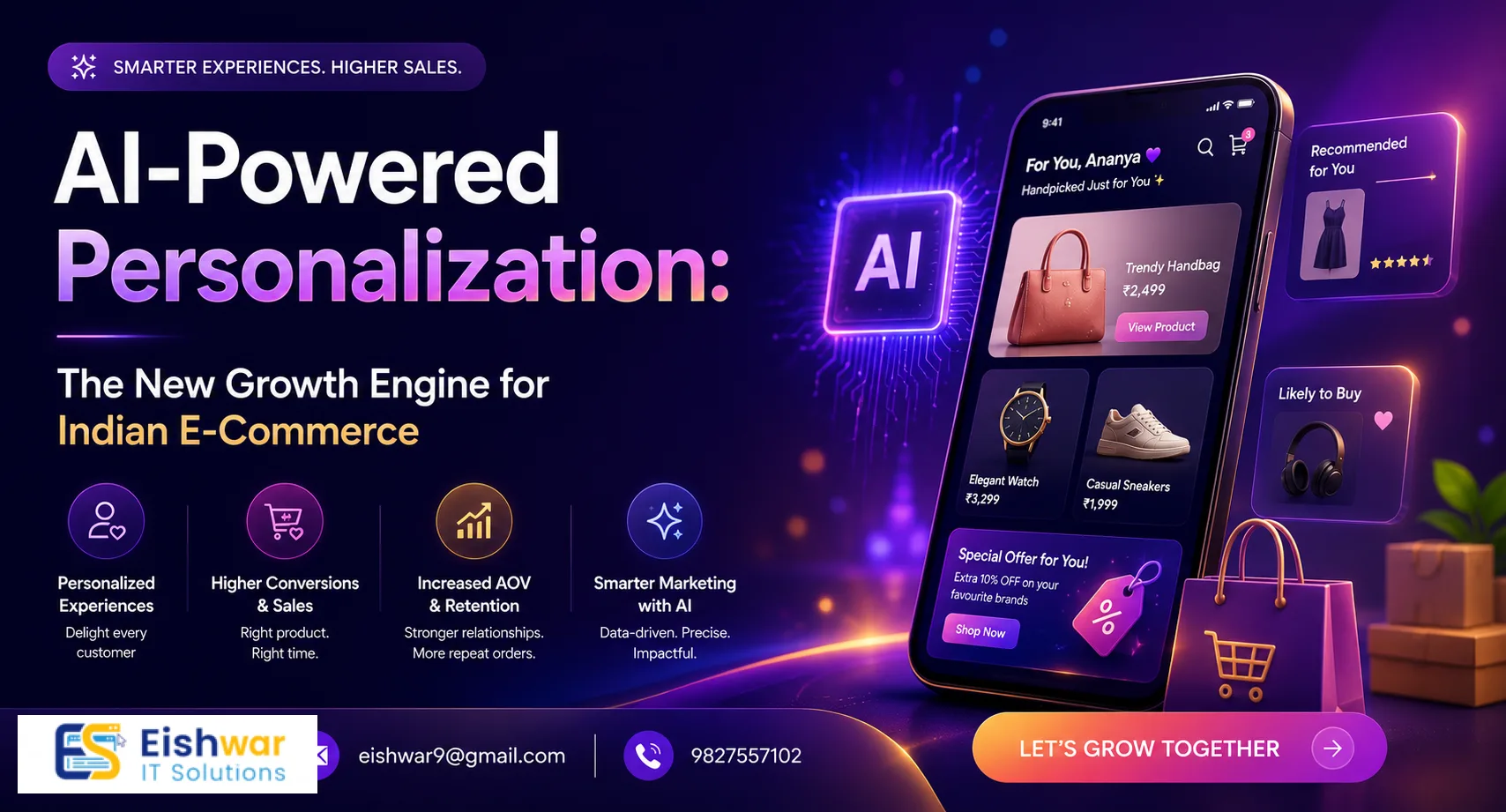
AI-Powered Personalization: The New Growth Engine for Indian E-Commerce in 2026
Introduction
Imagine visiting an online store that knows your style, remembers your size, suggests products you actually need, and even offers the perfect discount before you click away. That's not a futuristic dream—it's the reality of AI-powered personalization in Indian e-commerce today. In 2026, as competition heats up and customer expectations soar, personalization has become the ultimate differentiator. Business owners, marketers, and professionals who ignore this trend risk being left behind.
India's e-commerce market is projected to cross $150 billion by 2026, with AI driving a significant chunk of that growth. From Flipkart's AI-driven recommendations to D2C brands using predictive analytics, personalization is reshaping how Indians shop online. This article dives deep into practical strategies, real-world examples, and actionable tips to help you harness AI for your e-commerce business. Whether you're a startup or an established brand, these insights will help you stay ahead.
Consider this: a recent study by McKinsey found that personalization can reduce acquisition costs by as much as 50%, lift revenues by 5–15%, and increase marketing spend efficiency by 10–30%. For Indian businesses operating on thin margins, these numbers are game-changing. The key lies in understanding the unique nuances of the Indian consumer—price sensitivity, language diversity, and the growing preference for mobile-first experiences.
Main Section 1: Understanding AI-Powered Personalization in the Indian Context
AI-powered personalization uses machine learning algorithms to analyze customer data—browsing history, purchase patterns, demographics, and real-time behavior—to deliver tailored experiences. In India, where diversity in language, culture, and shopping habits is immense, AI helps bridge the gap between mass marketing and individual relevance.
For example, a customer in Mumbai searching for kurtis might see suggestions for festive wear, while someone in Bengaluru looking for the same term might get office-friendly options. AI factors in location, weather, past purchases, and even the time of day. This level of nuance is impossible to achieve manually but effortless with AI.
Key benefits for Indian e-commerce include higher conversion rates (up to 30% increase), reduced cart abandonment, improved customer lifetime value, and stronger brand loyalty. Moreover, AI personalization works across channels—website, app, email, WhatsApp, and social media—creating a seamless omnichannel experience. For instance, a customer who browses a product on your website can receive a personalized WhatsApp message with a discount code within minutes, thanks to AI-driven triggers.
However, the Indian context adds layers of complexity. With over 22 official languages and a vast urban-rural divide, personalization must account for linguistic and cultural preferences. AI models trained on Indian data can detect regional festivals like Pongal or Durga Puja and adjust recommendations accordingly. A customer in Tamil Nadu might see silk sarees during Pongal, while someone in Delhi sees Diwali-specific decorations. This cultural intelligence is what sets successful Indian e-commerce players apart.
Main Section 2: Practical Strategies to Implement AI Personalization
Ready to implement AI personalization? Here are five proven strategies tailored for Indian businesses:
1. Product Recommendations Engine: Use collaborative filtering and content-based filtering to suggest products. For instance, if a customer buys a smartphone, recommend cases, screen protectors, or earphones. Amazon India uses this extensively, generating 35% of its revenue through recommendations. A practical tip: start with a simple rule-based engine (e.g., "customers who bought this also bought") and gradually incorporate machine learning as you collect more data.
2. Dynamic Pricing and Offers: AI can analyze demand, competitor pricing, and customer willingness to pay to offer personalized discounts. For example, a first-time visitor might see a 10% welcome discount, while a loyal customer gets early access to a sale. In India, where price sensitivity is high, dynamic pricing can be a double-edged sword. Test different discount levels for different segments—for instance, offer a flat 15% off to price-sensitive customers in Tier 2 cities, while providing free shipping to premium customers in metros.
3. Personalized Email and WhatsApp Campaigns: Segment your audience based on behavior—abandoned cart, browse history, or past purchases—and send tailored messages. A customer who left a pair of shoes in their cart could receive a gentle reminder with a limited-time free shipping offer. For WhatsApp, use AI to determine the best time to send messages—sending a personalized offer during lunchtime or after work hours can boost open rates by 20%.
4. AI-Powered Search and Navigation: Implement visual search and semantic search. For instance, a user uploading a photo of a red lehenga should see similar options instantly. Myntra's AI search does this brilliantly, reducing search time by 40%. Additionally, use natural language processing (NLP) to understand colloquial queries like "sasti kurti" (cheap kurti) or "office wear for women" and return relevant results. This is especially effective for voice search, which is growing rapidly in India.
5. Predictive Customer Service: Use AI chatbots to anticipate issues. If a customer repeatedly checks the return policy, the chatbot can proactively offer help. This builds trust and reduces friction. For example, a chatbot can detect frustration in a customer's typing pattern (e.g., excessive use of exclamation marks) and escalate the query to a human agent. In India, where customer service expectations are high, this hybrid approach can reduce churn by up to 25%.
Main Section 3: Real-World Examples from Indian Brands
Let's look at brands that are already winning with AI personalization:
Flipkart's AI Assistant: Flipkart's AI-driven chatbot handles millions of queries daily, offering personalized product suggestions and order updates. Their recommendation engine uses real-time data to adjust suggestions during festive sales, boosting sales by 25%. For instance, during the Big Billion Days, the AI analyzes browsing patterns from the previous year to predict what each customer might want, creating a personalized homepage for every user.
Nykaa's Beauty Advisor: Nykaa uses AI to analyze skin tone and preferences, recommending makeup and skincare products. Their virtual try-on feature reduces returns and increases customer satisfaction. A practical tip: Nykaa also uses AI to send personalized skincare routines based on the customer's climate and skin type—a feature that has increased repeat purchases by 30%.
D2C Brand - Bombay Shaving Company: They use AI to segment customers based on grooming habits and send personalized subscription boxes. This has increased repeat purchases by 40%. The company also uses AI to predict when a customer is likely to run out of a product (e.g., a razor blade) and sends a timely reminder with a discount, reducing churn.
Small Business Example - Chumbak: This home decor brand uses AI to recommend products based on the customer's past purchases and browsing history. For instance, if a customer buys a quirky coffee mug, the AI suggests matching coasters or wall art. This cross-selling strategy has increased average order value by 15%.
These examples prove that AI personalization isn't just for giants—small and medium businesses can also leverage affordable tools like Wix AI, Zoho CRM, or custom solutions built on Google Cloud AI. The key is to start with a clear goal—whether it's increasing conversion rates, reducing cart abandonment, or improving customer retention—and choose the right tool for the job.
Expert Tips
Start Small, Scale Fast: Begin with one personalization feature—like product recommendations—and expand as you see results. Don't try to do everything at once. For example, a small business selling handmade jewelry can start by recommending complementary items (e.g., earrings with a necklace) and later add personalized email campaigns.
Prioritize Data Privacy: With India's Digital Personal Data Protection Act, 2023, ensure you collect data transparently and offer opt-in options. Customers trust brands that respect their privacy. A practical tip: use a clear, concise privacy policy and allow customers to control their data preferences easily. For instance, let them choose what types of recommendations they want to receive.
Use Indian Languages: AI personalization should extend to language. Offering product descriptions and recommendations in Hindi, Tamil, or Bengali can dramatically improve engagement in Tier 2 and Tier 3 cities. For example, a fashion brand can use AI to translate product names and descriptions into regional languages, making the shopping experience more inclusive.
Test and Iterate: A/B test your personalization algorithms. What works for one segment may not work for another. Continuous optimization is key. For instance, test different recommendation algorithms (e.g., collaborative filtering vs. content-based) for different product categories to see which yields higher conversion rates.
Leverage Real-Time Data: Use real-time analytics to keep recommendations fresh. For example, if a customer is browsing winter jackets, the AI should immediately show related accessories like gloves or scarves, rather than waiting for the next batch update. Tools like Google Analytics 4 or custom dashboards can help you track real-time behavior.
Common Mistakes
Over-Personalization: Bombarding customers with too many recommendations can feel creepy. Strike a balance between relevance and privacy. For example, avoid showing recommendations based on sensitive data like health conditions unless the customer has explicitly opted in.
Ignoring Mobile-First: Over 80% of Indian e-commerce traffic comes from mobile. Ensure your personalization works seamlessly on small screens. For instance, use responsive design for recommendation widgets and optimize load times for mobile networks.
Neglecting Real-Time Data: Personalization based on stale data leads to irrelevant suggestions. Use real-time analytics to keep recommendations fresh. A common mistake is using data from last month's browsing session—this can result in showing products the customer has already purchased or is no longer interested in.
Lack of Human Touch: AI should enhance, not replace, human interaction. Combine AI with excellent customer service for the best experience. For example, if a customer repeatedly rejects AI recommendations, a human agent can step in to understand their preferences better.
Underestimating Data Quality: Garbage in, garbage out. Ensure your data is clean, accurate, and up-to-date. For instance, if you have duplicate customer profiles, the AI might send conflicting recommendations. Regularly audit your data and use tools like data deduplication software.
Future Trends
Looking ahead, AI personalization in Indian e-commerce will evolve with these trends:
Hyper-Personalization with Generative AI: AI will create personalized product images, videos, and even tailored landing pages in real-time. Imagine a website that changes its layout based on who's viewing it. For example, a customer who frequently buys sports gear might see a homepage with dynamic banners featuring cricket or football equipment.
Voice and Visual Commerce: With the rise of voice assistants like Alexa and Google Assistant, personalized shopping via voice commands will become mainstream. Visual search will also grow, powered by AI. For instance, a customer can say, "Show me red sneakers under ₹2000," and the AI will display relevant results instantly.
AI-Powered Loyalty Programs: Dynamic loyalty programs that reward customers based on individual preferences and behaviors will replace one-size-fits-all points systems. For example, a coffee brand might offer a free latte to a customer who buys beans every month, while a fashion brand offers early access to new collections for frequent shoppers.
Integration with IoT: Smart devices like refrigerators and wearables will feed data to e-commerce platforms, enabling predictive reordering—for example, automatically ordering milk when your smart fridge senses it's low. In India, this trend is still nascent but holds immense potential for grocery and health products.
Ethical AI and Transparency: As AI becomes more pervasive, customers will demand transparency in how their data is used. Brands that adopt ethical AI practices—like explainable recommendations and bias-free algorithms—will build stronger trust. For instance, a fashion brand can explain why a particular product was recommended (e.g., "based on your past purchases of blue shirts").
FAQs
- What is AI-powered personalization in e-commerce?
It's the use of artificial intelligence to tailor shopping experiences—product recommendations, offers, content—based on individual customer data and behavior. For example, showing a customer winter coats if they live in a cold region or suggesting vegetarian recipes if they frequently buy plant-based products.
- Is AI personalization affordable for small Indian businesses?
Yes. Many SaaS tools like Wix, Shopify AI, and Zoho offer affordable personalization features. You can start with basic recommendations and scale up. For instance, a small business can use Shopify's free recommendation app to suggest related products, and later upgrade to a paid AI tool like Nosto for more advanced features.
- How does AI personalization improve customer loyalty?
By making customers feel understood and valued. Personalized experiences increase satisfaction, repeat purchases, and word-of-mouth referrals. For example, a customer who receives a birthday discount is more likely to return and recommend the brand to friends.
- What data do I need to start personalization?
Start with basic data like browsing history, purchase history, and demographics. As you grow, add real-time behavior and feedback. For instance, track which products a customer views, how long they spend on each page, and whether they add items to the cart. This data can be collected using tools like Google Analytics or custom tracking scripts.
- How do I ensure data privacy with AI personalization?
Follow India's data protection laws. Get explicit consent, anonymize data, and be transparent about how you use customer information. For example, use a pop-up on your website asking for consent to collect browsing data, and provide a clear privacy policy that explains how the data will be used.
- Can AI personalization work for physical stores too?
Absolutely. Phygital experiences—like personalized in-store offers via app or smart mirrors—are growing rapidly in India. For example, a clothing store can use AI to recommend outfits based on a customer's past purchases, displayed on a smart mirror in the fitting room.
- What are the key metrics to measure AI personalization success?
Key metrics include conversion rate, average order value, customer lifetime value, cart abandonment rate, and click-through rate on recommendations. For instance, if you implement product recommendations, track how often customers click on them and whether those clicks lead to purchases.
- How can I handle personalization for new customers with no history?
Use contextual data like location, device type, and time of day to make initial recommendations. For example, a new visitor from Delhi during winter might see warm clothing suggestions. As they browse, you can update recommendations based on their real-time behavior.
Conclusion
AI-powered personalization is not a luxury—it's a necessity for Indian e-commerce businesses aiming to thrive in 2026. By understanding your customers on a deeper level and delivering tailored experiences, you can boost sales, build loyalty, and stand out in a crowded market. Start small, focus on data privacy, and continuously optimize. The future of e-commerce is personal, and AI is your key to unlocking it.
Remember, the journey to personalization is iterative. You don't need to have a perfect system from day one. Begin with one strategy—like product recommendations or personalized emails—and refine it based on customer feedback and data. As you scale, you'll discover new opportunities to delight your customers and drive growth.
CTA
Ready to transform your e-commerce store with AI personalization? Contact EishwarITSolution today for a free consultation. Our experts will help you design and implement a personalized shopping experience that drives real results. Don't wait—your customers expect it now!