
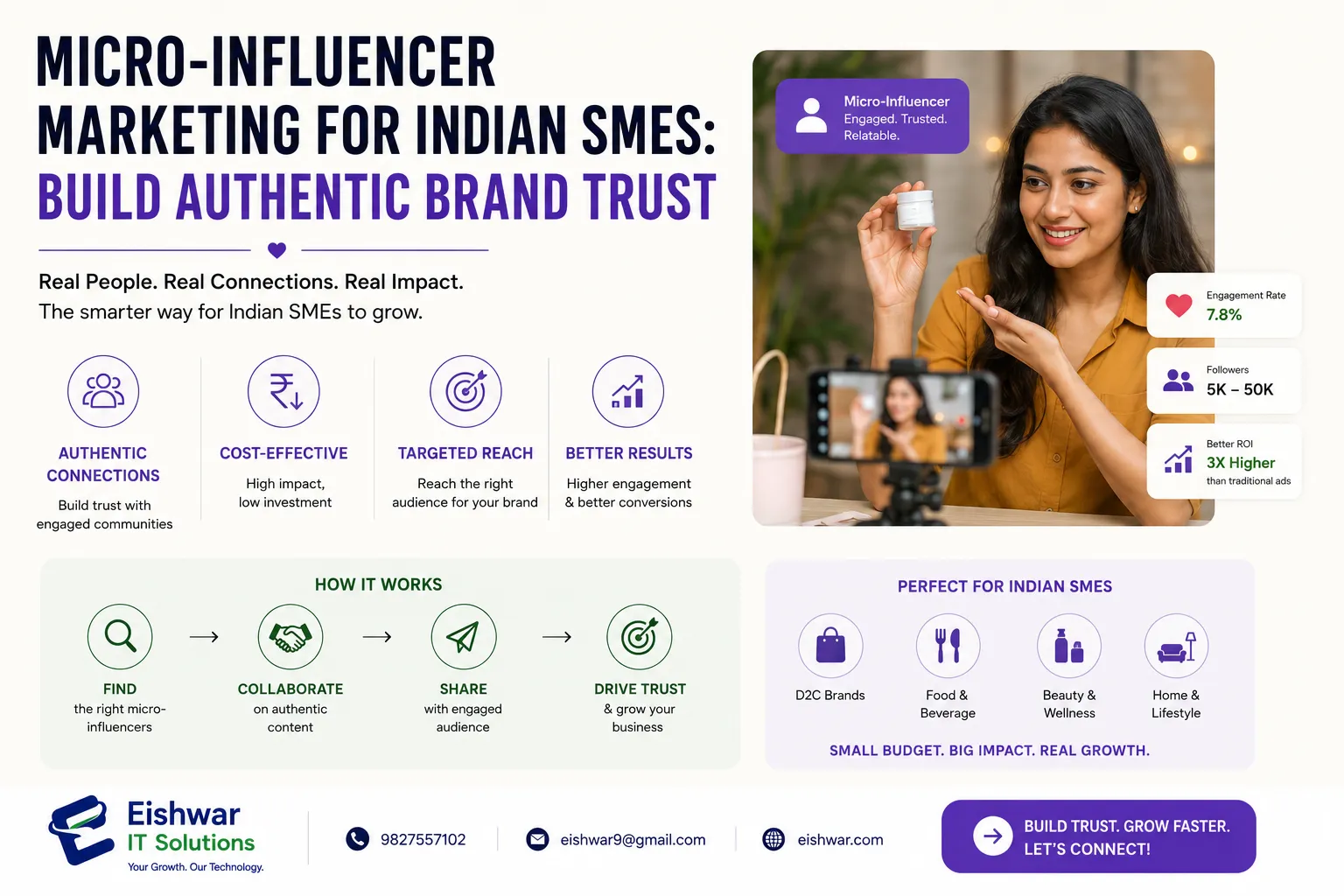
Micro-Influencer Marketing for Indian SMEs: Build Authentic Brand Trus
Published on: 17 Jun 2026
Micro-Influencer Marketing for Indian SMEs: Build Authentic Brand Trust
Introduction
In 2026, the Indian consumer is more skeptical than ever. They scroll past polished ads and celebrity endorsements, craving real stories from real people. For small and medium enterprises (SMEs) in India, this shift presents a golden opportunity: micro-influencer marketing. With over 900 million internet users and a rapidly growing creator economy, the power of authentic, relatable voices has never been more critical. Micro-influencers—those with 1,000 to 100,000 followers—offer a level of authenticity and engagement that mega-stars can't match. They speak your customer's language, share their culture, and build trust through genuine recommendations. At EishwarITSolution, we've seen businesses transform their brand perception by partnering with the right micro-influencers. This guide will walk you through everything you need to know—from why micro-influencers work in India to how to run a successful campaign. Let's dive in.
Learn more about our Website services
Main Section 1: Why Micro-Influencers Are a Game-Changer for Indian SMEs
India's digital landscape is unique. With over 900 million internet users and a booming creator economy, micro-influencers have become the new word-of-mouth. Here's why they matter for your brand:
- Higher Engagement Rates: Micro-influencers often have 3-6% engagement rates, compared to 1-2% for macro-influencers. Their followers trust them like a friend, leading to more meaningful interactions. For example, a micro-influencer with 5,000 followers might receive 200 comments on a post, while a celebrity with 1 million followers gets only 1,000 comments—a much lower percentage.
- Cost-Effective: While a celebrity might charge lakhs, a micro-influencer may work for a product sample or a modest fee (₹5,000–₹20,000 per post). Perfect for SME budgets. For instance, a small bakery in Mumbai can partner with 10 local food bloggers for the cost of one billboard ad.
- Niche Relevance: Whether you sell organic spices from Kerala or handmade jewelry from Jaipur, there's a micro-influencer who lives and breathes that niche. A micro-influencer specializing in Ayurveda can authentically promote your herbal products to a highly targeted audience.
- Local Connection: They understand regional languages, festivals, and pain points. A micro-influencer from Tamil Nadu can authentically promote a local brand in a way a national celebrity cannot. For example, a micro-influencer in Lucknow can highlight how your chikankari clothing fits into local wedding traditions.
For example, a small organic farm in Pune partnered with 10 local food bloggers (2,000–10,000 followers each) and saw a 40% increase in direct orders within three months. That's the power of authentic connection. Another case: a handmade soap brand in Bengaluru worked with 5 micro-influencers who shared their personal skincare routines, leading to a 25% boost in repeat customers.
Main Section 2: How to Identify and Approach the Right Micro-Influencers
Not every micro-influencer is right for your brand. Here's a step-by-step approach to ensure you choose partners who align with your values and goals:
Step 1: Define Your Goals
Are you looking for brand awareness, website traffic, or direct sales? Your goal dictates the type of influencer and content format. For brand awareness, focus on influencers with broad reach and high engagement. For sales, prioritize those with a track record of driving conversions through discount codes or affiliate links.
👉 Don't wait for the perfect moment; turn your vision into reality today.
Free ConsultationStep 2: Find Influencers Who Align with Your Values
Use tools like BuzzSumo, Upfluence, or simply search hashtags on Instagram and YouTube. Look for creators who already talk about your industry—not just anyone with followers. For example, if you sell eco-friendly products, search for hashtags like #SustainableLivingIndia or #EcoFriendlyFashion. Check their past content to ensure they genuinely care about your niche.
Step 3: Check Authenticity
Analyze their engagement: Are comments genuine? Do they have a loyal community? Avoid influencers with fake followers or bots. Tools like HypeAuditor or SocialBlade can help you detect suspicious activity. Look for consistent engagement over time, not just spikes on sponsored posts.
Step 4: Build a Relationship First
Don't send a cold pitch. Engage with their content, share their posts, and start a conversation. When you finally reach out, it feels natural. For instance, comment on their posts for a week, then send a DM complimenting their work before proposing a collaboration.
Step 5: Create a Win-Win Collaboration
Offer value beyond money—exclusive discounts, early access, or co-created content. Micro-influencers appreciate being treated as partners, not just vendors. For example, you could offer them a free product sample plus a 10% commission on sales generated through their unique code.
Pro tip: Start with a small campaign (3-5 influencers) to test the waters before scaling. Use a spreadsheet to track metrics like engagement rate, follower growth, and conversion rates for each influencer.
Main Section 3: Crafting an Authentic Campaign That Drives Results
Authenticity is the currency of micro-influencer marketing. Here's how to design a campaign that resonates with Indian audiences:
Give Creative Freedom
Micro-influencers know their audience best. Provide guidelines (key messages, hashtags, do's/don'ts) but let them tell your story in their voice. Scripted posts kill authenticity. For example, if you sell organic tea, let the influencer share their personal morning ritual with your product, rather than reading a scripted review.
Focus on Storytelling, Not Selling
Instead of a hard sell, encourage influencers to share a personal experience with your product. For instance, a skincare brand could ask an influencer to document their 30-day journey using the product, including before-and-after photos and honest updates. This builds trust and social proof.
Leverage User-Generated Content (UGC)
Repost influencer content on your brand channels. This not only extends reach but also builds social proof. Tag the creator and thank them publicly. For example, create a dedicated Instagram highlight reel featuring all influencer posts, and encourage followers to share their own experiences with a branded hashtag.
Track the Right Metrics
Don't just count likes. Track engagement rate, click-through rate, coupon code usage, and sentiment analysis. Use UTM parameters for precise measurement. For instance, create unique UTM links for each influencer to see which ones drive the most traffic to your website. Monitor comments for positive or negative sentiment to gauge brand perception.
Case in point: A small apparel brand in Delhi NCR gave 5 micro-influencers a unique discount code each. They generated 200+ orders in two weeks, with a 12% conversion rate from influencer traffic—far higher than their paid ads. The brand also saw a 15% increase in Instagram followers during the campaign period.
👉 Free Website Audit
Get Free AuditExpert Tips
- Start with Nano-Influencers: Those with 1,000–5,000 followers often have the highest engagement (up to 8%) and are very affordable (₹1,000–₹5,000 per post). Perfect for testing new products or markets.
- Build Long-Term Partnerships: One-off posts feel transactional. A 3-month ambassadorship builds deeper trust and consistency. For example, have a micro-influencer feature your product in multiple posts over time, creating a narrative arc.
- Use Video Content: Reels, YouTube Shorts, and Stories perform best. Video builds stronger emotional connections. Encourage influencers to create tutorials, unboxings, or day-in-the-life content with your product.
- Incorporate Local Languages: A Hindi or Tamil micro-influencer can connect with Tier 2 and Tier 3 city audiences more effectively. For instance, a Bengali micro-influencer can promote your sweets brand during Durga Puja with authentic cultural references.
- Measure ROI Holistically: Include brand lift, sentiment, and repeat purchases—not just immediate sales. Use surveys or social listening tools to track how brand perception changes after the campaign.
Common Mistakes
- Choosing Based on Follower Count Alone: A 50k follower account with 0.5% engagement is less valuable than a 5k account with 8% engagement. Always prioritize engagement over reach.
- Micromanaging Content: Overly controlling the creative process leads to inauthentic posts that audiences ignore. Trust the influencer's expertise.
- Ignoring Disclosure: FTC and Indian advertising guidelines require clear #ad or #sponsored tags. Non-compliance can damage trust and lead to legal issues. Always include a clear disclosure in the first two lines of the caption.
- Not Setting Clear Expectations: Define deliverables, timelines, and payment terms upfront to avoid misunderstandings. Use a written agreement or contract for larger campaigns.
- Neglecting Follow-Up: Don't disappear after the campaign. Nurture the relationship for future collaborations. Send a thank-you note, share their content, and consider them for future campaigns.
Future Trends
Looking ahead to 2026 and beyond, micro-influencer marketing in India will evolve in exciting ways:
- AI-Powered Matching: Tools will use AI to match brands with the most relevant micro-influencers based on audience demographics, interests, and values. This will save time and improve campaign ROI.
- Rise of Regional Platforms: Platforms like ShareChat and Moj will become key hubs for micro-influencer campaigns in Indian languages, reaching audiences in Tier 2 and Tier 3 cities who prefer local content.
- Performance-Based Partnerships: More brands will shift to commission-based models, paying influencers a percentage of sales generated. This aligns incentives and reduces upfront costs for SMEs.
- Virtual Influencers: AI-generated micro-influencers may emerge, but human authenticity will remain irreplaceable for trust. However, virtual influencers could be used for specific campaigns like product launches.
- Community-Centric Campaigns: Brands will co-create content with influencer communities, making followers part of the brand story. For example, a micro-influencer could host a live Q&A with their followers about your product.
FAQs
- What is a micro-influencer? A micro-influencer typically has 1,000 to 100,000 followers and is known for high engagement and niche authority. They are often seen as trusted peers rather than distant celebrities.
- How much does a micro-influencer campaign cost for an Indian SME? Costs vary widely, but you can expect to pay ₹5,000–₹50,000 per post depending on the influencer's reach and niche. Nano-influencers (1,000–5,000 followers) may charge as little as ₹1,000–₹5,000 per post.
- How do I measure the success of a micro-influencer campaign? Track engagement rate, click-throughs, coupon code usage, website traffic, and brand sentiment. Use UTM links for accuracy. Also monitor follower growth and repeat purchases over time.
- Can micro-influencers work for B2B brands? Yes! Many micro-influencers specialize in business niches like HR tech, accounting, or logistics. Their recommendations carry weight among professionals. For example, a micro-influencer in the SaaS space can review your project management tool for a targeted audience.
- What are the legal requirements for influencer marketing in India? You must disclose paid partnerships with clear labels like #ad, #sponsored, or #collab as per ASCI guidelines. The disclosure should be in the same language as the post and placed prominently.
- How do I find micro-influencers in my industry? Use influencer marketing platforms like BuzzSumo or Upfluence, search relevant hashtags on Instagram/YouTube, or ask your customers for recommendations. Also, monitor competitors' campaigns to see which influencers they work with.
- What is the ideal campaign duration for micro-influencer marketing? For best results, run campaigns for at least 4-6 weeks to build momentum. Long-term partnerships (3-6 months) yield even better results as trust deepens over time.
Conclusion
Micro-influencer marketing isn't just a trend—it's a fundamental shift in how brands build trust. For Indian SMEs, it levels the playing field, allowing you to compete with bigger players through authentic, local connections. By partnering with the right micro-influencers, you can humanize your brand, drive meaningful engagement, and grow sustainably. At EishwarITSolution, we help businesses craft digital strategies that work. Whether you're starting your first influencer campaign or refining an existing one, remember: authenticity always wins.
👉 Free Homepage Demo
Book DemoCTA
Ready to build an authentic brand that resonates with Indian consumers? Contact EishwarITSolution today for a free consultation on your micro-influencer marketing strategy. Let's grow your brand together.