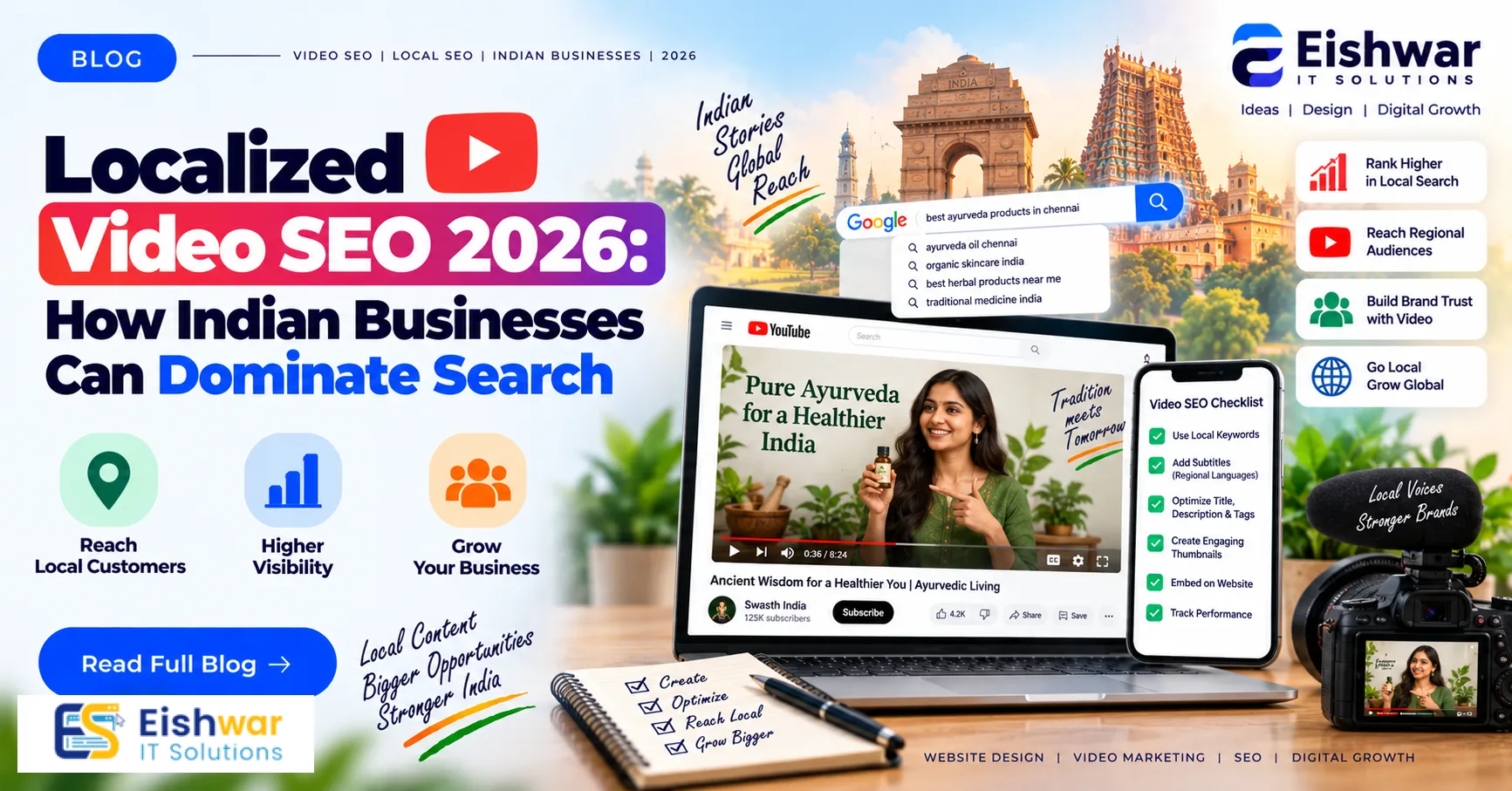
Localized Video SEO 2026: How Indian Businesses Can Dominate Search
Introduction
India is a land of diverse languages, cultures, and search behaviors. As we step into 2026, the way Indians search and consume content is changing rapidly—and video is at the heart of this transformation. With over 650 million internet users and one of the highest video consumption rates globally, Indian businesses that fail to optimize video content for local audiences are missing out on a massive opportunity.
Localized video SEO is not just about adding captions or subtitles. It's about creating video content that speaks the language of your local audience, addresses their specific needs, and appears in their search results at the right time. In this guide, we'll explore how Indian businesses can harness localized video SEO to dominate search rankings, build trust, and drive conversions in 2026.
Main Section 1: The Growing Importance of Video in Local Search
Video has become the preferred format for discovering products, learning about services, and making purchase decisions. In India, where smartphone penetration is high and data costs are low, video consumption has skyrocketed. Platforms like YouTube, Instagram Reels, and Facebook Watch are not just entertainment hubs—they are search engines in their own right.
Google increasingly displays video results for local queries, especially when users search for 'near me' or specific local services. A well-optimized video can appear in both traditional search results and video carousels, giving businesses double the visibility. Moreover, with the rise of voice search, users often ask questions that video content can answer more effectively.
For Indian businesses, this means that video is no longer optional. It's a critical component of any local SEO strategy. Whether you're a restaurant in Mumbai, a boutique in Jaipur, or a tech startup in Bengaluru, localized video content can help you connect with your community and stand out from competitors.
Main Section 2: Key Strategies for Localized Video SEO
1. Use Local Keywords in Video Metadata
Just like written content, videos need to be optimized with the right keywords. But for localized video SEO, you need to go beyond generic keywords and include location-specific terms. For example, instead of targeting 'best restaurant', target 'best North Indian restaurant in Connaught Place, Delhi'. Use these keywords in your video title, description, and tags. Also, consider using multilingual keywords—for instance, 'मुंबई में सबसे अच्छा पिज़्ज़ा' for Hindi-speaking audiences.
To find the right local keywords, use tools like Google Keyword Planner with location filters. Look for long-tail keywords that combine your product or service with a specific locality, neighborhood, or landmark. For example, a salon in Bandra might target 'hair styling in Bandra West' or 'bridal makeup near Linking Road'. These specific terms not only rank higher for local searches but also attract users with high purchase intent.
Additionally, don't forget to include local keywords in your video file name and in the 'alt text' if you embed videos on your website. Search engines crawl these elements, and every bit of optimization helps.
2. Create Videos in Local Languages
India has 22 official languages, and users are more likely to engage with content in their native language. Creating videos in Hindi, Tamil, Telugu, Bengali, or other regional languages can significantly boost your reach and engagement. You don't need to produce separate videos for every language—start with the most spoken languages in your target regions. Tools like AI dubbing can help you scale this effort.
For example, if you run a chain of fitness centers in South India, consider producing workout videos in Tamil and Telugu. This not only makes your content more accessible but also demonstrates that you value your local customers' culture. Many Indian brands have seen a 2-3x increase in engagement by simply adding a Hindi or regional language version of their videos.
When creating multilingual videos, ensure that the translation is accurate and culturally appropriate. Avoid literal translations that might sound awkward. If possible, hire native speakers to review your scripts or use professional dubbing services.
3. Embed Videos on Location-Specific Landing Pages
If you have multiple locations, create a dedicated landing page for each location and embed a video that is specific to that branch. This not only enhances user experience but also signals to Google that your page is highly relevant to that area. Ensure the video is hosted on your website (or embedded from YouTube) with proper schema markup (VideoObject) to help search engines understand and index it.
For instance, a real estate company with projects in Pune and Nashik should have separate pages for each project, each featuring a video tour of the property. This approach helps you rank for '2 BHK flats in Wakad' and 'luxury villas in Nashik' simultaneously. Moreover, embedding videos on location pages increases the time users spend on your site, which is a positive signal for SEO.
Remember to optimize the surrounding text on these pages with local keywords, customer testimonials, and clear calls-to-action. The video should complement the content, not replace it.
4. Optimize for YouTube and Google Video Search
YouTube is the second-largest search engine and a key player in video SEO. Create a YouTube channel for your business, optimize your channel description with local keywords, and use custom thumbnails that appeal to local audiences. Encourage local customers to leave reviews and engage with your videos—these signals can boost your rankings on both YouTube and Google.
When optimizing your YouTube videos, pay attention to the following:
- Title: Include your primary local keyword at the beginning. For example, 'Best Street Food in Chandni Chowk, Delhi | Food Tour 2026'.
- Description: Write a detailed description (at least 200 words) that includes your local keywords naturally, along with your business address, phone number, and website link.
- Tags: Use a mix of broad and specific tags, including location-based tags like 'Delhi food', 'Chandni Chowk', and 'street food India'.
- Thumbnails: Design custom thumbnails with text overlays in local languages. Bright, high-contrast images with faces tend to perform well.
- Subtitles: Add subtitles in multiple languages to make your videos accessible to a wider audience. YouTube automatically indexes subtitles, which can help with SEO.
Also, use YouTube's 'Location' feature to tag your videos with a specific place. This helps YouTube understand the geographical relevance of your content.
5. Leverage Local Business Schema
Combine your video schema with LocalBusiness schema to provide search engines with detailed information about your business, including address, hours, and services. This structured data increases the chances of your video appearing in rich snippets and local packs.
Implementing schema markup might sound technical, but it's straightforward with plugins like Yoast SEO or Rank Math if you're using WordPress. For custom websites, you can manually add JSON-LD code. Here's a simple example of how to combine VideoObject and LocalBusiness schema:
{
  "@context": "https://schema.org",
  "@type": "VideoObject",
  "name": "Best Pizza in Mumbai - Local Guide",
  "description": "Discover the top pizza places in Mumbai with our local guide.",
  "thumbnailUrl": "https://example.com/thumbnail.jpg",
  "uploadDate": "2026-01-15",
  "contentUrl": "https://example.com/video.mp4",
  "embedUrl": "https://www.youtube.com/embed/xyz",
  "publisher": {
    "@type": "LocalBusiness",
    "name": "Your Business Name",
    "address": {
      "@type": "PostalAddress",
      "streetAddress": "123 Main Street",
      "addressLocality": "Mumbai",
      "addressRegion": "MH",
      "postalCode": "400001"
    },
    "telephone": "+91-22-12345678"
  }
}
Test your schema using Google's Rich Results Test to ensure it's correctly implemented.
Main Section 3: Tools and Platforms to Leverage
To implement an effective localized video SEO strategy, you need the right tools and platforms. Here are some essentials:
- Google Keyword Planner: To find location-specific keywords and understand search volumes in different regions. Use the 'Location' filter to see data for specific cities or states.
- TubeBuddy or VidIQ: For YouTube SEO—these tools help you optimize video titles, tags, and descriptions, and analyze competitor videos. They also provide keyword suggestions based on what's trending in your niche.
- Canva or Adobe Premiere: For creating visually appealing videos with local elements like landmarks, language, and cultural references. Canva offers templates for social media videos, while Premiere gives you advanced editing capabilities.
- Wistia or Vimeo: If you prefer self-hosting videos for better control and analytics, these platforms offer advanced SEO features, including customizable players and detailed analytics.
- Google Analytics: To track video performance, including watch time, engagement, and conversions. Set up events to track video plays and completion rates.
Also, consider using social media platforms like Instagram Reels and Facebook Watch to distribute your video content. These platforms have their own search algorithms, and localized hashtags (e.g., #DelhiFoodie, #BengaluruTech) can help you reach the right audience.
For voice search optimization, tools like AnswerThePublic can help you discover common questions that people ask about your industry and location. Create videos that answer these questions directly.
Expert Tips
Here are some expert tips to take your localized video SEO to the next level:
- Focus on Intent: Understand what your local audience is searching for—whether it's 'how to find a plumber in Pune' or 'best saree shop in Surat'—and create videos that directly answer those queries. Use a mix of informational and transactional intent to cover the entire customer journey.
- Use Transcriptions: Add accurate transcriptions to your videos. This not only improves accessibility but also provides search engines with more text to crawl and index. You can use tools like Otter.ai or Rev to generate transcriptions quickly.
- Encourage User-Generated Content: Ask your local customers to create videos reviewing your products or services. Share these on your channels with permission—this builds community and adds authentic local relevance. For example, a restaurant can run a contest where customers submit videos of their favorite dishes.
- Monitor Local Trends: Use tools like Google Trends to see what's trending in your city or region. Create timely videos around these trends to capture attention. For instance, during the festive season, create videos about local celebrations or special offers.
- Collaborate with Local Influencers: Partner with local influencers or micro-influencers to create videos that feature your business. Their followers trust them, and this can significantly boost your local visibility.
Common Mistakes
Avoid these common pitfalls when implementing localized video SEO:
- Ignoring Mobile Optimization: Most Indian users watch videos on mobile. Ensure your video player is responsive and loads quickly on mobile devices. Use compressed video formats and lazy loading to improve performance.
- Using Only English: While English is widely spoken, it's not the first language for many. By ignoring regional languages, you're excluding a huge segment of your potential audience. Start with Hindi and then expand to other regional languages based on your target areas.
- Not Using Schema Markup: Without VideoObject and LocalBusiness schema, search engines may not fully understand your video content, reducing your chances of rich results. Always include schema markup on your video pages.
- Overlooking Video Sitemaps: Submit a video sitemap to Google Search Console to ensure all your videos are crawled and indexed. This is especially important if you host videos on your own domain.
- Neglecting Engagement: Video SEO doesn't end with publishing. Respond to comments, ask questions, and encourage likes and shares to boost engagement signals. Engaged videos rank higher in both YouTube and Google.
Future Trends
The landscape of localized video SEO is evolving rapidly. Here are some trends to watch in 2026:
- AI-Powered Video Personalization: AI tools will enable hyper-personalized video content that adapts to the viewer's location, language, and preferences in real time. For example, a video might automatically show a different intro based on whether the viewer is in Mumbai or Delhi.
- Voice-Activated Video Search: With the rise of voice assistants, optimizing videos for voice queries will become crucial. Use natural language and local phrases in your video scripts. For instance, include questions like 'Where can I find the best biryani in Hyderabad?' in your video.
- Interactive Videos: Interactive elements like polls, quizzes, and clickable hotspots will increase engagement and dwell time, signaling quality to search engines. These videos can also collect valuable data about viewer preferences.
- Shoppable Videos: E-commerce integration will allow users to purchase products directly from videos, making video SEO directly tied to sales. For example, a fashion brand can tag products in a video, allowing viewers to buy without leaving the video player.
- AR/VR Experiences: Augmented and virtual reality videos will offer immersive local experiences, such as virtual tours of your store or restaurant, which can be highly engaging and shareable. These experiences can also be optimized for local keywords.
FAQs
1. What is localized video SEO?
Localized video SEO is the practice of optimizing video content to rank higher in search results for location-specific queries. It involves using local keywords, creating content in regional languages, and optimizing video metadata to attract audiences in a specific geographic area.
2. Why is video important for local SEO in India?
Video is highly engaging and preferred by Indian users, especially on mobile. Google often displays video results for local searches, and video can increase click-through rates, dwell time, and conversions. Localized video also helps build trust with local audiences.
3. How can I optimize my YouTube videos for local search?
Use location-specific keywords in your video title, description, and tags. Add a local map or address in the video description. Create playlists around local topics. Encourage local customers to engage with your videos. Also, use YouTube's 'Location' feature to tag your videos with a specific place.
4. What are the best languages for localized video content in India?
The best languages depend on your target regions. Hindi is widely understood, but regional languages like Tamil, Telugu, Bengali, Marathi, and Kannada are essential for deeper local engagement. Analyze your audience data to determine which languages to prioritize.
5. How long should my localized videos be?
For SEO, the ideal length is between 2 to 5 minutes. This is long enough to provide value but short enough to retain attention. However, the length should be determined by the complexity of the topic. Always prioritize quality and relevance over length.
6. Can I use the same video for multiple locations?
It's not recommended. Each location should have a unique video that highlights its specific offerings, staff, or ambiance. This improves relevance and helps you rank for location-specific queries.
7. How do I measure the success of my localized video SEO?
Track metrics such as video views, watch time, click-through rate, and conversions. Use Google Analytics and YouTube Analytics to monitor performance. Also, check your rankings for local keywords to see if your videos are appearing in search results.
Conclusion
Localized video SEO is a powerful strategy for Indian businesses to connect with their local audiences and dominate search results in 2026. By creating videos that speak the language of your customers, optimizing them for location-specific queries, and leveraging the right tools, you can significantly boost your online visibility and drive meaningful engagement.
The future of search is video, and the future of video is local. Don't get left behind—start implementing these strategies today and watch your business grow.
CTA
Ready to elevate your local SEO with video? Contact EishwarITSolution today for a free consultation. Our experts can help you craft a localized video SEO strategy that drives results. Visit our website to learn more about our digital marketing services.