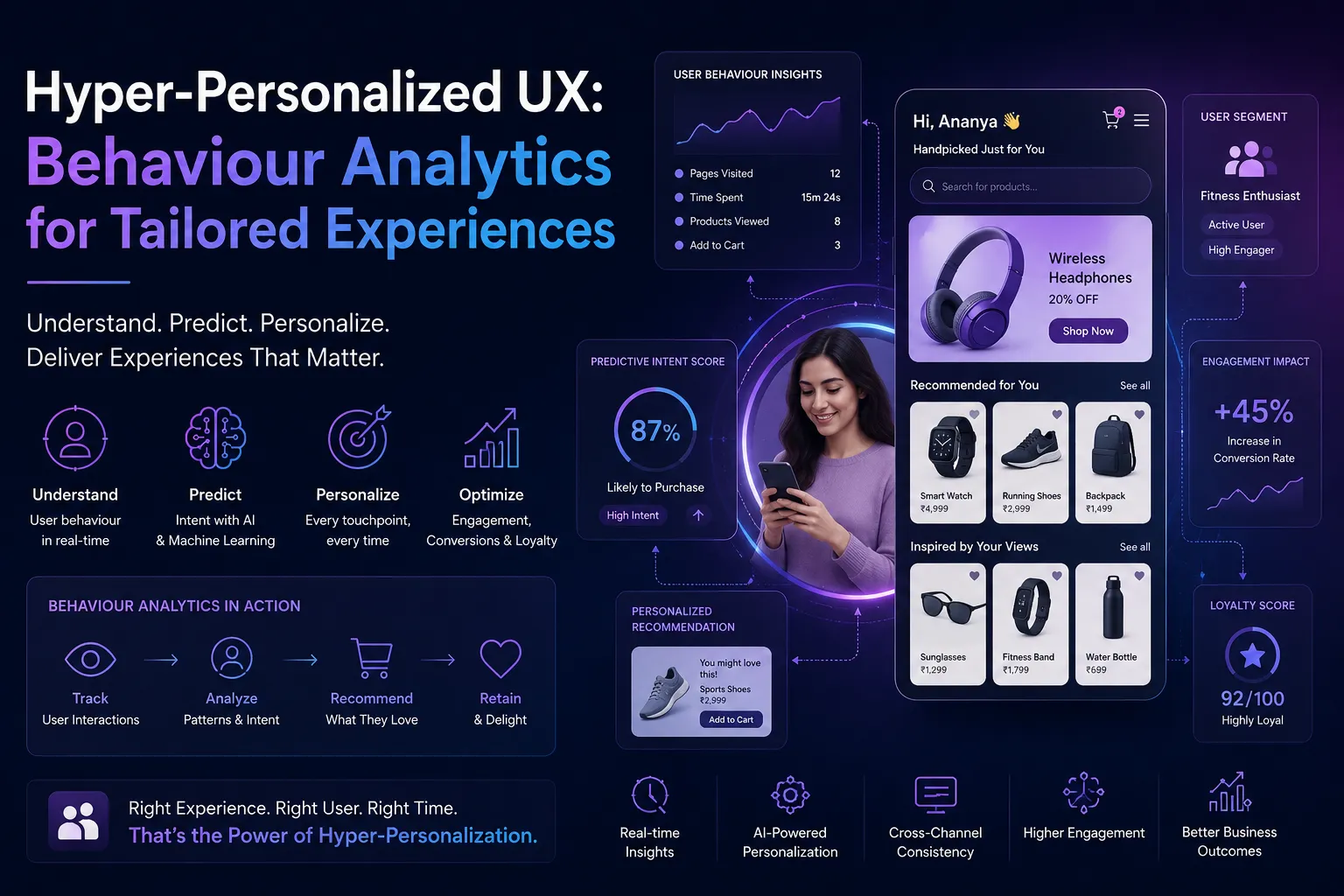
Hyper-Personalized UX: Behaviour Analytics for Tailored Experiences in
\n
Introduction
In 2026, generic user experiences are dead. Users expect every interaction to feel like it was designed just for them. This is where hyper-personalized UX steps in — not just using a user's name in an email, but dynamically adapting content, layout, and even functionality based on real-time behaviour. For Indian businesses targeting savvy marketers and professionals, mastering this trend is no longer optional; it's a competitive necessity.
User behaviour analytics (UBA) is the engine behind this shift. By tracking how users click, scroll, pause, and convert, you can build experiences that anticipate needs before they're expressed. This article explores practical ways to implement hyper-personalization using behaviour data, with examples relevant to the Indian market. Whether you run an e-commerce store, a SaaS platform, or a content site, these insights will help you create a UX that feels personal, intuitive, and highly effective.
Main Section 1: What is Hyper-Personalized UX and Why Does It Matter?
Hyper-personalized UX goes beyond basic segmentation. Instead of grouping users by broad demographics (age, location), it uses real-time behaviour data to tailor every aspect of the experience. This includes dynamic content blocks, personalized product recommendations, adaptive navigation menus, and even custom onboarding flows.
For example, an Indian travel booking site might notice a user repeatedly searching for budget hotels in Goa. A hyper-personalized approach would not only show Goa deals on the homepage but also highlight budget-friendly options, offer a special discount, and simplify the booking flow for that user. This level of personalization increases relevance, reduces friction, and dramatically improves conversion rates.
Why it matters in 2026: User attention spans are shrinking, and competition is fierce. According to recent studies, 80% of consumers are more likely to purchase from brands offering personalized experiences. In India, where mobile-first users expect speed and relevance, hyper-personalized UX can be the differentiator that turns casual visitors into loyal customers.
Main Section 2: How Behaviour Analytics Drives Hyper-Personalization
Behaviour analytics tools track every user action — clicks, mouse movements, scroll depth, time on page, form interactions, and even session replays. This data feeds into machine learning models that identify patterns and predict future behaviour. Here's how you can leverage it for hyper-personalized UX:
- Real-time adaptation: Use tools like Hotjar, Mixpanel, or Google Analytics 4 to trigger changes instantly. If a user abandons a cart, show a personalized popup with a discount code for those items.
- Predictive recommendations: Analyze past purchases and browsing history to suggest products or content. For instance, an Indian e-learning platform can recommend courses based on a user's completed modules and time spent on specific topics.
- Dynamic content blocks: Change hero banners, CTAs, and testimonials based on user behaviour. A returning visitor might see a “Welcome back! Here's what's new” message, while a new visitor sees a signup offer.
- Segmentation by intent: Identify users with high purchase intent (e.g., those who visited pricing pages multiple times) and serve them targeted upsells or consultation offers.
For an Indian context, consider a local fashion retailer. By analysing behaviour data, they might discover that users from tier-2 cities prefer COD and look for budget-friendly sections. The site can then prioritize COD options and budget filters for those users, while showing premium collections to users from metro cities with higher average order values.
Main Section 3: Implementing Hyper-Personalized UX — A Step-by-Step Guide
Ready to implement? Follow these steps to integrate behaviour analytics into your personalization strategy:
- Define personalization goals: Start with clear objectives — increase sign-ups, reduce bounce rate, or boost average order value. Align your data collection with these goals.
- Choose the right tools: Invest in behaviour analytics platforms that offer real-time tracking and integration with your CMS or CRM. Popular options include Amplitude, Heap, and VWO.
- Set up data collection: Tag key events like page views, clicks, form submissions, and downloads. Ensure compliance with India's data privacy laws (DPDP Act 2023) by obtaining user consent.
- Build user segments: Create dynamic segments based on behaviour — new visitors, returning customers, high-value users, cart abandoners, etc. Use these segments to trigger personalized content.
- Test and iterate: Run A/B tests to compare personalized vs. generic experiences. Measure metrics like engagement rate, conversion lift, and customer satisfaction.
- Scale gradually: Start with one or two high-impact personalization tactics (e.g., personalized homepage banners) and expand based on results.
For example, a B2B SaaS company in India could personalize the demo booking flow. If a user visits the pricing page multiple times, show a “Book a Free Demo” modal with a testimonial from a similar industry. If they spend time on the features page, highlight those features in the call-to-action.
Expert Tips
- Start with low-hanging fruit: Personalize email subject lines and CTAs first — these are easy to implement and show quick wins.
- Respect user privacy: Always be transparent about data collection. Provide clear opt-in/opt-out options to build trust.
- Use progressive profiling: Collect user data gradually across multiple interactions instead of asking for everything upfront.
- Combine behaviour with context: Factor in time of day, device type, and location for deeper personalization. For instance, a food delivery app could show breakfast options in the morning and dinner deals in the evening.
- Monitor for bias: Ensure your personalization algorithms don't inadvertently exclude or stereotype users. Regularly audit your segments for fairness.
Common Mistakes
- Over-personalization: Creeping users out by being too specific (e.g., referencing a recent search for a sensitive product). Strike a balance between relevance and privacy.
- Ignoring mobile users: In India, mobile-first is the norm. Ensure personalization works seamlessly on small screens and slow networks.
- Data silos: Behaviour data stuck in one tool while your website uses another. Integrate your analytics with your personalization engine for seamless execution.
- Forgetting new users: Personalization requires data. For first-time visitors, rely on contextual cues (e.g., referral source, landing page) instead of waiting for behaviour data.
- No testing: Assuming personalization always works. Always A/B test to validate that your changes actually improve metrics.
Future Trends
Looking ahead, hyper-personalized UX will evolve with AI and edge computing. By 2027, we can expect:
- Real-time emotional detection: Using facial recognition or sentiment analysis to adapt UX based on user mood.
- Voice and gesture personalization: Interfaces that adapt based on how you speak or move.
- Predictive personalization: Anticipating needs before the user even takes action, like auto-filling forms based on past behaviour.
- Privacy-first personalization: New techniques like federated learning that allow personalization without storing raw user data.
For Indian businesses, staying ahead means investing in scalable analytics infrastructure and adopting a culture of continuous experimentation.
FAQs
1. What is the difference between personalization and hyper-personalization?
Personalization uses basic data like name or location. Hyper-personalization uses real-time behaviour data (clicks, scrolls, past purchases) to dynamically tailor the entire experience.
2. How much does it cost to implement behaviour analytics for personalization?
Costs vary. Basic tools like Google Analytics are free. Advanced platforms like Amplitude or Mixpanel start around $1,000/year for small businesses. Implementation time ranges from a few weeks to months.
3. Is hyper-personalization legal in India?
Yes, but you must comply with the Digital Personal Data Protection (DPDP) Act 2023. Obtain explicit consent, provide data access, and allow users to opt out.
4. Can small businesses afford hyper-personalization?
Absolutely. Start with free tools like Google Analytics and use simple rules-based personalization (e.g., segmenting by referral source). Scale as you grow.
5. How do I measure the ROI of hyper-personalized UX?
Track metrics like conversion rate, average order value, time on site, and repeat purchase rate. Compare personalized vs. non-personalized user groups using A/B testing.
6. What are the best tools for behaviour analytics in India?
Popular choices include Google Analytics 4 (free), Hotjar (for session replays), Mixpanel, Amplitude, and VWO (for A/B testing). Choose based on your budget and technical expertise.
7. How often should I update my personalization strategy?
Review your strategy quarterly. User behaviour changes, so regularly analyze data and tweak your segments and triggers.
Conclusion
<p>Hyper-personalized UX powered by behaviour analytics is not just a trend — it's the new standard for digital experiences in 2026. By understanding your users' actions and adapting in real time, you can create meaningful connections that drive engagement, loyalty, and revenue. For Indian businesses, the opportunity is immense: a market that values relevance, speed, and trust. Start small, test often, and always put the user first.</p>
CTA
<p>Ready to transform your digital experience? <a href="http://eishwar.com/contact">Contact EishwarITSolution today</a> for a free consultation on implementing behaviour analytics and hyper-personalization for your business.</p>