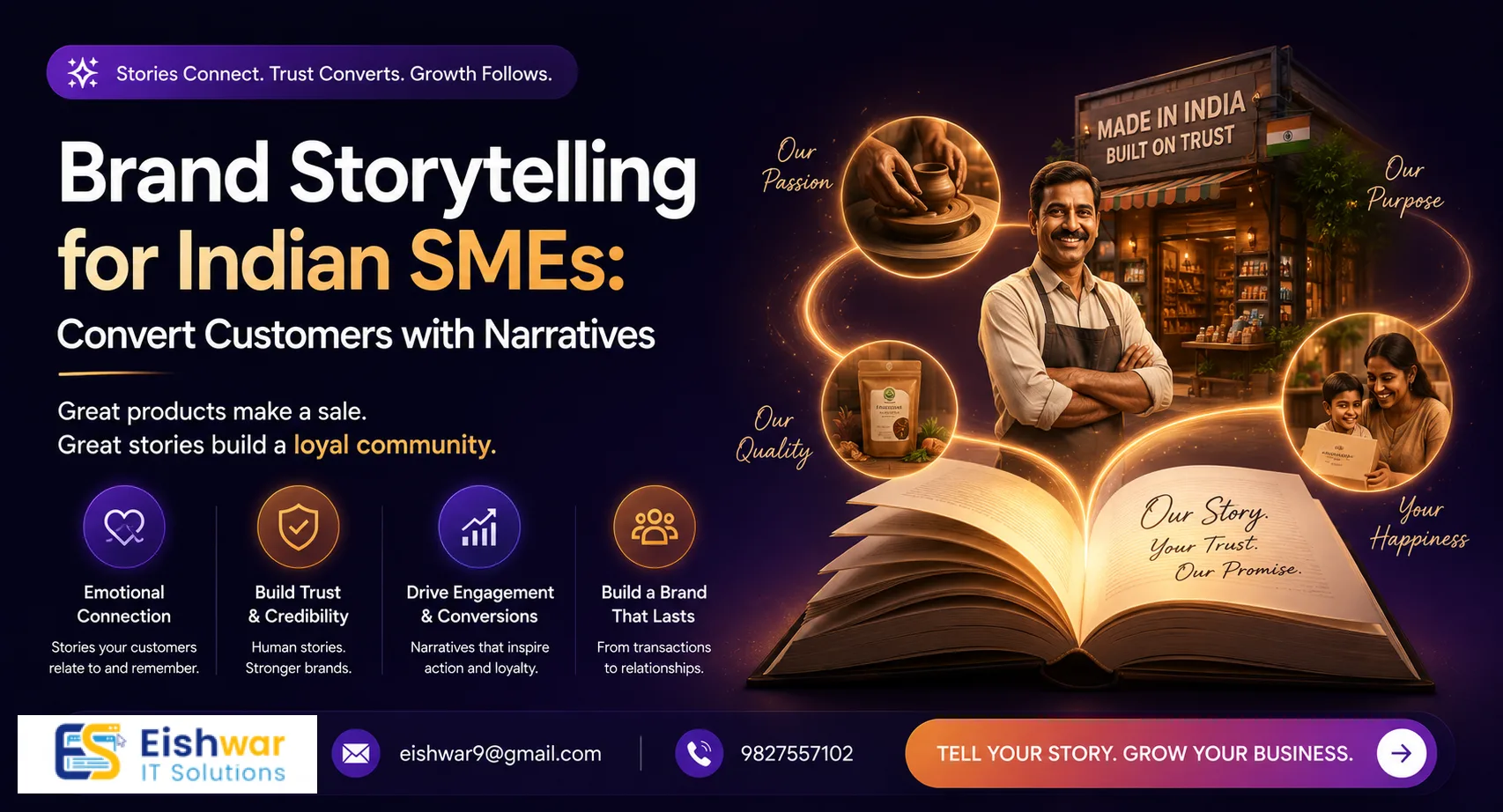
Brand Storytelling for Indian SMEs: Crafting Narratives That Convert Customers in 2026
Introduction
In a crowded marketplace, facts tell, but stories sell. For Indian SMEs competing with big brands, brand storytelling is not just a luxury—it's a survival tool. In 2026, customers are overwhelmed with choices and immune to traditional advertising. They crave authenticity, connection, and purpose. A compelling brand narrative can make your small business feel relatable, trustworthy, and memorable. This guide will show you how to craft stories that resonate with Indian audiences and turn casual browsers into loyal customers.
Main Section 1: Why Brand Storytelling Matters for Indian SMEs in 2026
India's digital ecosystem is booming. With over 900 million internet users, the competition for attention is fierce. SMEs often struggle to differentiate themselves. Brand storytelling bridges this gap by humanizing your business. Instead of listing features, you share values, struggles, and victories. For example, a local organic food brand can tell the story of how they source directly from tribal farmers, preserving traditional farming methods. This narrative builds trust and justifies premium pricing. In 2026, customers in India are more values-driven—they support businesses that align with their beliefs. A strong story creates emotional anchors, making your brand unforgettable. Consider a small textile business in Varanasi that shares the journey of weavers who have practiced their craft for generations. By highlighting the human effort behind each saree, they create a connection that mass-produced alternatives cannot replicate. This approach not only drives sales but also fosters brand advocacy, as customers become storytellers themselves, sharing your narrative with their networks.
Main Section 2: Elements of a High-Converting Brand Story
1. Authentic Origin: Share why your business started. Was it a personal problem? A gap in the market? For instance, a Jaipur-based handicraft brand might narrate how the founder discovered dying art forms and decided to revive them. This origin story should include specific details—like the first artisan they met or the moment they realized the impact of their work. 2. Relatable Hero: Your customer is the hero, not your product. Position your brand as the guide that helps them overcome challenges. For example, a financial planning service for young professionals could frame its story around a customer who achieved financial freedom after years of struggle. 3. Conflict and Resolution: Every story needs tension. Describe the problem your audience faces (e.g., lack of quality skincare for sensitive Indian skin) and how your solution changed their life. Use real testimonials to add credibility. 4. Emotional Triggers: Use pride, nostalgia, or hope. An Indian snack brand could evoke memories of grandmother's kitchen by describing the aroma of freshly roasted spices. 5. Clear Call-to-Action: End with an invitation—subscribe, buy, or share their own story. For instance, a home decor brand might ask customers to post photos of their spaces with a branded hashtag, creating a community around shared aesthetics.
Main Section 3: Practical Steps to Build Your Brand Narrative
Step 1: Know Your Audience Deeply. Conduct surveys, analyze social media comments, and talk to customers. What keeps them up at night? What are their aspirations? For a Pune-based tech startup, the audience might be small business owners who fear digital disruption. Create buyer personas that include demographics, psychographics, and pain points. Step 2: Define Your Core Message. In one sentence, what do you stand for? Example: 'We help Indian artisans reach global customers while preserving their craft.' This message should be the north star for all your content. Step 3: Create a Story Bank. Collect real customer success stories, employee anecdotes, and founder journeys. Use them across website, social media, and emails. For instance, a food delivery service could document a day in the life of a delivery partner, highlighting their dedication. Step 4: Choose the Right Medium. Video stories work well for Instagram and YouTube; long-form articles for LinkedIn or blog. For a B2B brand, a detailed case study might be more effective than a 30-second reel. Step 5: Test and Iterate. Monitor engagement metrics. Which stories get the most shares? Double down on those themes. Use A/B testing for headlines and formats to optimize conversion rates.
Expert Tips
- Tip 1: Use local language phrases or dialects to increase relatability. A Hindi or Tamil phrase can create instant connection. For example, a brand targeting Tamil Nadu customers might use 'Vaanga, unga kadhai sollunga' (Come, tell us your story) in campaigns.
- Tip 2: Leverage user-generated content. Encourage customers to share their own stories with your product. Repost them with credit. This not only builds community but also provides authentic social proof.
- Tip 3: Keep it concise. Attention spans are short. A 60-second video or a 300-word post can be more effective than a long essay. Focus on one key emotion per piece of content.
- Tip 4: Be consistent across all touchpoints. Your website, social media, and packaging should tell the same story. Use the same tone, visuals, and key phrases to reinforce your narrative.
- Tip 5: Show vulnerability. Admitting past mistakes (like a failed product launch) makes your brand more human and trustworthy. For instance, a clothing brand could share how they learned from a quality issue and improved their sourcing process.
Common Mistakes
- Mistake 1: Bragging about achievements without showing struggle. Customers connect with underdogs, not perfection. Share the challenges you faced, like a startup that nearly shut down due to cash flow issues but pivoted successfully.
- Mistake 2: Using jargon or complex language. Keep it simple and conversational, like you're talking to a friend. Avoid terms like 'synergy' or 'disruptive' unless your audience is very niche.
- Mistake 3: Ignoring cultural nuances. What works in Mumbai might not work in Chennai. Tailor stories to regional sensibilities. For example, a food brand might emphasize different flavors in different states.
- Mistake 4: Being inauthentic. Don't fabricate stories. If your brand is not eco-friendly, don't pretend it is. Customers can spot insincerity, and it can damage your reputation irreparably.
- Mistake 5: Forgetting the call-to-action. A great story without a next step is wasted effort. Always guide the audience on what to do next, whether it's visiting your website, signing up for a newsletter, or making a purchase.
Future Trends
In 2026 and beyond, brand storytelling will become more interactive and immersive. Expect to see: AI-generated personalized stories—imagine a website that customizes your brand narrative based on visitor data, such as location or browsing history. For instance, a travel company could show different stories to users from different cities. Voice-assisted storytelling via smart speakers in Indian languages, allowing users to hear your brand's journey while cooking or commuting. Augmented reality (AR) experiences that let customers 'step into' your brand story—like virtually visiting a farm or factory. A spice brand could use AR to show the origins of their turmeric. Short-form video narratives will dominate platforms like Instagram Reels and YouTube Shorts, with brands creating serialized content that keeps viewers coming back. Indian SMEs that embrace these technologies early will have a competitive edge, as they can offer unique, memorable experiences that differentiate them from larger competitors.
FAQs
Q1: What is brand storytelling?Brand storytelling is the strategic use of narrative to communicate your brand's values, mission, and personality. It goes beyond facts to create emotional connections with your audience. For example, instead of saying 'we sell organic soap,' you tell the story of how your grandmother's recipe inspired the product.
Q2: How does storytelling help convert customers?Stories build trust and make your brand memorable. When customers feel an emotional connection, they are more likely to choose your product over competitors and become repeat buyers. A study by Headstream found that if people love a brand story, 55% are more likely to buy the product in the future.
Q3: Can small businesses with limited budgets do storytelling?Absolutely. You don't need expensive production. A simple video shot on a smartphone sharing your founder's journey or a customer testimonial can be highly effective. Authenticity matters more than production value. For instance, a local bakery could share a behind-the-scenes video of early morning preparations.
Q4: How do I measure the success of brand storytelling?Track metrics like engagement (likes, shares, comments), website session duration, conversion rate, and customer feedback. Tools like Google Analytics and social media insights can help. Additionally, monitor brand sentiment through reviews and direct messages to gauge emotional impact.
Q5: What are some examples of successful brand storytelling in India?Brands like Paper Boat (nostalgic Indian childhood memories), Mamaearth (safe and toxin-free products for new parents), and The Whole Truth Foods (honest, no-hidden-ingredients snacks) are great examples. Each uses a clear narrative that resonates with their target audience's values and emotions.
Q6: How often should I update my brand story?Your core story should remain consistent, but you can update it with new chapters as your business evolves. For example, after launching a new product line or achieving a milestone, share that part of the journey. Regularly refresh your story bank with recent customer testimonials and employee stories to keep content current.
Q7: What if my brand story doesn't seem interesting?Every brand has a story—you just need to find the right angle. Focus on the human elements: the problem you solve, the people you help, and the passion behind your work. Even a mundane product like a stapler can have a story if you highlight the craftsmanship or the office productivity it enables.
Conclusion
Brand storytelling is not a passing trend—it's the backbone of meaningful customer relationships. For Indian SMEs in 2026, the ability to craft and share authentic narratives can be the difference between blending in and standing out. Start small, stay genuine, and let your brand's unique voice shine. Your story is your superpower.
CTA
Ready to transform your brand with storytelling? Contact EishwarITSolution today for a free consultation. Our experts will help you craft a narrative that captivates your audience and drives growth. Don't wait—your story deserves to be heard.