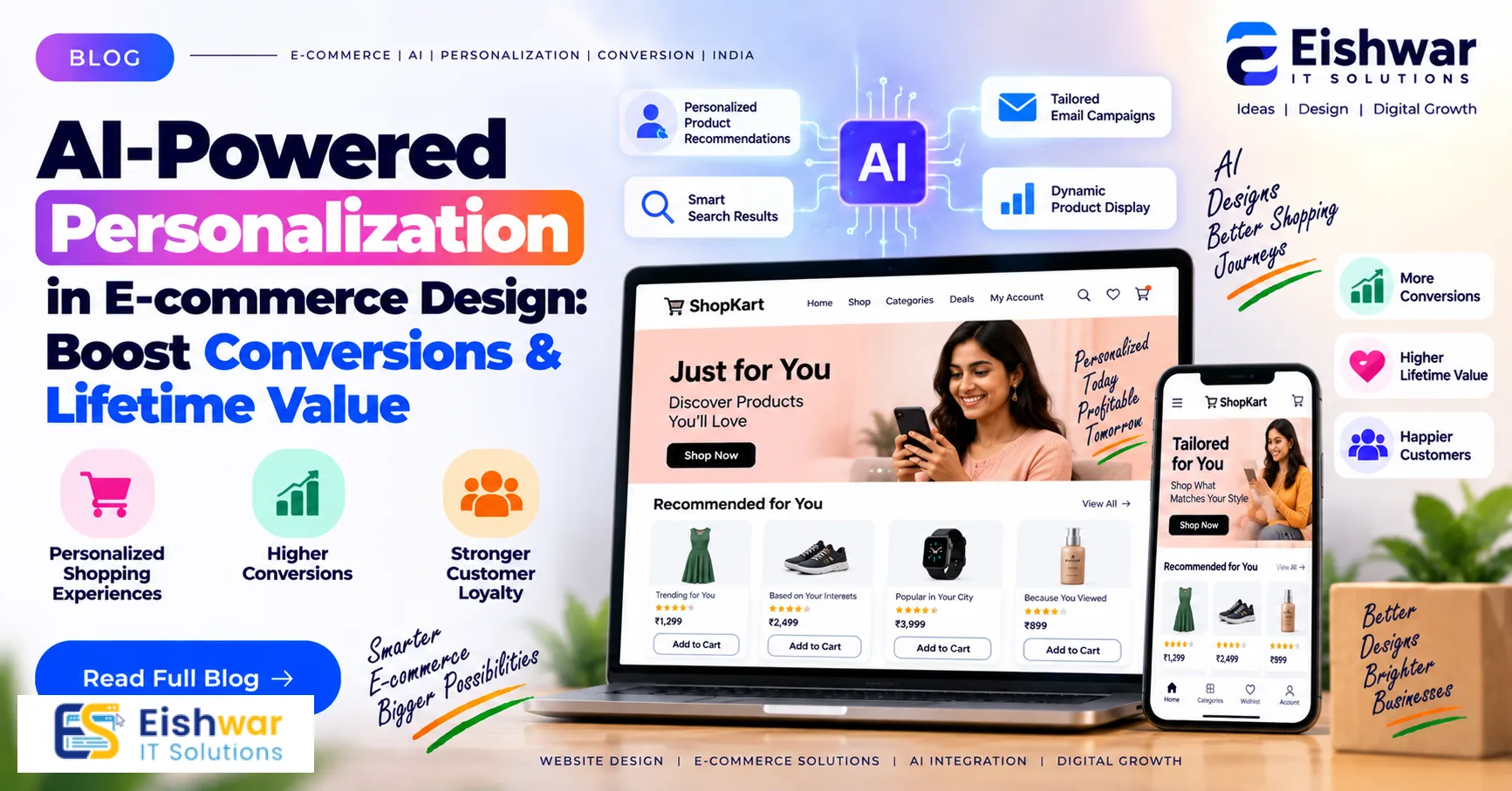
AI-Powered Personalization in E-commerce Design: Boost Conversions & Loyalty in 2026
Introduction
In the crowded Indian e-commerce landscape, standing out is harder than ever. With over 900 million internet users and a booming online shopping culture, generic one-size-fits-all websites are failing to capture attention. The modern Indian shopper is discerning, value-conscious, and expects a seamless, personalized experience—whether they're browsing on a budget smartphone in a Tier-2 city or on a high-end laptop in Bengaluru. Enter AI-powered personalization—the game-changer that transforms a static online store into a dynamic, tailored shopping experience. In 2026, AI is not just a buzzword; it's the backbone of successful e-commerce website design. This guide will show you how to leverage AI to boost conversions and build unshakeable customer loyalty, specifically for Indian businesses.
Main Section 1: The Rise of AI in E-commerce Design
AI has moved from backend operations to the very front-end of customer experience. From personalized product recommendations to dynamic pricing, AI algorithms analyze vast amounts of data to predict what each visitor wants. In India, where diversity is vast—different languages, cultures, and purchasing power—AI's ability to segment and personalize is invaluable. Imagine a customer in Mumbai seeing a curated selection of monsoon gear, while a shopper in Delhi sees winter wear—all in real-time. That's the power of AI-driven design.
Moreover, AI-powered chatbots and virtual assistants are becoming integral to e-commerce websites. They provide instant, 24/7 support, answering queries in local languages, and guiding users through the purchase journey. This not only enhances user experience but also reduces bounce rates and increases the likelihood of conversion. For instance, a chatbot that greets a returning customer with "Welcome back, Priya! How can I help you today?" in Hindi or Tamil creates an immediate sense of recognition and comfort, which is crucial in a market where trust is a major factor.
The rise of AI is also driven by the increasing sophistication of recommendation engines. These systems go beyond simple 'customers also bought' models. They now use deep learning to understand subtle patterns in browsing behavior, time spent on product pages, and even mouse movement. For example, if a user frequently checks out running shoes but never buys, the AI might infer they are comparing options and start showing them targeted discounts or reviews to nudge them toward a purchase. This level of insight was unimaginable just a few years ago but is now accessible even to small businesses.
Another key driver is the explosion of data from multiple touchpoints—social media, mobile apps, and even offline stores. AI can unify this data to create a single customer view, enabling consistent personalization across all channels. In India, where many shoppers research on Instagram and then buy on the website, this omnichannel approach is essential. By 2026, AI will not just be a tool but a strategic partner in designing every aspect of the e-commerce experience.
Main Section 2: How to Implement AI Personalization in Your Store
Implementing AI personalization doesn't require a massive budget. Start with these practical steps:
- Collect Data Ethically: Use analytics tools to gather browsing behavior, purchase history, and demographic data. Ensure you comply with India's data protection laws and be transparent with users. For example, clearly state in your privacy policy that you use cookies to personalize the shopping experience. Offer a cookie consent banner that allows users to opt in or out. Ethical data collection builds trust, which is the foundation of loyalty.
- Leverage Recommendation Engines: Use AI-powered plugins or platforms that offer product recommendations based on user behavior. For example, Amazon's 'Customers who bought this also bought' is a classic, but even smaller stores can use tools like Barilliance or Nosto. These tools can be integrated with popular e-commerce platforms like Shopify, WooCommerce, or Magento in a matter of hours. Start with simple 'related products' and 'recently viewed' widgets, then gradually move to more sophisticated 'frequently bought together' suggestions.
- Personalize Content and Offers: Use AI to show different homepage banners, product categories, and promotional offers based on user segments. For instance, first-time visitors might see a welcome discount, while returning customers see loyalty rewards. You can also personalize email marketing campaigns—send a birthday discount or a reminder about items left in the cart. A/B test different messages to see what resonates best with each segment.
- Dynamic Pricing: AI can adjust prices based on demand, competitor pricing, and user willingness to pay. Use this cautiously to maintain trust. For example, during a flash sale, you might lower prices for users who have shown high intent but haven't purchased. However, avoid showing different prices to different users for the same product at the same time, as this can lead to backlash. Instead, use dynamic pricing for personalized discounts or bundles.
- Chatbots with NLP: Implement AI chatbots that understand natural language and provide personalized assistance. They can suggest products, answer queries, and even handle complaints. For instance, a chatbot can ask, "Are you looking for a gift for someone?" and then guide the user to a curated gift section. Ensure the chatbot is trained on your product catalog and can handle common queries in multiple Indian languages. If the chatbot cannot resolve an issue, seamlessly transfer the conversation to a human agent.
Remember, the goal is to make the customer feel understood. A personalized experience reduces decision fatigue and makes shopping enjoyable. For example, a customer who is a frequent buyer of organic food might appreciate a homepage that highlights new organic products, along with a recipe blog. This not only increases the chance of a sale but also positions your brand as one that understands their lifestyle.
Main Section 3: Case Studies and Real-World Impact
Consider the example of an Indian D2C fashion brand that used AI to personalize their website. By analyzing past purchases and browsing behavior, they showed each visitor a unique 'Recommended for You' section. Result? A 35% increase in average order value and a 20% boost in repeat purchases within three months. The brand also used AI to predict which products would be popular in different regions, allowing them to stock inventory accordingly. For instance, they noticed that customers in Kerala preferred more colorful ethnic wear during Onam, while customers in Punjab leaned toward traditional suits during Baisakhi. This regional insight helped them tailor their offerings and marketing messages, leading to higher sales.
Another example is a grocery e-commerce platform that used AI to predict when customers would run out of essentials and sent timely reminders with one-click reorder options. This convenience led to a 50% increase in customer retention. The AI analyzed purchase cycles—for instance, if a customer bought milk every two days, the system would send a reminder on the third day. This proactive approach not only saved customers time but also made them feel cared for. The platform also used AI to suggest complementary products, such as offering a discount on bread when a customer added butter to their cart.
These examples highlight that AI personalization is not just for giants like Flipkart or Myntra. Small and medium businesses can also reap huge benefits by adopting AI tools that fit their scale. For instance, a small handicraft store can use AI to recommend products based on the user's past purchases and browsing history, even if they have only a few hundred products. The key is to start with the data you have and gradually expand your AI capabilities as you grow.
Expert Tips
- Start Small: Don't try to implement everything at once. Begin with product recommendations and email personalization, then expand. For example, you can start by adding a 'Recommended for You' section on your product pages and see how it impacts click-through rates. Once you're comfortable, move on to personalized email campaigns and then to dynamic pricing.
- Focus on Mobile: Since most Indian shoppers use smartphones, ensure your AI features are optimized for mobile. Test on various devices and network speeds. A personalized experience that takes too long to load will frustrate users. Use accelerated mobile pages (AMP) or progressive web apps (PWA) to ensure fast loading times. Also, make sure your AI-driven recommendations are easily clickable on a small screen.
- Use Local Languages: AI can help you serve content in Hindi, Tamil, Telugu, etc. This builds trust and connects with a wider audience. For example, you can use AI to automatically translate product descriptions and reviews into the user's preferred language. This is especially important in a country where only a small percentage of the population is fluent in English. A user who can read about a product in their native language is more likely to make a purchase.
- Balance Personalization and Privacy: Be transparent about data usage and provide opt-out options. Trust is the foundation of loyalty. For instance, allow users to view and delete their data if they wish. Also, avoid using sensitive data like health or financial information for personalization, as this can be seen as invasive. Instead, focus on shopping behavior and preferences.
- Monitor and Optimize: AI is not set-and-forget. Regularly analyze performance metrics and tweak your algorithms. For example, if you notice that a particular recommendation is not performing well, adjust the algorithm or the placement. Use A/B testing to compare different personalization strategies and see which one yields better results. Keep a close eye on user feedback and adjust your approach accordingly.
Common Mistakes
- Over-Personalization: Showing too many recommendations can overwhelm users. Keep it relevant and concise. For example, instead of showing 20 recommended products, show 5 that are highly relevant. Also, avoid personalizing every single element of the page, as this can make the site feel cluttered and confusing. A clean, focused design with a few personalized touches is more effective.
- Ignoring Data Quality: Garbage in, garbage out. Ensure your data is clean and up-to-date. For example, if you have duplicate customer records, your AI will make incorrect assumptions. Regularly clean your database by removing duplicates, updating contact information, and segmenting customers accurately. Also, ensure that your data collection methods are reliable and that you're not missing out on important data points.
- Neglecting Privacy: With India's Digital Personal Data Protection Act, non-compliance can lead to heavy fines. Prioritize data security. For example, encrypt all customer data, both in transit and at rest. Use secure servers and regularly update your security protocols. Also, be transparent about what data you collect and why. Provide clear privacy policies and obtain explicit consent from users before collecting their data.
- Not Testing: AI models need continuous testing. A/B test different personalization strategies to see what works. For example, you might test whether showing a personalized banner on the homepage increases click-through rates compared to a generic banner. Use the results to refine your approach. Also, test your AI features on different devices and browsers to ensure they work seamlessly.
- Forgetting the Human Touch: AI should enhance, not replace, human interaction. For complex queries, always offer live support. For example, if a customer is having trouble with a payment, a chatbot might not be able to resolve it. In such cases, provide a clear option to connect with a human agent via phone or live chat. This ensures that customers feel valued and supported, which is crucial for building loyalty.
Future Trends
Looking ahead, AI personalization will become even more sophisticated. Expect to see:
- Hyper-Personalization with Real-Time Data: Websites will adapt instantly to user behavior, even changing the layout mid-session. For example, if a user spends time looking at a specific category, the homepage might automatically rearrange to show more products from that category. This real-time adaptation will make the shopping experience feel almost magical.
- Voice Commerce Integration: With the rise of smart speakers, AI will enable voice-based shopping experiences tailored to individual users. For instance, a user might say, "Order my usual groceries," and the AI will know exactly what to order based on past purchases. Voice assistants will also be able to answer questions like, "What's the best smartphone under 20,000 rupees?" and provide personalized recommendations based on the user's preferences.
- AI-Driven Visual Search: Users will be able to search for products by uploading images, and AI will find similar items. For example, a user might take a photo of a dress they saw on the street and upload it to the e-commerce site. The AI will then show similar dresses available for purchase. This feature is particularly useful in fashion and home decor, where visual appeal is key.
- Predictive Personalization: AI will anticipate needs before the user even searches, suggesting products based on context like weather, upcoming events, or past purchases. For example, if a user has a history of buying gifts for Diwali, the AI might start showing gift ideas a few weeks before the festival. Similarly, if a user lives in a region with a monsoon season, the AI might suggest raincoats and umbrellas when the weather forecast predicts rain.
For Indian businesses, embracing these trends early will provide a competitive edge. The future is personalized, and AI is the key. By staying ahead of the curve, you can ensure that your e-commerce website remains relevant and appealing to the modern Indian shopper.
FAQs
1. What is AI-powered personalization in e-commerce?
AI-powered personalization uses machine learning algorithms to analyze user data and deliver tailored shopping experiences, such as product recommendations, customized content, and dynamic pricing, to each individual visitor. It involves understanding user behavior, preferences, and purchase history to create a unique experience that increases engagement and conversions.
2. How can small Indian businesses afford AI personalization?
Many affordable AI tools and platforms are available, such as free or low-cost recommendation plugins for Shopify or WooCommerce. Start with basic features and scale as you grow. For example, you can use free tools like Google Analytics to collect data and then use a plugin like 'Related Products' that costs a few hundred rupees per month. As your business grows, you can invest in more advanced AI solutions that offer deeper personalization.
3. Is AI personalization safe for user privacy?
Yes, if implemented responsibly. Follow India's data protection laws, be transparent about data collection, and allow users to control their data. Ethical AI builds trust. For instance, you should provide a clear privacy policy, obtain consent before collecting data, and offer users the option to opt out of personalization. Additionally, ensure that your data storage and processing are secure to prevent breaches.
4. What metrics should I track to measure the success of AI personalization?
Track conversion rate, average order value, customer lifetime value, repeat purchase rate, and bounce rate. Compare these with a control group to see the impact. For example, you can run an A/B test where one group sees personalized content and the other sees generic content. By comparing the metrics between the two groups, you can determine the effectiveness of your AI personalization efforts.
5. Can AI personalization work for B2B e-commerce?
Absolutely. B2B buyers also expect personalized experiences. AI can tailor product catalogs, pricing, and content based on company size, industry, and past orders. For example, a B2B supplier can use AI to show a procurement manager a personalized dashboard with frequently ordered items, bulk pricing, and reorder reminders. This not only improves the buying experience but also increases efficiency for both parties.
6. How long does it take to see results from AI personalization?
Results can vary, but many businesses see improvements within a few weeks of implementation. For instance, you might notice an increase in click-through rates on personalized recommendations within the first month. However, significant gains in conversion rate and customer loyalty may take a few months as the AI learns more about your customers and you optimize your strategies. Patience and continuous monitoring are key.
7. What are the common challenges in implementing AI personalization?
Common challenges include data quality issues, lack of technical expertise, and integration difficulties with existing systems. To overcome these, start with a clear plan, invest in training or hire experts, and choose AI tools that are compatible with your e-commerce platform. Additionally, ensure that you have a robust data collection and management strategy in place to feed the AI with accurate and relevant data.
Conclusion
AI-powered personalization is the future of e-commerce website design. It's not about replacing human touch but enhancing it. By delivering relevant, timely, and personalized experiences, you can significantly boost conversions and foster loyalty among Indian customers. The time to act is now. Start small, stay ethical, and let AI guide your customers to exactly what they need—before they even know it. Remember, the goal is to create a shopping experience that feels effortless and personal, making your customers feel valued and understood. With the right approach, AI can be the key to unlocking long-term success in the competitive Indian e-commerce market.
CTA
Ready to transform your e-commerce website with AI-powered personalization? Contact EishwarITSolution today for a free consultation and see how we can help you design a store that converts visitors into loyal customers. Our team of experts will work with you to understand your business goals, assess your current website, and recommend the best AI solutions tailored to your needs. Don't wait—embrace the future of e-commerce and stay ahead of the competition.