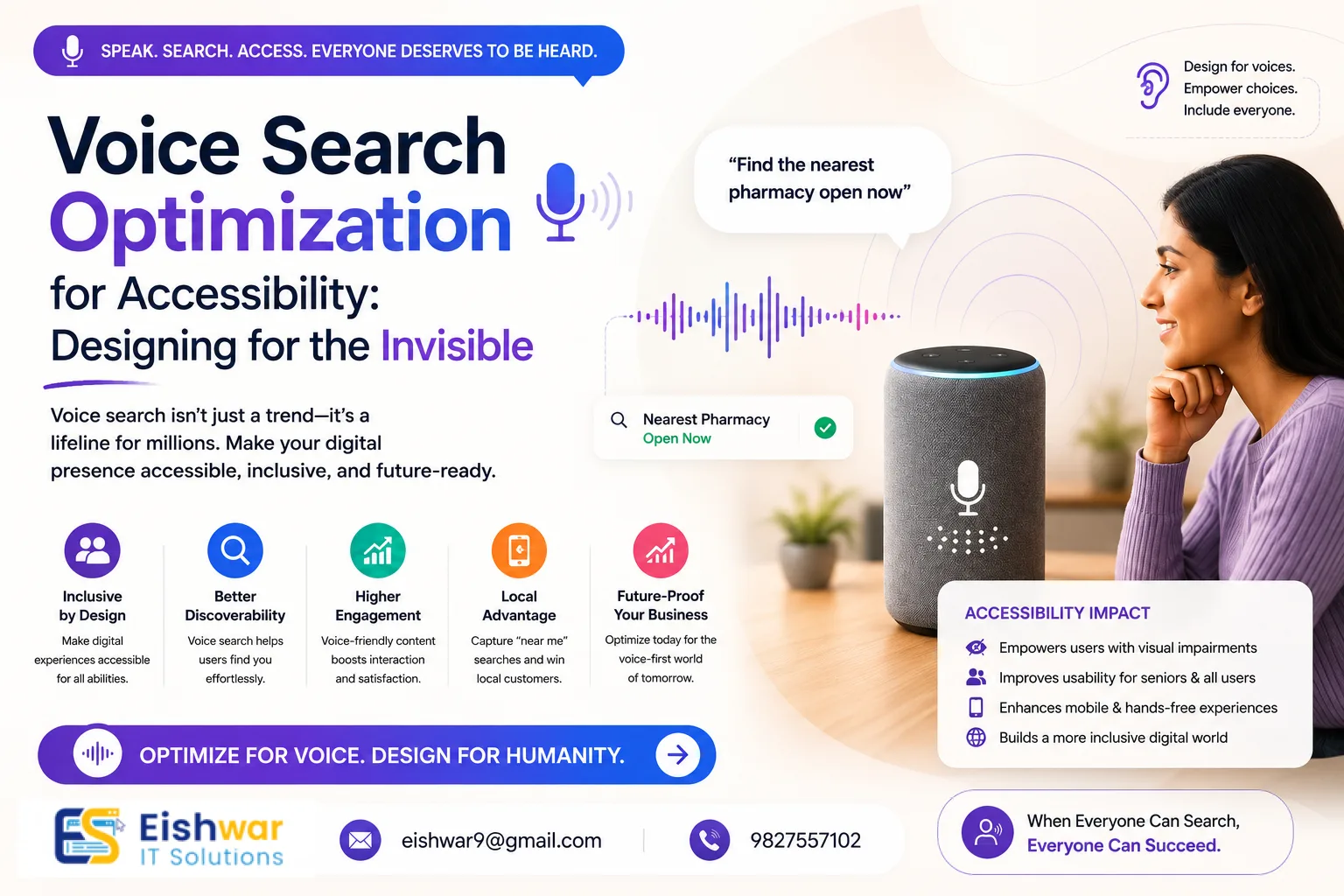
Voice Search SEO in 2026: Strategies for Indian Businesses to Dominate Conversational Queries
Introduction
Imagine asking your phone, "Where can I get the best biryani near me?" or "Which digital marketing agency in Mumbai offers web design services?" That's voice search in action—and it's exploding in India. By 2026, over 50% of all searches will be voice-based, driven by affordable smartphones, cheap data, and the rise of vernacular assistants like Google Assistant, Alexa, and Siri. For Indian business owners, marketers, and professionals, ignoring voice search SEO is like leaving money on the table.
This guide will walk you through the latest voice search strategies tailored for the Indian market. You'll learn how to optimize for natural language queries, capture local leads, and stay ahead of competitors who are still typing. Let's dive in.
Main Section 1: Understanding Voice Search Behavior in India
Voice search isn't just a trend; it's a behavioral shift. Indian users prefer speaking over typing, especially in regional languages. According to a 2025 Google report, 71% of Indian users find voice search easier than typing, and 60% use it daily. The key difference? Voice queries are longer, more conversational, and often include location-specific terms.
For example, a typed search might be "best web design company Pune." A voice search sounds like, "Hey Google, who is the best web design company in Pune for small businesses?" This shift demands a new SEO approach—one that prioritizes natural language, question phrases, and local intent.
Businesses must map their content to these conversational patterns. Start by analyzing your customer FAQs: What do they ask when they call you? Use those exact phrases in your website copy, blog posts, and product descriptions. Also, consider regional languages—Hindi, Tamil, Telugu, and others. Voice assistants are getting smarter with Indian accents and dialects, so creating content in multiple languages can give you a massive edge. For instance, a restaurant in Chennai could optimize for "Enaku nalla biryani enga kedaikum?" (Where can I get good biryani?) to capture Tamil voice queries.
Main Section 2: Technical Optimization for Voice Search
Voice search relies heavily on structured data, page speed, and mobile-friendliness. Here's what you need to fix:
1. Structured Data (Schema Markup): Implement FAQ schema, LocalBusiness schema, and HowTo schema. This helps search engines understand your content and serve it as a featured snippet or voice answer. For instance, if you run a restaurant in Delhi, add schema for menu, hours, and location. When someone asks, "Where can I get paneer butter masala near Connaught Place?" your business could be the answer. Use Google's Structured Data Testing Tool to validate your markup.
2. Page Speed: Voice search users expect instant answers. A one-second delay can reduce conversions by 7%. Use tools like Google PageSpeed Insights to optimize images, enable caching, and minify code. For Indian users on slower connections, consider AMP (Accelerated Mobile Pages) for key landing pages. A practical tip: compress images using WebP format and leverage browser caching to cut load times by up to 30%.
3. Mobile Optimization: Most voice searches happen on mobile. Ensure your site is fully responsive, with easy-to-tap buttons and readable fonts. Avoid pop-ups that frustrate mobile users—Google penalizes intrusive interstitials in voice search results. Test your site on devices like a budget Android phone (e.g., Redmi or Samsung M series) to simulate real user experience.
4. Local SEO: Claim and optimize your Google Business Profile. Include accurate NAP (Name, Address, Phone), business hours, and categories. Encourage reviews—they boost local rankings. Voice searches like "plumber near me" rely on local packs, so being in the top three is crucial. Add photos, respond to reviews, and post updates weekly to keep your profile active.
Main Section 3: Content Strategy for Conversational Queries
Your content must answer questions naturally. Here's how to create voice-search-optimized content:
Target Long-Tail Keywords: Focus on phrases that start with who, what, where, when, why, and how. For example, instead of "web design services," target "How much do web design services cost in Bangalore?" Use tools like AnswerThePublic or Google's People Also Ask to find these queries. Aim for 10-15 long-tail keywords per page.
Create FAQ Pages: Dedicate a page to frequently asked questions. Each question should be a heading (H2 or H3), and the answer should be concise—around 40-50 words. This format increases your chances of appearing in voice search results. For example, a dental clinic could have an FAQ page with questions like "What is the cost of teeth whitening in Pune?" and answer in a single sentence.
Write in Conversational Tone: Use natural language, contractions, and second-person pronouns. For example, "You can boost your sales by optimizing for voice search" sounds more natural than "Optimizing for voice search can boost sales." Read your content aloud—if it sounds like a robot, rewrite it. Include phrases like "Hey, are you looking for..." to mimic real speech.
Include Local Context: Mention landmarks, neighborhoods, and local events. If you're a café in Jaipur, write about "best coffee near Hawa Mahal" or "evening snacks near Johari Bazaar." Voice assistants love context. Also, reference local festivals like Diwali or Pongal to connect with seasonal queries.
Expert Tips
- Tip 1: Audit your website's current voice search performance using Google Search Console. Filter queries by question phrases (who, what, etc.) and optimize pages that already get impressions. Focus on pages with high impressions but low click-through rates—they're prime candidates for voice snippets.
- Tip 2: Leverage Google Business Profile posts to answer trending questions. For example, if you're a salon, post about "How to choose the right haircut for summer in India." Use a call-to-action like "Book now" to drive conversions.
- Tip 3: Use schema for your business's products and services. If you sell handmade jewelry, add Product schema with price, availability, and reviews. Voice assistants can then read your product details aloud. For example, "Alexa, find me silver earrings under ₹500" could pull your product.
- Tip 4: Create a dedicated mobile app or PWA (Progressive Web App) for repeat customers. Voice search on apps is growing, and having an app increases brand recall. PWAs load instantly and work offline—ideal for Indian users with intermittent connectivity.
- Tip 5: Monitor competitor voice search strategies using tools like SEMrush or Ahrefs. See which conversational keywords they rank for and find gaps you can fill. For instance, if a competitor ranks for "best pizza in Delhi," target "best thin-crust pizza in Delhi for delivery."
Common Mistakes
- Mistake 1: Ignoring local SEO. Many businesses optimize for generic keywords but forget to claim their Google Business Profile. Without it, you won't appear in "near me" voice searches. Ensure your profile is verified and updated monthly.
- Mistake 2: Using complex jargon. Voice search users want simple answers. If your content is full of industry buzzwords, assistants will skip it. Replace terms like "utilize" with "use" and "commence" with "start."
- Mistake 3: Not optimizing for featured snippets. Voice assistants pull answers from position zero. If your content isn't structured with clear headings and bullet points, you'll miss out. Use numbered lists for steps and tables for comparisons.
- Mistake 4: Ignoring mobile UX. A slow, clunky site will lose voice traffic. Test your site on multiple devices and fix any issues. Use Google's Mobile-Friendly Test tool to identify problems.
- Mistake 5: Forgetting about voice commerce. More users are buying via voice—ensure your checkout process is voice-friendly (e.g., simple steps, autofill options). For example, enable one-click ordering and voice-activated payments like Google Pay.
Future Trends
Voice search is evolving rapidly. Here's what to expect by 2027:
- Multilingual Voice Search: Google's Project Vaani aims to support all Indian languages. Businesses that create content in regional languages will dominate. Start building a Hindi or Tamil version of your site now.
- Voice Search with Visuals: Smart displays (like Google Nest Hub) combine voice with visuals. Optimize images with alt text and descriptive filenames to appear in these results. For example, name your image "biryani-recipe-delhi.jpg" instead of "IMG_123.jpg."
- AI-Powered Personalization: Voice assistants will remember user preferences (e.g., "Order my usual from Domino's"). Brands that build loyalty will benefit. Use CRM data to personalize voice responses.
- Voice Search for B2B: Professionals will use voice to research vendors, check reviews, and compare services. B2B companies must optimize for long-tail, industry-specific queries like "best ERP software for manufacturing in India."
- Privacy Concerns: As voice data grows, users will demand transparency. Businesses that clearly explain data usage will gain trust. Add a privacy policy page and mention voice data handling.
FAQs
What is voice search SEO?
Voice search SEO is the process of optimizing your website and content to appear in voice search results from assistants like Google Assistant, Alexa, and Siri. It focuses on natural language, question-based queries, and local intent.
How does voice search differ from traditional search?
Voice searches are longer, more conversational, and often location-specific. Traditional searches are shorter and use keyword-based phrases. Voice search also prioritizes featured snippets and local packs.
Do I need to create content in regional languages for voice search?
Yes, especially if your target audience speaks Hindi, Tamil, Telugu, or other regional languages. Voice assistants are improving in vernacular support, and regional content can give you a competitive edge in local markets.
How long should my content be for voice search?
Voice search answers are typically 30-50 words. However, your overall content can be longer (2000+ words) to cover related topics and increase authority. Just ensure the direct answer is concise and highlighted.
Can voice search help my local business?
Absolutely. 76% of voice search users look for local businesses. Optimize your Google Business Profile, target "near me" keywords, and encourage customer reviews to capture local voice traffic.
What tools can I use for voice search keyword research?
Use AnswerThePublic, Google's People Also Ask, SEMrush, and Ahrefs. These tools help you find question-based and long-tail keywords that mimic natural speech.
How do I measure voice search success?
Track metrics like featured snippet appearances, click-through rates from voice queries, and local pack rankings. Use Google Search Console to monitor query performance and adjust your strategy.
Is voice search SEO expensive?
Not necessarily. Many optimizations, like adding schema markup or improving page speed, are low-cost. Investing in content creation and local SEO can yield high returns without a big budget.
Conclusion
Voice search is not the future—it's the present. Indian businesses that adapt now will enjoy first-mover advantage in a rapidly growing channel. By optimizing for conversational queries, improving technical SEO, and creating user-focused content, you can capture voice-driven traffic and stay ahead of the competition.
Remember, voice search is about being helpful. Answer your customers' questions before they ask, and you'll not only rank higher but also build lasting trust.
CTA
Ready to dominate voice search in 2026? Contact EishwarITSolution for a free voice search audit. Our experts will analyze your website, identify gaps, and create a custom strategy to boost your conversational rankings. Don't let your competitors get the first word—act now!