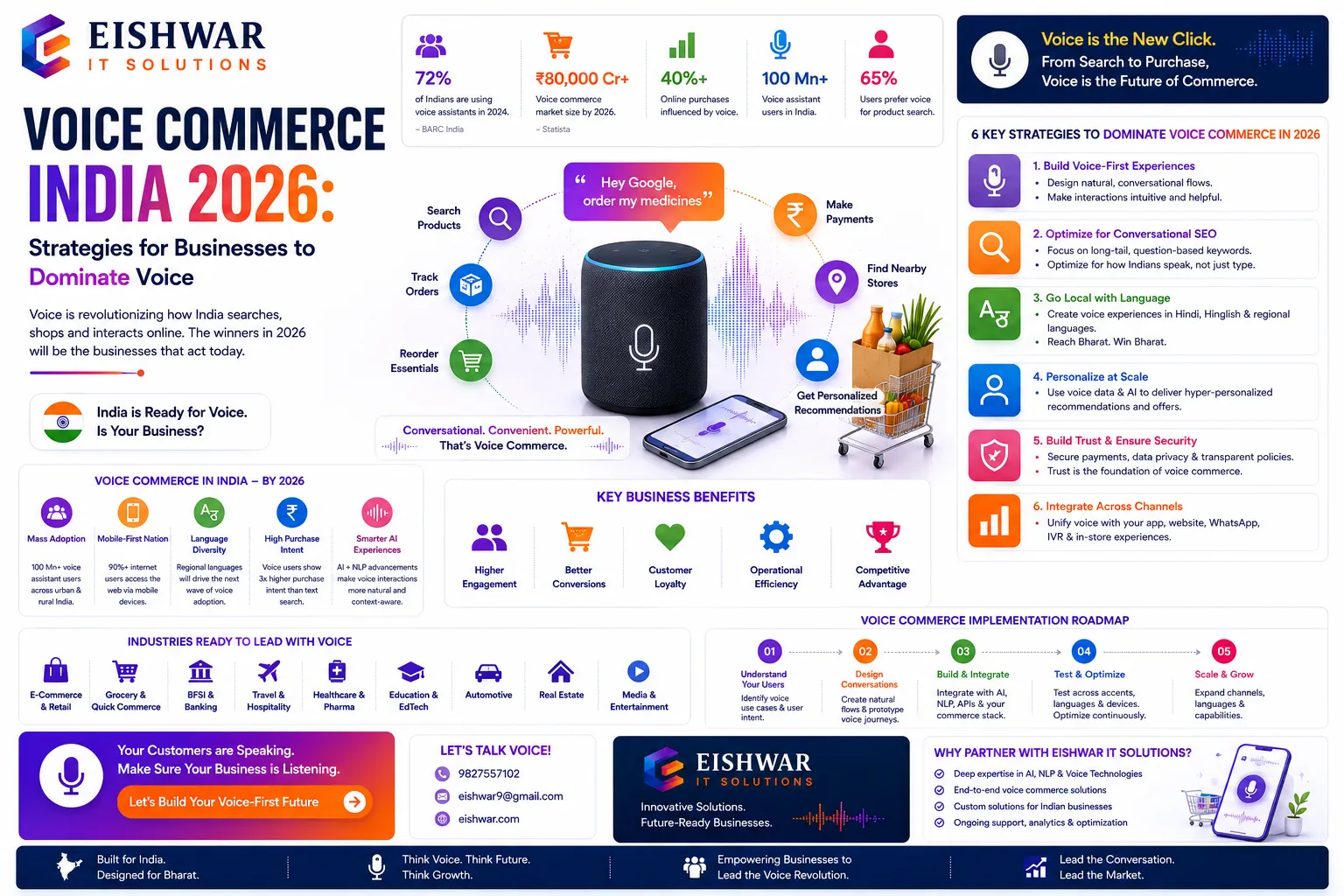
Voice Commerce India 2026: Strategies for Businesses to Dominate Voice-Activated Shopping
Introduction
Imagine asking your smart speaker to order groceries, book a cab, or pay a bill—all without lifting a finger. This is not a sci-fi dream; it's the reality of voice commerce in India in 2026. With the proliferation of affordable smartphones, cheap data plans, and voice assistants like Alexa, Google Assistant, and Siri, voice-activated shopping is becoming mainstream. For business owners, marketers, and professionals, understanding this shift is no longer optional—it's essential for staying competitive.
In this article, we'll explore the rise of voice commerce in India, provide actionable strategies to capitalize on it, and share expert tips to avoid common pitfalls. Whether you run a small local shop or a large enterprise, these insights will help you tap into the voice-first future.
Main Section 1: Understanding Voice Commerce in the Indian Context
Voice commerce refers to the use of voice commands to search for products, make purchases, or complete transactions through voice-enabled devices. In India, this trend is fueled by high mobile penetration, increasing internet literacy, and a growing comfort with voice interfaces—especially among non-English speakers. By 2026, experts predict that voice commerce will account for over 20% of all e-commerce transactions in India, driven by a combination of technological advancements and shifting consumer behaviors.
Key drivers include:
- Local language support: Voice assistants now understand Hindi, Tamil, Telugu, Bengali, and more, making shopping accessible to millions of users who prefer interacting in their native tongues. For instance, a user in rural Uttar Pradesh can say, "Alexa, mere liye chawal order karo," and complete a purchase seamlessly.
- Convenience: Voice commands save time, especially for repeat purchases like groceries or household items. A busy professional in Bengaluru can reorder monthly supplies while cooking dinner, eliminating the need to browse apps.
- Smart speaker adoption: Devices like Amazon Echo and Google Nest are becoming common in urban Indian homes, with sales growing at 40% year-over-year as of 2025. This hardware penetration creates a natural ecosystem for voice commerce.
For example, a user in Mumbai can say, "Hey Google, order my usual milk from Amul," and the transaction completes in seconds. This seamless experience is driving loyalty and repeat business, with early adopters reporting a 25% increase in purchase frequency. Additionally, the rise of voice-enabled mobile apps—like those from Flipkart and Paytm—means that even without a smart speaker, users can leverage voice for shopping on their phones.
Main Section 2: Actionable Strategies to Optimize for Voice Commerce
To succeed in voice commerce, businesses must adapt their digital presence. Here are proven strategies with practical tips to implement them effectively:
1. Optimize for Voice Search
Voice searches are longer and more conversational than text searches. For instance, instead of typing "best smartphone under 15000," a user might say, "Which is the best smartphone under 15000 rupees with good camera?" Use natural language keywords and long-tail phrases in your product descriptions, FAQs, and blog content. A practical tip: analyze your customer support queries to identify common conversational phrases, then incorporate those into your SEO strategy. Tools like AnswerThePublic can help uncover voice search patterns.
2. Create Voice-Friendly Product Listings
Ensure your product titles and descriptions are clear and concise. Voice assistants often read the first few lines of a product description aloud. Include key details like brand, size, price, and key features in the first 50 words. For example, instead of a vague title like "Men's Shirt," use "Men's Blue Cotton Shirt, Size M, ₹999, Free Delivery." This not only improves voice search accuracy but also enhances user experience when the assistant reads the listing.
3. Implement Structured Data Markup
Use schema markup (like Product schema, FAQ schema) to help search engines understand your content. This increases the chances of your products being featured in voice search results or Google Assistant actions. A practical example: adding Product schema with fields like price, availability, and reviews can trigger rich snippets in voice responses. Use Google's Structured Data Testing Tool to validate your markup.
4. Build a Voice App or Skill
Consider developing a custom voice app for platforms like Alexa Skills or Google Actions. For example, a restaurant chain can create a skill that allows users to order food by voice, saying, "Alexa, order my usual from Domino's." This builds brand loyalty and provides a direct sales channel. Start with a simple skill that handles one use case—like reordering a favorite item—and expand based on user feedback. Amazon's Alexa Skills Kit offers free templates to get started.
5. Focus on Local SEO
Many voice searches are local, like "find a plumber near me" or "buy vegetables in Delhi." Optimize your Google My Business profile, collect reviews, and use local keywords to appear in voice results. A practical tip: ensure your business hours, address, and phone number are accurate across all directories. Also, encourage satisfied customers to leave voice-friendly reviews, as these are often read aloud by assistants.
Main Section 3: Real-World Examples and Best Practices
Indian brands are already leveraging voice commerce. Here are a few inspiring examples with detailed insights:
- Flipkart: The e-commerce giant launched a voice search feature in Hindi and English, allowing users to shop hands-free. This led to a 30% increase in conversions from voice users. They achieved this by integrating natural language processing (NLP) to understand regional accents and slang, such as "sasta phone" for budget smartphones.
- Tata Cliq: Integrated with Google Assistant to enable voice-based product discovery and ordering. Users can say, "Ok Google, ask Tata Cliq to find me a blue shirt." The company reported a 20% reduction in cart abandonment due to the streamlined voice interface.
- Local Kirana Stores: Small retailers are using voice-enabled ordering systems via WhatsApp bots, making it easy for customers to place repeat orders. For example, a store in Pune uses a bot that recognizes voice messages like "same as last week" and processes the order automatically, saving time for both the shopkeeper and customer.
Best practices include testing your voice experience regularly with real users, gathering feedback through surveys, and ensuring your payment process is voice-friendly (e.g., enabling voice PINs or biometric verification). Also, monitor analytics to track voice search queries and adjust your strategy accordingly.
Expert Tips
We spoke with industry leaders to gather their top tips for voice commerce success:
- Ravi Sharma, Digital Transformation Consultant: "Start small. Pick one product category and optimize it for voice search. Measure results before scaling. For instance, if you sell electronics, focus on voice queries like 'best laptop for students' and track conversion rates."
- Priya Mehta, E-commerce Strategist: "Don't ignore security. Voice transactions can be vulnerable to eavesdropping or unauthorized access. Implement multi-factor authentication, such as combining voice recognition with a one-time password, and educate users about safe practices like not sharing voice PINs."
- Ankit Gupta, Voice Technology Expert: "Invest in natural language processing (NLP) tools to understand user intent better. The more accurate your responses, the higher the conversion. For example, use sentiment analysis to detect frustration in voice queries and route users to customer support."
Common Mistakes
Avoid these pitfalls when entering voice commerce:
- Ignoring mobile optimization: Most voice searches happen on mobile. Ensure your site is mobile-friendly and loads fast. A delay of even one second can lead to a 20% drop in conversions. Use tools like Google PageSpeed Insights to test performance.
- Overcomplicating voice commands: Keep the user journey simple. Too many steps can frustrate users and lead to abandonment. For example, avoid requiring users to confirm multiple times; instead, use a single command like "Order now" with a confirmation prompt.
- Neglecting user privacy: Voice data is sensitive. Be transparent about data usage and comply with Indian data protection laws, such as the Digital Personal Data Protection Act, 2023. Clearly state how voice recordings are stored and used in your privacy policy.
- Forgetting about customer support: Have a plan for handling voice-based complaints or returns. A chatbot can handle simple queries, but complex issues may need human intervention. For instance, if a user says, "My order is wrong," route them to a live agent who can access their order history.
Future Trends
The voice commerce landscape is evolving rapidly. Here's what to watch for in the coming years:
- Multilingual voice commerce: As AI improves, voice assistants will seamlessly switch between languages, opening up rural markets. For example, a user in Tamil Nadu might start a query in Tamil and switch to English for specific product names, with the assistant understanding both.
- Voice-enabled payments: Biometric authentication (like voice prints) will make payments faster and more secure. Companies like Amazon are already testing voice-based payment confirmation, reducing fraud while maintaining convenience.
- Integration with IoT: Smart refrigerators, cars, and wearables will enable voice ordering directly from devices. Imagine your smart fridge detecting low milk levels and asking, "Shall I order milk?"—and you simply say "Yes."
- Personalized voice experiences: AI will remember user preferences, offering tailored product recommendations via voice. For instance, a voice assistant might suggest, "You usually buy organic coffee. Would you like to reorder the same brand?" based on past purchases.
FAQs
What is voice commerce?
Voice commerce is the use of voice commands to search for products, make purchases, or complete transactions through voice-enabled devices like smart speakers, smartphones, or voice assistants. It leverages natural language processing to understand user intent and streamline the shopping experience.
How can small businesses in India benefit from voice commerce?
Small businesses can optimize their Google My Business profiles, use local SEO, and create voice-friendly product listings. They can also integrate with voice assistants like Alexa for hands-free ordering, especially for repeat purchases like groceries or household items. For example, a local bakery can enable voice ordering for daily bread, reducing customer effort and increasing loyalty.
What are the best practices for voice search optimization?
Use conversational keywords, implement structured data markup, optimize for local searches, and ensure your website is mobile-friendly and fast. Also, create FAQ pages that answer common voice queries, such as "How do I return a product?" or "What is your return policy?" This helps voice assistants provide accurate responses.
Is voice commerce secure?
Yes, when implemented correctly. Use multi-factor authentication, encrypt voice data, and comply with data protection regulations like India's Digital Personal Data Protection Act. Educate users about safe voice shopping practices, such as not sharing voice PINs and using secure networks for transactions.
What are the future trends in voice commerce for India?
Trends include multilingual support, voice-enabled payments using biometrics, integration with IoT devices like smart refrigerators, and personalized voice experiences driven by AI. These will make voice commerce more accessible and convenient for Indian consumers, especially in rural areas where voice is the primary digital interface.
How do I start with voice commerce for my business?
Start by auditing your current digital presence for voice search readiness. Optimize product listings with conversational keywords, add structured data markup, and claim your Google My Business profile. Then, consider building a simple voice skill or app for one product category. Use analytics to track voice queries and refine your approach. Partnering with a voice technology expert can accelerate the process.
Conclusion
Voice commerce is not a passing trend—it's a fundamental shift in how Indian consumers shop. By optimizing for voice search, creating voice-friendly experiences, and staying ahead of emerging technologies like multilingual AI and IoT integration, your business can capture a significant share of this growing market. Start today with small steps, such as refining your product listings or testing a voice skill, measure your results, and scale as you learn. The voice-first future is here—make sure your business is heard loud and clear.
CTA
Ready to make your business voice-ready? Contact EishwarITSolution today for a free consultation on voice commerce optimization. Our experts will help you build a strategy that drives sales and customer loyalty, from voice search SEO to custom skill development. Don't wait—your competitors are already listening.