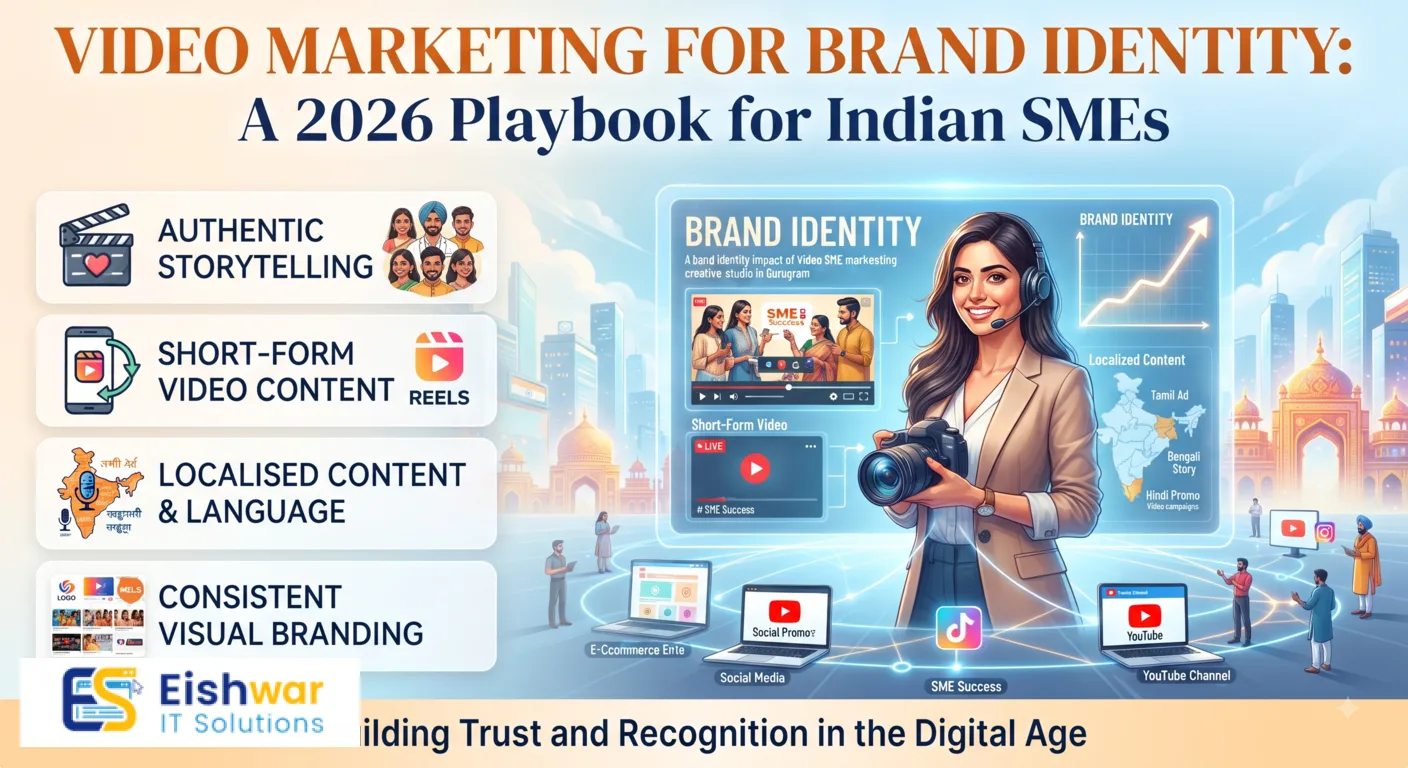
Video Marketing for Brand Identity: A 2026 Playbook for Indian SMEs
Introduction
In 2026, video is no longer an option—it's a necessity for brand identity. For Indian SMEs, video marketing offers a powerful way to connect with audiences, tell your story, and stand out in a crowded market. This guide walks you through strategies, examples, and actionable steps to build a brand that resonates through video. With over 800 million internet users in India and video consumption growing at 40% year-over-year, SMEs that ignore video risk being invisible. Whether you run a boutique in Jaipur or a tech startup in Bengaluru, video can humanize your brand and drive measurable results. Let’s dive into how you can leverage video to create a lasting brand identity.
Main Section 1: Why Video Marketing is Crucial for Brand Identity
Video creates emotional connections. It combines visuals, sound, and storytelling to convey your brand's personality. For Indian SMEs, video helps humanize your business, build trust, and differentiate from competitors. Studies show that viewers retain 95% of a message when watched in video, compared to 10% when read. In a market where trust is a key purchase driver—especially in Tier 2 and Tier 3 cities—video bridges the gap between anonymity and familiarity.
Example: A local bakery in Mumbai using short recipe videos to showcase its ingredients and process builds authenticity and customer loyalty. The bakery, "Sweet Layers," saw a 30% increase in foot traffic after posting weekly behind-the-scenes clips of their cake decorating. Similarly, a small electronics repair shop in Delhi used video testimonials from satisfied customers to build credibility, resulting in a 50% boost in inquiries. Video also improves SEO—websites with video are 53 times more likely to rank on Google’s first page. For Indian SMEs, this means better visibility without a hefty ad budget.
Practical Tip: Start with a simple smartphone video of your team at work. Share it on WhatsApp Business or Instagram to gauge response. The goal is to show, not just tell, what your brand stands for.
Main Section 2: Types of Video Content for Brand Building
Choose the right format for your goals. Not all videos serve the same purpose, and matching format to objective is critical for ROI.
- Brand Story Videos: Share your mission, values, and journey. For example, a handloom brand in Varanasi can create a 3-minute film about how they source fabric from local weavers, emphasizing sustainability and heritage.
- Product Demos: Show how your product solves problems. A kitchen appliance SME could demonstrate a mixer grinder’s durability by blending tough spices, addressing common customer concerns about longevity.
- Customer Testimonials: Real people, real results. Film a short interview with a loyal customer in their home or office. Keep it unscripted for authenticity. A small fitness studio in Pune used member transformation stories to attract new clients, doubling their membership in six months.
- Behind-the-Scenes: Humanize your team and processes. Show your packaging line, a team meeting, or a day in the life of your founder. This builds transparency and relatability.
- Educational Content: Establish authority in your niche. A financial advisory SME can create short videos explaining tax-saving tips in Hindi, positioning themselves as trusted experts.
- User-Generated Content (UGC): Encourage customers to share videos using your product. Repost these on your channels—it’s free social proof. A small cosmetics brand in Hyderabad ran a #MyGlowStory campaign, receiving over 200 customer videos in a month.
For Indian SMEs, use local languages and cultural references to increase relatability. For instance, a food brand in Tamil Nadu can use Tamil with English subtitles to reach both local and diaspora audiences. Also, leverage festivals—create Diwali specials or Holi-themed videos to tap into emotional moments.
Main Section 3: Practical Steps to Implement Video Marketing
Start small and scale. Many SMEs fail because they try to do too much too soon. Follow this step-by-step approach:
- Define your brand voice and visual style. Write down three adjectives that describe your brand (e.g., friendly, professional, innovative). Use these to guide your video tone, color palette, and music choices. Create a simple style guide—even a one-page document—to ensure consistency across all videos.
- Choose platforms where your audience spends time. YouTube for long-form (tutorials, vlogs), Instagram Reels for short-form (behind-the-scenes, tips), and LinkedIn for B2B (case studies, thought leadership). For local reach, consider WhatsApp Business and Facebook. For example, a textile SME targeting export buyers should focus on LinkedIn and YouTube, while a local restaurant should prioritize Instagram and WhatsApp.
- Create a content calendar with consistent posting. Plan one month ahead. Include themes for each week (e.g., Monday: tips, Wednesday: customer story, Friday: product demo). Use free tools like Google Calendar or Trello to schedule. Consistency builds audience expectation and algorithm favorability.
- Invest in good lighting and audio, even with a smartphone. A ring light (₹1,000-2,000) and a lapel microphone (₹500-1,500) can dramatically improve quality. Avoid shooting in noisy environments—use a quiet room with natural light. For product demos, use a clean background or a branded backdrop.
- Analyze metrics like watch time, shares, and comments to refine. Use platform analytics (Instagram Insights, YouTube Studio) to see what works. If a video on "How to Use Our Product" gets high watch time but low shares, consider adding a call-to-action to share. If a humorous video gets high engagement, create more of that style.
Tip: Use free tools like Canva for simple video editing and captions. CapCut (free) is excellent for trimming, adding text, and transitions. For more advanced editing, DaVinci Resolve offers a free version with professional features. Also, repurpose content—turn a long YouTube video into three Instagram Reels or five LinkedIn posts to maximize reach.
Expert Tips
- Keep videos under 2 minutes for social media; longer for YouTube. Attention spans are short. For Instagram Reels, aim for 15-30 seconds. For YouTube, 5-10 minutes is ideal for tutorials or in-depth content. Test different lengths and track drop-off rates.
- Add captions for silent viewing (most users watch without sound). Use auto-captioning tools on Instagram or YouTube, but manually review for accuracy, especially if using regional languages. Captions also improve accessibility and SEO.
- Use a consistent color palette and logo placement. Choose 2-3 brand colors and use them in text overlays, backgrounds, and thumbnails. Place your logo in the same corner (e.g., bottom right) for brand recall. Tools like Canva allow you to create branded templates.
- Collaborate with micro-influencers to expand reach. Identify influencers in your niche with 5,000-50,000 followers. They often have higher engagement rates than mega-influencers. Offer free products or a small fee. For example, a small organic tea brand in Assam partnered with a local food blogger, resulting in 10,000 views and 200 direct orders in a week.
- Test different formats—live, recorded, short-form, long-form. Live videos (Instagram Live, YouTube Live) build real-time connection. Recorded videos allow editing for polish. Short-form works for awareness; long-form for education. A/B test thumbnails and titles to see what drives clicks.
- Optimize for mobile-first viewing. Over 70% of Indian users watch videos on mobile. Shoot in vertical (9:16) for Reels and Shorts, and horizontal (16:9) for YouTube. Ensure text is large enough to read on small screens.
Common Mistakes
- Ignoring mobile optimization (most Indian users watch on phones). Avoid small text, complex graphics, or horizontal-only content that requires turning the phone. Test your videos on a mobile device before publishing.
- Being too salesy—focus on value first. Pushy calls-to-action or constant product plugs turn viewers off. Instead, educate, entertain, or inspire. For example, a plumbing service SME can create a video on "5 Signs Your Water Heater Needs Repair" rather than "Buy Our Service Now."
- Inconsistent posting schedule. Posting three videos in a week and then nothing for a month confuses your audience and algorithms. Set a realistic schedule—even one video per week—and stick to it. Use scheduling tools like Buffer or Hootsuite (free tiers available).
- Neglecting analytics and feedback. Posting without reviewing metrics is like driving without a map. Check weekly: which videos had highest retention? Which got most comments? Use insights to pivot. Also, respond to comments to build community.
- Using poor audio or lighting. Viewers forgive shaky footage but not bad audio. A buzzing fan or echo can make your brand seem unprofessional. Invest in a basic microphone and shoot in well-lit areas. Natural light from a window works wonders.
- Copying competitors without adding unique value. If every SME in your niche is doing the same type of video, find a different angle. For instance, if competitors focus on product features, you could focus on customer stories or industry insights.
Future Trends
In 2026, interactive video (shoppable, quizzes), AI-generated personalized videos, and live streaming for real-time engagement will dominate. Indian SMEs should experiment with short-form vertical videos (Reels, Shorts) and leverage regional languages to tap into Bharat markets. Shoppable videos—where viewers can click to buy directly—are gaining traction on Instagram and YouTube. For example, a small fashion brand in Lucknow can tag products in a Reel, allowing viewers to purchase without leaving the app. AI tools like Synthesia can create personalized video messages for customers at scale, ideal for B2B follow-ups. Live streaming on YouTube or Facebook for product launches or Q&A sessions builds immediacy and trust. Also, augmented reality (AR) filters on Instagram can let customers virtually try products—a boon for eyewear or cosmetics SMEs. Finally, voice search optimization for video titles and descriptions will become crucial as smart speakers proliferate in Indian households.
FAQs
1. Do I need expensive equipment for video marketing?
No. A modern smartphone with good lighting and a microphone can produce high-quality videos. Focus on content and storytelling. Many successful Indian SMEs started with just a phone and natural light. As you grow, consider investing in a tripod (₹1,000-2,000) and a basic editing software subscription.
2. Which platform is best for Indian SMEs?
YouTube for long-form, Instagram Reels for short-form, and LinkedIn for B2B. Choose based on your target audience. For local businesses (e.g., a salon or restaurant), Facebook and WhatsApp are also effective. Test one platform first, master it, then expand. For example, a B2B software SME in Pune found LinkedIn generated 80% of their leads from video posts.
3. How often should I post videos?
Consistency matters more than frequency. Start with 1-2 videos per week and adjust based on engagement. If you can only manage one per week, that’s fine—just ensure it’s high quality. Use a content calendar to plan ahead. For example, a small coaching center in Chennai posts one educational video every Tuesday and sees steady growth in subscribers.
4. Can video marketing work for B2B SMEs?
Absolutely. Case studies, explainer videos, and thought leadership clips build credibility and trust with business clients. For instance, a logistics SME in Gujarat created a 2-minute video explaining their tracking system, which helped them win a contract with a major e-commerce player. B2B buyers often watch videos to research solutions before contacting sales.
5. How do I measure video marketing success?
Track views, watch time, engagement (likes, shares, comments), click-through rates, and conversion metrics like sign-ups or sales. Use platform analytics and set up UTM links for website traffic. For example, if a video on "How to Clean Your AC" drives 100 inquiries to your service page, that’s a clear ROI. Also, monitor brand mentions and sentiment in comments.
6. What if I don’t have time to create videos?
Outsource to freelancers or agencies, or repurpose existing content. For example, turn a blog post into a short video script. Use AI tools like Pictory or Lumen5 to convert text to video quickly. Even one video per month is better than none—start small and scale as you see results.
7. How can I make my videos stand out in a crowded market?
Focus on your unique story and value proposition. Use local flavors—language, music, settings—that resonate with your audience. For example, a spice brand in Kerala can use traditional cooking scenes and Malayalam narration. Also, experiment with humor, emotion, or surprise to capture attention in the first 3 seconds.
Conclusion
Video marketing is a game-changer for Indian SMEs aiming to build a strong brand identity. Start with a clear strategy, focus on storytelling, and leverage the right platforms. Consistency and authenticity will set you apart. Remember, you don’t need a Hollywood budget—just a smartphone, a good idea, and the willingness to connect with your audience. The Indian market is ripe for SMEs that embrace video; those who delay risk being left behind. Take the first step today, and watch your brand identity grow.
CTA
Ready to transform your brand with video? Contact EishwarITSolution today for expert guidance and tailored video marketing strategies. Our team specializes in helping Indian SMEs create impactful video content that drives brand identity and business growth. Get a free consultation and sample video strategy within 48 hours.