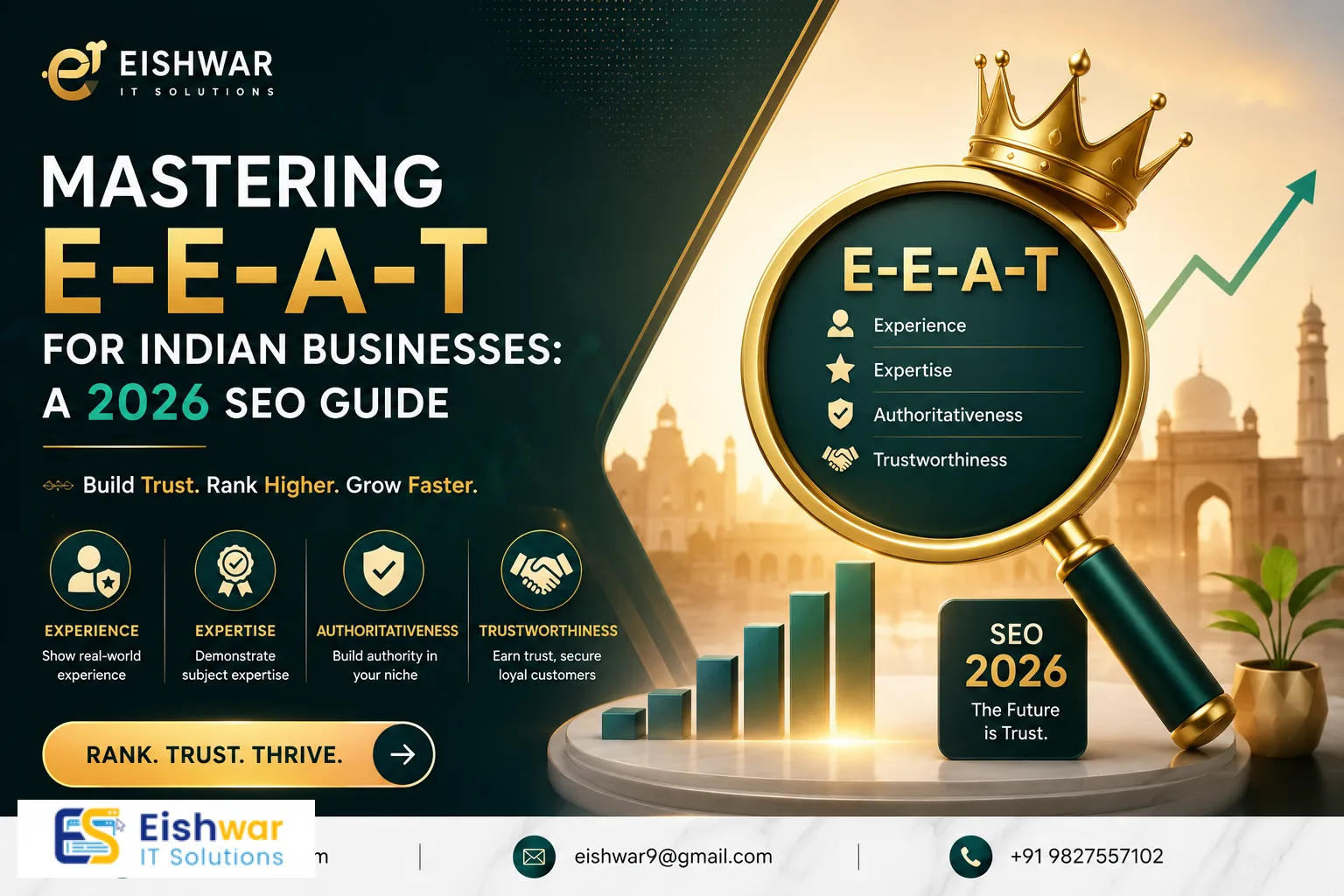
Mastering E-E-A-T for Indian Businesses: How Expertise, Experience, Authoritativeness, and Trustworthiness Drive SEO Success in 2026
Introduction
In the ever-evolving world of SEO, one acronym has become the gold standard for content quality: E-E-A-T. Standing for Experience, Expertise, Authoritativeness, and Trustworthiness, this framework is not just a guideline—it's a core component of Google's search quality evaluation. For Indian businesses, especially those targeting local markets, mastering E-E-A-T is no longer optional. In 2026, as competition intensifies and user expectations rise, demonstrating these qualities can be the difference between page one and obscurity.
But what does E-E-A-T mean for a small business in Mumbai, a tech startup in Bangalore, or a family-run shop in Delhi? It's about showing Google and your audience that you are a credible source—someone who has real-world experience, deep knowledge, and a reputation worth trusting. This guide will walk you through each pillar of E-E-A-T, with practical, actionable strategies tailored for the Indian market. Let's dive in.
Main Section 1: Understanding E-E-A-T in the Indian Context
E-E-A-T stands for Experience, Expertise, Authoritativeness, and Trustworthiness. These are not direct ranking factors, but they are used by Google's human quality raters to assess the overall quality of a website. In India, where trust is often built through personal relationships and community reputation, translating these online can be challenging but rewarding. For instance, a local restaurant in Jaipur that shares stories of family recipes and customer interactions online builds a stronger connection than one that simply lists menu items. Let's break down each pillar with Indian examples.
Experience: Real-World Credibility
Experience means your content demonstrates first-hand knowledge. For example, a travel blog about Kerala should include personal anecdotes, photos, and tips from actual visits—like describing the best time to visit Munnar to avoid crowds or recommending a lesser-known homestay. For a digital marketing agency like EishwarITSolution, sharing case studies with real client results—such as "How We Boosted Leads for a Pune Real Estate Firm by 150% in 3 Months"—shows experience. In India, where word-of-mouth is powerful, showcasing your journey and client success stories builds immediate credibility. Consider adding video testimonials or behind-the-scenes clips of your team at work to humanize your brand.
Expertise: Knowledge That Shines
Expertise is about having the credentials or deep knowledge in your field. For a medical website, it's having doctors review content and including their qualifications, like MBBS or MD. For a marketing blog, it's citing industry research—for instance, referencing a 2025 report on Indian consumer behavior from a source like Nielsen or Statista. Indian businesses can leverage local certifications, awards, or partnerships to demonstrate expertise. For example, a certified Google Partner badge is a strong signal for an SEO agency, while a FSSAI license for a food blog adds authority. Additionally, publishing original data, such as a survey on shopping habits in Tier-2 cities, can position you as a thought leader.
Authoritativeness: Being the Go-To Source
Authoritativeness is earned when other reputable sites mention you, when you are cited in industry publications, or when you have a strong backlink profile. In India, being featured in leading business magazines like Forbes India or Economic Times can skyrocket your authority. Even local news mentions from credible regional outlets, such as a Times of India article about your startup, add significant weight. To build this, actively pitch guest posts to industry blogs, participate in webinars, or collaborate with influencers. For example, a Delhi-based fashion brand could partner with a popular lifestyle blogger for a co-created collection, earning mentions and links.
Trustworthiness: The Foundation
Trustworthiness covers everything from secure HTTPS connections to transparent contact information, clear privacy policies, and accurate content. For Indian users, displaying a physical address, phone number, and GST number builds trust. Also, having genuine customer reviews on platforms like Google My Business and Justdial is crucial. A practical tip: respond to every review—positive or negative—within 24 hours. For e-commerce sites, include clear return policies and secure payment badges. For example, a Mumbai-based online store that shows its return policy upfront and uses SSL certificates will see higher conversion rates.
Main Section 2: Practical Strategies to Improve E-E-A-T for Your Indian Business
Now that you understand the pillars, let's look at actionable steps you can take today to boost your E-E-A-T signals.
1. Build Experience with Rich Case Studies
Create detailed case studies that highlight your work with Indian clients. Include the challenge, your approach, and measurable results. Use real names (with permission) and data. For example, "How We Increased Traffic for a Jaipur Handicraft Store by 300% in 6 Months" could detail the specific SEO techniques used, such as optimizing for local keywords like 'handmade blue pottery Jaipur' and building backlinks from local tourism sites. This not only shows experience but also provides social proof. Add visuals like before-and-after graphs or screenshots of analytics to make it compelling.
2. Showcase Expertise Through Author Bios and Content Quality
Every blog post should have a clear author byline with a short bio that lists credentials. If possible, use real names and photos. For a law firm, mention the lawyer's bar council registration number. For a tech company, highlight certifications like AWS or Google Cloud. Also, cite authoritative sources—link to government websites (e.g., India's Ministry of Electronics and IT), industry reports, or academic studies. For instance, a blog on digital payments in India could link to RBI guidelines. Ensure your content is fact-checked and updated regularly.
3. Earn Authoritativeness via Local SEO and PR
Get listed on reputable Indian business directories like IndiaMART, TradeIndia, and local chambers of commerce. Submit guest posts to well-known industry blogs or local news sites like YourStory or Inc42. Participate in local events, webinars, or podcasts—for example, speaking at a TiE conference or a NASSCOM event. Each mention from a credible source builds your authority. Also, actively manage your Google Business Profile—respond to reviews and post updates regularly, such as offers or event announcements. Use structured data markup for your organization to help search engines understand your authority signals.
4. Strengthen Trust with Transparency and Security
Ensure your website uses HTTPS. Display your business address, phone number, and email prominently in the header or footer. Add a clear privacy policy and terms of service page. For e-commerce sites, show secure payment badges (like Razorpay or Paytm) and easy return policies. Encourage customers to leave reviews on Google and respond to them—both positive and negative—professionally. For example, if a customer complains about delayed delivery, apologize publicly and offer a solution. This shows you value feedback.
5. Leverage User-Generated Content (UGC)
Encourage customers to share their experiences. Feature their testimonials, photos, or video reviews on your site. UGC not only adds fresh content but also signals trust and real-world validation. For a restaurant in Chennai, embedding Instagram posts from happy customers—like a photo of their biryani with a caption—creates a powerful trust signal. Run contests or campaigns asking users to share their stories, and feature the best ones on your website or social media.
Main Section 3: Integrating E-E-A-T into Your Content Strategy
Your content is the primary vehicle for E-E-A-T. Here's how to optimize it for each pillar.
Content That Demonstrates Experience
Write from a first-person perspective when appropriate. Share behind-the-scenes stories, lessons learned, and practical tips. For example, "What I Learned Running a Digital Marketing Campaign for a Pune Startup" could include specific challenges like budget constraints or cultural nuances. This personal touch resonates with Indian audiences who value authenticity. Use real examples from your work, such as a failed campaign and what you learned from it.
Content That Shows Expertise
Create in-depth guides, tutorials, and whitepapers. Use data, charts, and expert quotes. For a financial advisor, publish articles on tax-saving strategies under Indian tax laws, like Section 80C deductions. For a real estate agent, explain the home-buying process in a specific city like Hyderabad, including stamp duty rates and registration fees. The more specific and actionable, the better. Include step-by-step instructions and checklists to add value.
Content That Builds Authority
Publish original research, surveys, or industry reports. For example, "The State of Digital Marketing in Tier-2 Cities in India 2026" could include data from a survey of 500 businesses, highlighting trends like increased mobile usage. Such content is highly linkable and positions you as a thought leader. Also, collaborate with influencers or experts for co-authored pieces—for instance, a joint blog with a well-known SEO expert on voice search trends in India.
Content That Enhances Trust
Be transparent about your affiliations, sponsored content, and any potential biases. Correct errors promptly and visibly—add a note at the top of the post if you've made a correction. Include a fact-checking process for your content. For a health blog, always include a disclaimer that the content is for informational purposes and not medical advice, and cite sources like the Indian Council of Medical Research (ICMR).
Expert Tips
- Update Older Content: Regularly refresh your older blog posts with new data, examples, and improved formatting. Google values fresh, up-to-date information. For example, update a 2023 post on 'Best SEO Tools' to include new tools like Surfer SEO or Frase.
- Use Structured Data: Implement schema markup for author, organization, and reviews. This helps search engines understand your credibility signals. Use tools like Google's Structured Data Markup Helper to add it easily.
- Build a Strong Internal Linking Structure: Link to your best, most authoritative pages. This distributes authority and helps users find deeper content. For instance, in a blog about local SEO, link to your case study on a local business success.
- Monitor Your Brand Mentions: Use tools like Google Alerts or Brand24 to track mentions. Reach out to sites that mention you and ask for a link. For example, if a blogger mentions your product, request a backlink to your site.
- Encourage External Reviews: Beyond Google, get listed on industry-specific review sites. For a software company, that could be G2 or Capterra. For a local service, it's Justdial or Sulekha. Respond to all reviews to show engagement.
Common Mistakes
- Ignoring Author Bios: Many Indian business websites have no author information. This is a missed opportunity to show expertise. Always include a bio with credentials and a photo.
- Thin Content: Publishing short, low-value articles just for the sake of posting. Every piece should add genuine value. Aim for at least 500 words per post, with original insights.
- Neglecting Negative Reviews: Deleting or ignoring negative feedback. Instead, address them professionally and publicly. This shows you care about customer satisfaction.
- Over-Optimizing Anchor Text: Using exact-match keywords in backlinks. This can look manipulative. Use natural, branded, or generic anchor text like 'click here' or 'learn more'.
- Not Having a Clear Contact Page: A missing or vague contact page erodes trust. Always include multiple ways to reach you—phone, email, and a physical address.
Future Trends
As we move through 2026, E-E-A-T will become even more integrated into Google's algorithms. Here are trends to watch:
- AI and Content Authenticity: With the rise of AI-generated content, Google will prioritize content that shows genuine human experience. Use AI as a tool, but always add your unique insights. For example, use AI to draft an outline, then fill it with personal stories and expert opinions.
- Video and Visual E-E-A-T: Expect Google to evaluate visual content for E-E-A-T. Ensure your videos feature real experts and are hosted on secure platforms like YouTube or Vimeo. Add transcripts and captions for accessibility.
- Local E-E-A-T Signals: Google will increasingly consider local citations, reviews, and community involvement as trust signals. For Indian businesses, being active in local events and charities will help. Sponsor a local cricket tournament or participate in a cleanliness drive, and mention it on your site.
- User Interaction Signals: Metrics like dwell time, bounce rate, and click-through rate will indirectly reflect trust. Create engaging, easy-to-navigate content with clear headings, bullet points, and images. Use tools like Hotjar to analyze user behavior.
FAQs
What is E-E-A-T in SEO?
E-E-A-T stands for Experience, Expertise, Authoritativeness, and Trustworthiness. It's a framework used by Google's quality raters to assess the quality of web content. While not a direct ranking factor, it heavily influences how Google evaluates your site's credibility. For example, a health website with doctor-reviewed content and secure connections will rank higher than one without.
How can Indian small businesses improve E-E-A-T?
Start by creating detailed case studies, adding author bios with credentials, securing your website with HTTPS, and actively collecting and responding to customer reviews on Google and local directories like Justdial. For instance, a small bakery in Delhi could share a case study on how they increased online orders by 50% using social media ads, and display their FSSAI license on the site.
Does E-E-A-T affect local SEO?
Yes, significantly. For local businesses, trust signals like accurate NAP (Name, Address, Phone) information, positive reviews, and local citations are part of E-E-A-T. A well-optimized Google Business Profile with regular updates and responses to reviews boosts your local authority. For example, a plumber in Pune with consistent NAP across directories and 50+ positive reviews will outrank competitors.
Can AI-generated content pass E-E-A-T?
AI-generated content alone often lacks the first-hand experience and unique insight that E-E-A-T requires. However, you can use AI as a starting point and then heavily edit it to include personal experiences, expert quotes, and original data. Always have a human expert review before publishing. For instance, use AI to generate a draft on 'best SEO practices for Indian businesses,' then add your own case studies and local examples.
How long does it take to see E-E-A-T improvements in rankings?
E-E-A-T is a long-term strategy. You may start seeing improvements in 3-6 months as you consistently publish high-quality content, earn backlinks, and build a positive online reputation. Patience and consistency are key. For example, a startup that publishes weekly expert blogs and earns mentions from industry sites may see a 20% traffic increase in 6 months.
What are some quick wins for E-E-A-T?
Add a detailed 'About Us' page with team photos and bios, display your business license or certifications, enable HTTPS, and start collecting and showcasing customer testimonials. These are relatively easy to implement and have immediate impact. For instance, a local salon adding before-after photos and client reviews can see a 15% increase in bookings within a month.
How does E-E-A-T apply to YMYL (Your Money or Your Life) sites in India?
YMYL sites—those dealing with health, finance, legal, or safety topics—require even higher E-E-A-T. For example, a financial advice site in India should have content reviewed by a SEBI-registered advisor, cite official sources like RBI, and include clear disclaimers. Google holds these sites to a stricter standard because poor advice can harm users.
Conclusion
E-E-A-T is not a checklist—it's a commitment to quality, transparency, and genuine value. For Indian businesses, mastering this framework means aligning your online presence with the trust signals that matter most to both Google and your customers. Start small: update your author bios, secure your site, and publish one in-depth, experience-rich article this week. Over time, these efforts compound, building a foundation that withstands algorithm updates and competitive pressures. The digital landscape in India is booming, and those who invest in E-E-A-T today will lead tomorrow.
Ready to Build Unshakeable Trust Online?
If you want to elevate your brand's authority and dominate search rankings in 2026, EishwarITSolution is here to help. Our team specializes in crafting E-E-A-T-optimized content and SEO strategies tailored for the Indian market. Contact us today for a free consultation and let's build your digital legacy together.
CTA
<p>If you want to elevate your brand's authority and dominate search rankings in 2026, EishwarITSolution is here to help. Our team specializes in crafting E-E-A-T-optimized content and SEO strategies tailored for the Indian market. <a href="http://eishwar.com/contact">Contact us today</a> for a free consultation and let's build your digital legacy together.</p>