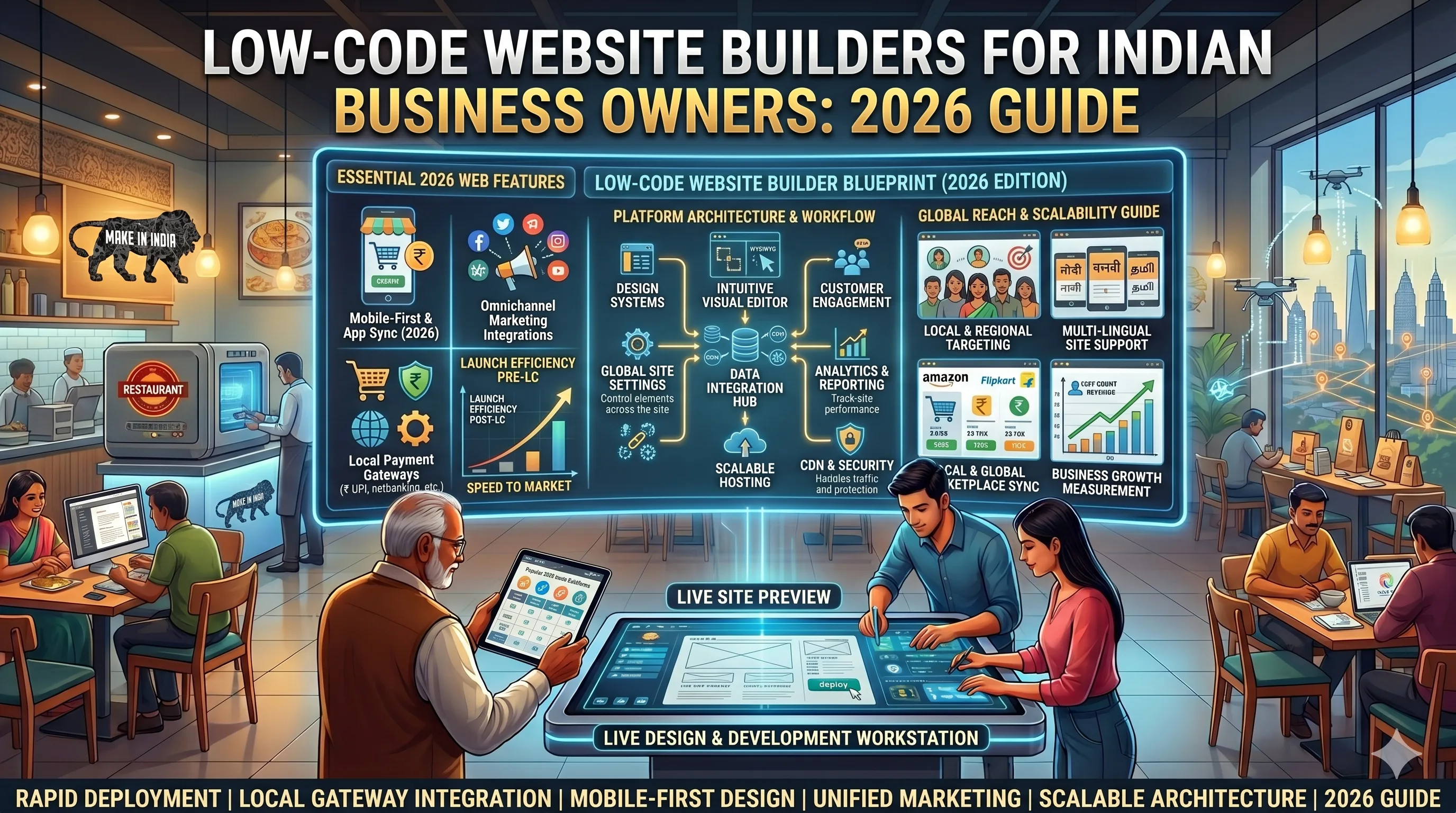
Low-Code Website Builders for Indian Business Owners: 2026 Guide
Introduction
In 2026, Indian business owners are embracing low-code website builders to create professional websites without hiring developers. These platforms offer drag-and-drop simplicity, powerful integrations, and cost-effective solutions. Whether you run a startup in Bangalore or a retail store in Bilaspur, low-code tools empower you to launch a stunning site in days, not months. The digital landscape in India is evolving rapidly, with over 800 million internet users and a thriving e-commerce market projected to reach $350 billion by 2030. For small and medium businesses, a website is no longer optional—it's the foundation of credibility and growth.
At EishwarITSolution, we help businesses leverage the best digital tools. This guide explores top low-code builders for the Indian market, expert tips, and common pitfalls to avoid. We'll dive deep into practical examples, cost comparisons, and regional considerations to ensure you make an informed decision.
Main Section 1: What Are Low-Code Website Builders and Why They Matter in 2026
Low-code platforms require minimal hand-coding. They use visual interfaces, pre-built templates, and modular components to speed up development. For Indian businesses, this means lower costs, faster time-to-market, and less reliance on scarce technical talent. According to a 2025 Gartner report, low-code adoption in Asia-Pacific grew by 40% year-over-year, with India leading the charge due to its vibrant startup ecosystem and digital payment infrastructure.
In 2026, low-code adoption in India is surging due to mobile-first audiences and the need for agile digital presence. Platforms like Wix, Bubble, and Webflow offer local payment gateways (e.g., Razorpay, Paytm) and regional language support. For instance, a boutique in Jaipur used Wix to integrate UPI payments and Hindi language options, resulting in a 30% increase in local orders within a month.
Example: A small restaurant in Raipur used a low-code builder to create a menu site with online ordering in just two days, costing under ₹5,000. The owner, who had no technical background, customized the template with photos of their dishes and integrated a delivery partner API. This practical approach saved them ₹50,000 compared to hiring a freelance developer.
Key benefits for Indian businesses include:
- Cost Efficiency: Average development cost for a basic website via a low-code builder is ₹3,000–₹15,000, versus ₹30,000–₹1,00,000 for custom development.
- Speed: Launch within days, not weeks. A Delhi-based tutoring center built a booking system in 48 hours using Bubble.
- Localization: Support for Indian languages (Hindi, Tamil, Bengali) and payment methods (UPI, NetBanking, COD).
- Scalability: Many platforms offer tiered plans that grow with your business, from a simple brochure site to a full-fledged e-commerce store.
Main Section 2: Top Low-Code Website Builders for Indian Business Owners
1. Wix – Best for Beginners
Wix offers 900+ templates, AI design assistant (Wix ADI), and robust SEO tools. It supports Indian payment gateways like Razorpay and Paytm, and has a free plan with Wix branding. Ideal for service businesses (salons, clinics) and small e-commerce stores. Pro tip: Use Wix's built-in booking system for appointment-based businesses. A Pune-based yoga studio used Wix to manage class schedules and accept payments, reducing administrative work by 20 hours per week.
2. Bubble – Best for Custom Apps
Bubble allows you to build web apps without code. It’s powerful for startups needing complex logic, like customer portals, marketplaces, or booking systems. Costs start at $25/month (approx. ₹2,100). Example: A Chennai-based logistics startup built a real-time tracking portal for clients using Bubble, integrating Google Maps API and SMS notifications. However, Bubble has a steeper learning curve—plan for 2–4 weeks to master the basics.
3. Webflow – Best for Design Control
Webflow gives pixel-perfect design freedom and clean code export. Great for agencies and creative professionals. Includes CMS and hosting. A Mumbai-based graphic designer used Webflow to create a portfolio site with custom animations, which helped them land a ₹2 lakh project. Note: Webflow’s pricing starts at $14/month (approx. ₹1,200), but e-commerce plans are higher.
4. Squarespace – Best for Aesthetics
Known for beautiful templates, Squarespace is perfect for photographers, artists, and small retailers. It integrates with Indian payment gateways via third-party apps like Razorpay. A Delhi-based photographer used Squarespace to showcase their work and sell prints, with a 15% conversion rate from visitors. However, Squarespace lacks native Indian language support, so you may need custom CSS for multilingual sites.
5. Zyro – Best for Affordability
Zyro offers low-cost plans ($2.90/month, approx. ₹240) with AI tools like logo maker and heatmaps. Good for micro-businesses on a tight budget. A street vendor in Varanasi used Zyro to create a simple site listing their products and contact info, costing under ₹3,000 annually. Limitations include fewer templates and basic e-commerce features.
6. Shopify (Low-Code) – Best for E-commerce
While Shopify is a dedicated e-commerce platform, its low-code approach with drag-and-drop themes and app integrations makes it accessible. It supports Indian payment gateways, shipping partners (Delhivery, Shiprocket), and multi-currency. A Bengaluru-based organic food brand scaled from 10 to 500 orders per month using Shopify’s low-code setup, with a total monthly cost of ₹2,500.
Main Section 3: How to Choose the Right Low-Code Platform for Your Indian Business
Consider these factors:
- Budget: Compare monthly/annual costs. Indian businesses often prefer no-commitment plans. For example, Zyro’s annual plan costs ₹2,880, while Webflow’s is ₹14,400. Factor in domain registration (₹500–₹1,000/year) and premium plugins.
- E-commerce needs: Look for built-in cart, payment gateways, and shipping integrations. Shopify and Wix excel here, while Squarespace may require third-party apps for COD.
- Local support: Check for Hindi/regional language templates and local customer service. Wix offers templates in Hindi, while Bubble has a community forum with Indian developers.
- SEO features: Ensure meta tags, custom URLs, and mobile optimization. Webflow and Wix have strong SEO tools, while Zyro is more limited.
- Scalability: Can the platform handle growth? Some low-code builders limit traffic or database size. Bubble allows scaling to thousands of users, but costs increase. Webflow’s CMS plans cap at 10,000 items.
Actionable tip: Start with a free trial. Test the builder with a sample page before committing. For instance, create a product page and test checkout with a dummy payment to ensure smooth integration.
Expert Tips
- Start with a clear sitemap: Plan your pages (Home, About, Services, Contact) to avoid redesign. Use tools like Lucidchart or even pen and paper to map out user flow.
- Use AI design tools: Platforms like Wix ADI can generate a site from your inputs in minutes. For example, a real estate agent in Gurgaon used Wix ADI to create a property listing site with 20 pages in under an hour.
- Optimize for mobile: Over 70% of Indian users browse on phones. Test your site on multiple devices using Google’s Mobile-Friendly Test. Ensure buttons are large enough for touch, and text is readable without zooming.
- Integrate analytics: Use Google Analytics or built-in stats to track visitor behavior. Set up goals for form submissions or purchases to measure ROI. A Jaipur-based bakery discovered that 60% of orders came from mobile users after analyzing analytics, prompting them to optimize their mobile checkout.
- Backup regularly: Export your site content manually – some builders lock you in. For Webflow, export HTML/CSS; for Wix, use third-party backup tools like BackupBuddy.
- Leverage local SEO: Add your business to Google My Business and use location-specific keywords. A clinic in Lucknow used “best dentist in Lucknow” in their site content and saw a 50% increase in local traffic.
Common Mistakes
- Overcomplicating design: Too many animations or fonts slow down load time. Keep it simple. A restaurant in Hyderabad used 10 different fonts and heavy images, resulting in a 12-second load time—they lost 40% of visitors. After simplifying, load time dropped to 3 seconds, and conversions improved.
- Ignoring SEO basics: Failing to add alt text or meta descriptions hurts visibility. Use tools like Yoast (for WordPress) or built-in SEO checkers. A Delhi-based consultant missed meta descriptions and ranked on page 5 for their target keywords—fixing this moved them to page 2.
- Skipping security: Ensure SSL (HTTPS) is enabled, especially for payment pages. Most builders include SSL, but verify. A Kolkata-based e-commerce site was hacked due to outdated plugins, leading to data loss. Regular updates are critical.
- Not testing on local internet speeds: Use tools like Pingdom to check performance on 3G/4G. Compress images (use TinyPNG) and enable lazy loading. A travel agency in Shimla found their site loaded in 8 seconds on 4G—optimizing images reduced it to 4 seconds.
- Choosing a platform without exit strategy: Can you migrate your site if needed? Some builders don’t allow code export. Webflow allows full export, while Wix requires manual recreation. Plan for the long term.
- Neglecting customer support: Indian businesses often need timely support. Check if the builder offers 24/7 chat or phone support in Indian time zones. Bubble’s community forum is active, but response times vary.
Future Trends
In 2026 and beyond, low-code platforms will integrate more AI features, like automated A/B testing and personalized user experiences. Voice commerce and AR/VR capabilities will become accessible to non-developers. For example, a furniture store could let customers visualize products in their home using AR, all built with low-code tools. Indian businesses should also watch for government-backed digital initiatives like the Open Network for Digital Commerce (ONDC), which may offer subsidized website tools and integration APIs. Additionally, expect deeper integration with Indian payment systems like UPI 2.0 and RuPay credit cards.
Another trend is the rise of no-code AI assistants that can generate entire websites from a text prompt. By 2027, platforms like Wix and Bubble may offer voice-activated site building, making it even easier for non-technical users. Indian businesses that adopt these tools early will gain a competitive edge.
FAQs
Do low-code website builders work well for Indian small businesses?
Yes, many low-code builders now support Indian payment gateways (Razorpay, Paytm, UPI), regional languages (Hindi, Tamil, Bengali), and mobile-first designs, making them ideal for local businesses. For example, a small grocery store in Pune used Wix to accept UPI payments and saw a 25% increase in online orders.
How much does a low-code website cost for a small business in India?
Costs range from ₹300/month (Zyro) to ₹2,000/month (Webflow). Many offer free plans with limited features. Premium domains cost extra (₹500–₹1,000/year). For a basic site with e-commerce, expect ₹1,000–₹3,000/month including all features. Always factor in transaction fees (e.g., Razorpay charges 2% per transaction).
Can I sell products online using a low-code builder?
Absolutely. Platforms like Wix, Shopify (low-code), and Squarespace have e-commerce features including product catalogs, carts, and payment integration. For example, a handmade jewelry seller in Jaipur used Shopify to sell to customers across India, with integrated shipping from Delhivery. Ensure the builder supports your preferred payment methods and shipping partners.
Is low-code secure for business websites?
Reputable builders include SSL, regular security updates, and GDPR compliance. However, always check their data protection policies. For Indian businesses, ensure compliance with IT Act 2000 and upcoming data protection laws. Avoid storing sensitive customer data on free plans, as they may have weaker security. Use strong passwords and enable two-factor authentication.
Can I migrate my site from a low-code platform to a custom site later?
It depends. Some platforms allow code export (Webflow), while others (Wix) lock you in. Plan your exit strategy early. For example, if you start with Wix, you may need to rebuild from scratch if you migrate. Webflow allows you to export clean HTML/CSS/JS, making migration easier. Always check the platform’s export policy before committing.
What is the best low-code builder for a multi-language website in India?
Wix offers built-in multilingual support with automatic translation for over 100 languages, including Hindi and Tamil. Bubble allows custom language implementations via plugins. Webflow requires third-party tools like Weglot. For a pan-India business, Wix is the most straightforward choice. A travel agency in Kerala used Wix to create a site in Malayalam and English, attracting local tourists.
Conclusion
Low-code website builders are a game-changer for Indian business owners in 2026. They offer speed, affordability, and ease of use without sacrificing quality. By choosing the right platform and following best practices, you can establish a strong online presence that drives growth. Whether you're a solo entrepreneur or a growing team, these tools democratize web development, allowing you to focus on your core business. Remember to start small, test thoroughly, and plan for the future.
CTA
Ready to build your website? EishwarITSolution offers expert consultation to help you select and set up the best low-code builder for your business. Contact us today for a free strategy session. Our team will analyze your needs, recommend the ideal platform, and guide you through the setup process—so you can launch with confidence.