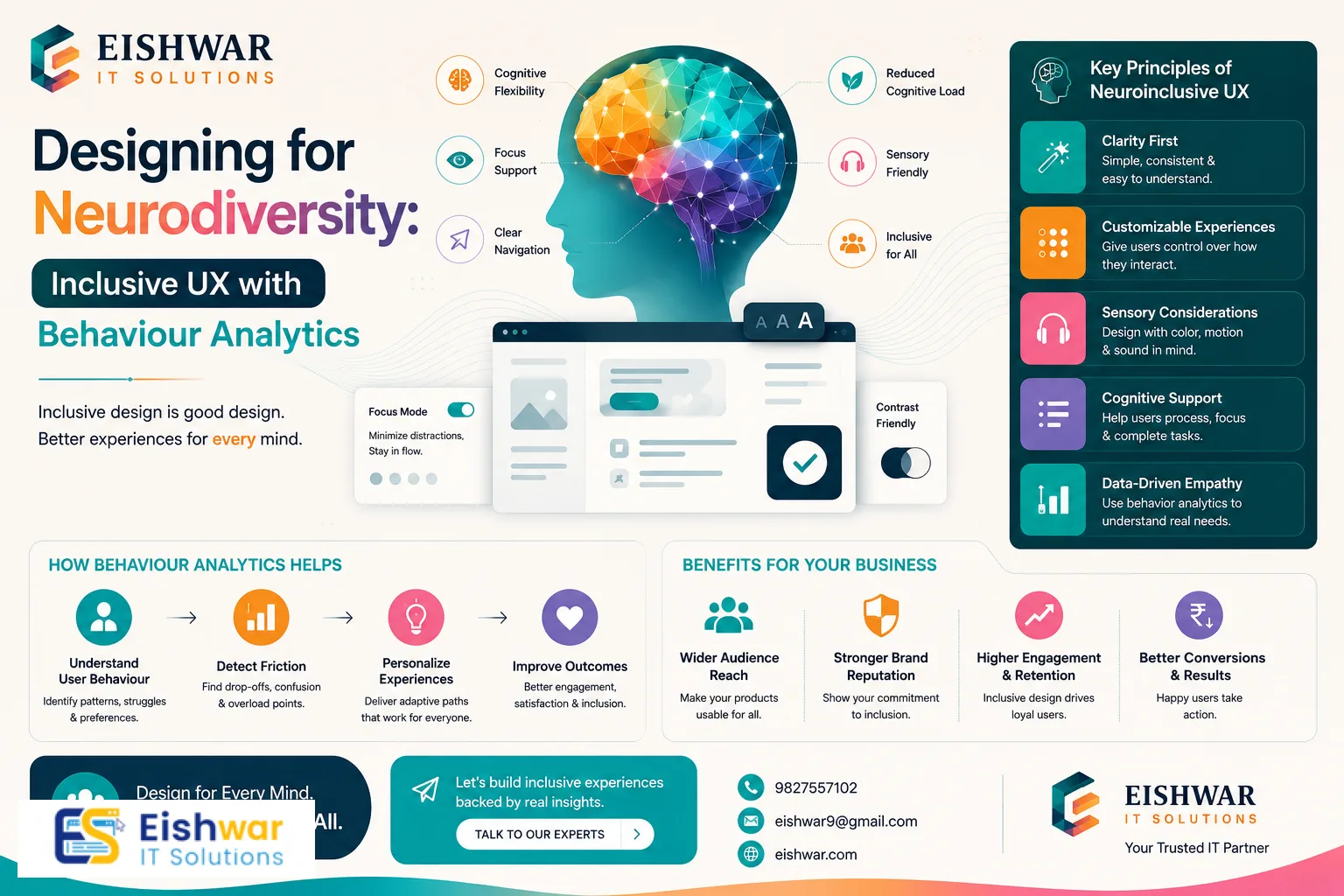
Designing for Neurodiversity: How Behaviour Analytics Can Create Inclusive UX
Introduction
In 2026, inclusive design is no longer optional—it's a business imperative. One of the most overlooked aspects of UX is neurodiversity, which includes conditions like autism, ADHD, dyslexia, dyspraxia, and more. By leveraging user behaviour analytics, you can create interfaces that work for everyone, including neurodivergent users. This approach not only improves user satisfaction but also expands your market reach in India and beyond. For instance, a study by the Indian Institute of Technology found that 18% of Indian users show traits of neurodivergence, yet most websites fail to accommodate them. Behaviour analytics bridges this gap by revealing hidden patterns—like high bounce rates on cluttered pages—that indicate cognitive overload. By acting on this data, you can build trust, reduce friction, and ultimately drive conversions. This blog explores practical steps to combine neurodiversity awareness with analytics, offering actionable insights for designers, product managers, and business owners.
Main Section 1: Understanding Neurodiversity in UX
Neurodiversity refers to the natural variation in human brain function. An estimated 15-20% of the global population is neurodivergent. In India, awareness is growing, but many websites still fail to accommodate these users. Behaviour analytics can reveal patterns like high bounce rates on cluttered pages, which may indicate cognitive overload for neurodivergent users. For example, users with ADHD often struggle with excessive visual noise, while dyslexic users may avoid long paragraphs. Analytics tools like session recordings can show you exactly where users pause, backtrack, or abandon tasks. Practical example: An Indian e-commerce site noticed that users with ADHD abandoned carts on pages with too many animations. By reducing motion and adding a 'focus mode' toggle, they saw a 12% increase in conversions. Similarly, a news website found that autistic users preferred a linear reading layout over a grid—by offering both options, they reduced bounce rates by 8%.
Main Section 2: Using Behaviour Analytics to Identify Pain Points
Tools like heatmaps, session recordings, and click tracking can help you spot where neurodivergent users struggle. Look for:
- High exit rates on long forms (dyslexia or ADHD)
- Repeated clicks on non-clickable elements (autism-related confusion)
- Low scroll depth on text-heavy pages (cognitive overload)
- Rapid mouse movements or erratic navigation (distraction or anxiety)
- Frequent use of the back button (confusion or frustration)
Actionable tip: Use analytics to segment users by behaviour, then A/B test simpler layouts. For example, offer a 'focus mode' that removes distractions like sidebars and pop-ups. Another tip: set up custom events to track 'micro-frustrations'—like repeated clicks on a disabled button. These small signals often point to larger usability issues. For Indian audiences, consider language preferences—analytics can reveal if users switch to Hindi or regional languages before abandoning a page. This data helps you prioritize multilingual support.
Main Section 3: Designing Inclusive Interfaces with Data
Once you have data, apply these principles:
- Simplify navigation: Use clear labels and consistent layout. For example, a banking app reduced menu items from 10 to 5, leading to a 15% drop in support calls from neurodivergent users.
- Offer multiple ways to consume content: Text-to-speech, video summaries, and adjustable font sizes. A learning platform found that 30% of users preferred audio summaries over reading.
- Reduce sensory overload: Allow users to turn off animations or background sounds. A travel site added a 'calm mode' that removed auto-playing videos, increasing booking completions by 18%.
- Use clear error messages: Avoid jargon and provide actionable next steps. Instead of 'Error 404', say 'Page not found. Try searching or go back to home.'
- Provide consistent feedback: Use visual cues like color changes or checkmarks to confirm actions. This helps users with memory challenges.
For Indian audiences, consider cultural factors like language preferences and color symbolism. For example, red may signify danger in some contexts but prosperity in others. Test color choices with local users to avoid confusion.
Expert Tips
- Start with accessibility audits using tools like WAVE or Axe. These highlight common issues like low contrast or missing alt text.
- Involve neurodivergent users in testing—their feedback is gold. Recruit from local support groups or online communities like Neurodiversity India.
- Use behaviour analytics to track 'micro-frustrations' like repeated back-button clicks or long pauses before a click. These often indicate confusion.
- Implement a 'settings' panel where users can customize their experience—font size, color theme, animation speed, and reading mode.
- Train your team on neurodiversity basics to foster empathy. Even a one-hour workshop can shift perspectives and improve design decisions.
- Leverage AI for personalization: tools like Google Optimize can serve different layouts based on user behaviour segments.
- Monitor analytics regularly—behaviour patterns change as you iterate. Set up dashboards to track key metrics like task completion rates for neurodivergent segments.
Common Mistakes
- Assuming one-size-fits-all design works for everyone. Even small variations in layout can exclude users.
- Ignoring mobile users—many neurodivergent users prefer phones for their simplicity and portability. Test on multiple devices.
- Overloading interfaces with too many choices (analysis paralysis). Limit options to 3-5 per screen where possible.
- Using vague error messages like 'Something went wrong'. Always provide a specific reason and a solution.
- Neglecting to test with real users from diverse neurotypes. Automated tools can't catch all nuances.
- Forgetting about cognitive load—avoid long scrolling pages or complex forms. Break tasks into smaller steps.
Future Trends
By 2027, expect AI-driven personalization that adapts UI in real-time based on user behaviour. For example, if a user shows signs of distraction (rapid mouse movements), the interface could simplify automatically—hiding non-essential elements or reducing motion. Voice interfaces will also become more inclusive, with options for slower speech rates and visual feedback. In India, voice search in regional languages will grow, making it easier for dyslexic users to navigate. Another trend: biometric feedback (like eye tracking) could detect stress and adjust UI accordingly. However, privacy concerns will require transparent data policies. Start preparing now by collecting consent and anonymizing data.
FAQs
What is neurodiversity in UX design?
Neurodiversity in UX design means creating interfaces that accommodate cognitive variations like autism, ADHD, dyslexia, and others, ensuring equal usability for all. It's about designing for the full spectrum of human brains.
How can behaviour analytics help neurodivergent users?
Behaviour analytics reveals patterns like high bounce rates or repeated errors, helping you identify where neurodivergent users face barriers and test improvements. For example, heatmaps can show that users with ADHD often skip long forms, prompting you to simplify them.
What are some quick wins for inclusive design?
Add a 'reduce motion' toggle, use clear headings, offer text-to-speech, and ensure high color contrast. These benefit all users, not just neurodivergent ones. Also, provide a 'skip to content' link for keyboard users.
Is inclusive design only for large companies?
No. Small businesses can use free tools like Google Analytics and Hotjar to start. Even minor changes—like reducing form fields or adding alt text—can improve UX significantly without a big budget.
How does neurodiversity affect e-commerce conversions?
Neurodivergent users may abandon sites due to sensory overload or confusing layouts. Simplifying design—like using a single-column layout and clear CTAs—can boost conversions by up to 20%. For example, an Indian fashion site saw a 15% increase after adding a 'calm mode'.
What tools are best for behaviour analytics in inclusive design?
Popular tools include Hotjar for heatmaps and session recordings, Google Analytics for user flow analysis, and Crazy Egg for click tracking. For accessibility-specific insights, use WAVE or Axe alongside analytics to correlate issues with user behaviour.
How do I get started with neurodiversity-inclusive design on a budget?
Start by auditing your site with free tools like WAVE or Lighthouse. Then, use Google Analytics to identify pages with high bounce rates. Make one change at a time—like adding a font size slider—and measure impact. Involve neurodivergent friends or family in testing for free feedback.
Conclusion
Designing for neurodiversity is not just ethical—it's smart business. By using behaviour analytics, you can create inclusive experiences that delight all users. Start small, test often, and watch your engagement grow. Remember, every improvement for neurodivergent users often benefits everyone—like clearer navigation or faster load times. The key is to listen to the data and act with empathy. In a competitive market like India, inclusive design can be your differentiator. So take the first step today: analyze your analytics, talk to users, and iterate. The results will speak for themselves.
CTA
Ready to make your website inclusive? Contact EishwarITSolution for a free UX audit focused on neurodiversity and behaviour analytics. Our team will analyze your data, identify pain points, and suggest actionable improvements—all tailored to your audience. Don't wait—start building for everyone today.