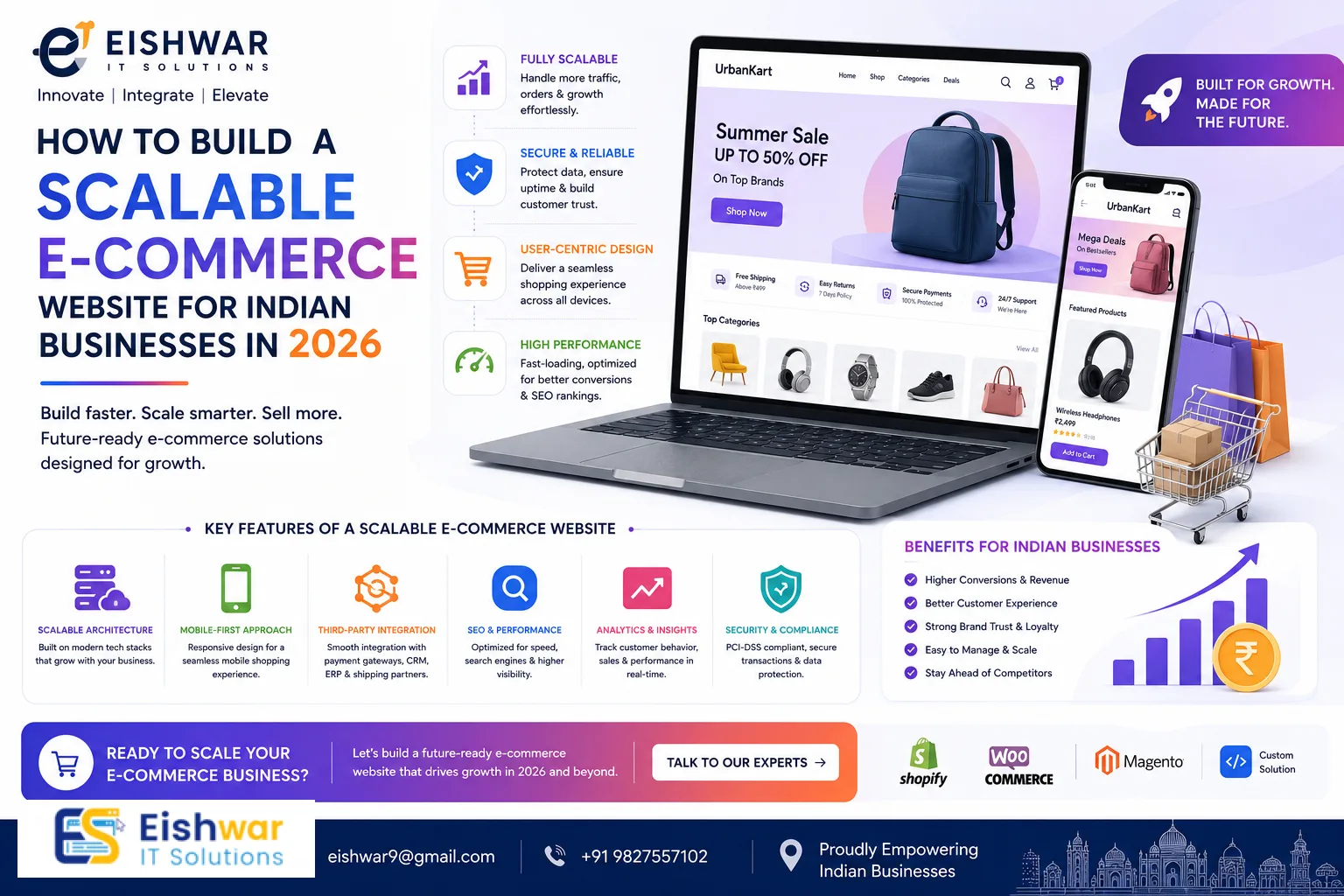
How to Build a Scalable E-commerce Website for Indian Businesses in 2026
Introduction
India's e-commerce market is projected to reach $350 billion by 2030, and 2026 is the year to lay a strong foundation. For Indian business owners, marketers, and professionals, building a scalable e-commerce website isn't just about launching an online store—it's about creating a platform that grows with your business, handles traffic spikes during festivals like Diwali, Durga Puja, or the Big Billion Days, and delivers a seamless experience across devices, especially mobile. With over 900 million internet users in India by 2026, the opportunity is immense, but so is the competition. In this comprehensive guide, we'll walk you through the essential steps to build a scalable e-commerce website tailored for the Indian market in 2026, covering everything from tech stack choices to performance optimization, security, and future trends. Whether you're a startup or an established business looking to expand online, this guide will provide practical, actionable insights to ensure your e-commerce platform not only survives but thrives in the dynamic Indian landscape.
Main Section 1: Understanding Scalability for Indian E-commerce
Scalability means your website can handle increasing traffic, products, and transactions without slowing down or crashing. For Indian businesses, this is critical during events like Diwali, Big Billion Days, or flash sales, where traffic can spike 10x or more within minutes. A scalable architecture uses cloud infrastructure, load balancers, and efficient databases. For example, using AWS or Google Cloud with auto-scaling ensures your site stays fast even when traffic spikes. Start with a scalable mindset—choose technologies that allow easy upgrades, like microservices instead of monolithic code. Consider a real-world example: a Mumbai-based electronics retailer saw a 300% traffic surge during a Diwali sale. Their monolithic setup crashed, costing them ₹2 crore in lost revenue. After migrating to a microservices architecture on AWS with auto-scaling, they handled a similar surge the next year without any downtime. Key components of scalability include horizontal scaling (adding more servers), vertical scaling (upgrading existing servers), and database sharding (splitting databases to handle load). For Indian businesses, also consider regional data centers to reduce latency—using providers like AWS Mumbai or Azure Central India can cut page load times by 30% for users in tier-1 cities. Additionally, implement caching strategies with tools like Redis or Varnish to reduce database load during peak times. A practical tip: start with a load testing tool like Apache JMeter to simulate 10,000 concurrent users and identify bottlenecks before going live. Remember, scalability isn't just about handling traffic—it's about maintaining performance, security, and user experience as you grow.
Main Section 2: Choosing the Right Tech Stack for 2026
Your tech stack is the backbone of your e-commerce site. For Indian businesses, consider these components with specific examples and tips:
- Frontend: React or Next.js for fast, dynamic user interfaces. Next.js offers server-side rendering for better SEO and performance, which is crucial for ranking on Google India. For example, a Jaipur-based handicraft store used Next.js and saw a 25% increase in organic traffic due to improved Core Web Vitals. Consider using Tailwind CSS for rapid styling and better mobile responsiveness.
- Backend: Node.js or Python (Django) for handling business logic and APIs. Node.js is great for real-time updates like inventory tracking, while Django provides robust security features like CSRF protection. For a grocery delivery startup in Bangalore, Node.js with Express reduced API response times by 40% compared to their previous PHP setup. Alternatively, consider Go for high-performance microservices if you expect massive scale.
- Database: PostgreSQL for relational data (orders, customers) and MongoDB for flexible product catalogs. Use caching with Redis to speed up queries—for instance, caching product details can reduce database load by 60%. For Indian businesses, consider using a managed database service like Amazon RDS to handle backups and scaling automatically.
- Hosting: Cloud platforms like AWS, Azure, or Indian providers like Tata Communications for low-latency hosting. Use CDN (Cloudflare) to serve static assets fast—Cloudflare has edge servers in Mumbai, Delhi, and Chennai, reducing load times by 50% for users in tier-2 cities. For cost-effectiveness, start with a pay-as-you-grow model.
- Payment Gateway: Integrate Razorpay, Paytm, or PhonePe for Indian payment methods (UPI, net banking, cards). Ensure support for Cash on Delivery (COD), which still accounts for 40% of transactions in India. For example, a fashion retailer integrated Razorpay's UPI auto-pay feature and saw a 15% increase in repeat purchases due to smoother checkout.
Example: A Delhi-based clothing brand used Next.js + Node.js + AWS and saw 40% faster load times during Diwali sales. They also used Redis caching for product listings and Cloudflare CDN for images, resulting in a 20% increase in conversion rate. When choosing your tech stack, prioritize technologies with strong community support in India, as this ensures easier hiring and troubleshooting. Also, consider using a headless CMS like Strapi or Contentful for managing content, allowing non-technical team members to update product descriptions and blogs without developer involvement.
Main Section 3: Mobile-First Design and Performance Optimization
Over 70% of Indian e-commerce traffic comes from mobile devices, and this is expected to reach 80% by 2026. Your website must be mobile-first. Use responsive design, compress images (WebP format), and implement lazy loading. Optimize for Core Web Vitals—LCP under 2.5 seconds, FID under 100ms, CLS under 0.1. Tools like Google PageSpeed Insights can help. Also, enable AMP (Accelerated Mobile Pages) for product pages to improve mobile loading. For Indian users, consider progressive web app (PWA) features like offline browsing and push notifications to boost engagement. For example, a home decor store in Pune implemented a PWA and saw a 30% increase in repeat visits due to offline access to product catalogs. Practical tips for mobile optimization: use a mobile-first CSS framework like Bootstrap 5 or Material-UI, minimize JavaScript bundles with tree shaking, and use image optimization services like TinyPNG or Cloudinary. For Indian users with slower 3G/4G connections, implement adaptive loading—serve lower-resolution images on slower networks. Also, consider using service workers to cache critical resources, enabling instant loading on subsequent visits. A real-world case: a Kolkata-based book retailer optimized their mobile site by reducing image sizes by 60% and implementing lazy loading, resulting in a 35% decrease in bounce rate and a 20% increase in mobile conversions. Don't forget to test on real devices—use tools like BrowserStack to simulate Indian mobile devices like the Xiaomi Redmi or Samsung Galaxy series. Additionally, integrate with Google's Mobile-Friendly Test to ensure compliance. Remember, a fast mobile experience directly impacts your SEO rankings and user satisfaction.
Expert Tips
- Use Headless Commerce: Separate frontend and backend for flexibility. For example, use Shopify Plus as backend and Next.js as frontend. This allows you to change the frontend without disrupting backend operations. A Chennai-based electronics store used this approach to launch a custom mobile app without rebuilding their backend.
- Implement Multi-Language Support: Offer Hindi, Tamil, and other regional languages to reach tier-2 and tier-3 cities. Use tools like Google Translate API or hire local translators for accuracy. A fashion brand in Lucknow added Hindi support and saw a 50% increase in traffic from Uttar Pradesh.
- Leverage AI for Personalization: Use AI tools like TensorFlow or AWS Personalize to recommend products based on browsing history, increasing average order value by 20%. For example, a grocery store used AI to suggest complementary items (e.g., milk with cereal) and saw a 15% increase in basket size.
- Test with Load Testing Tools: Use Apache JMeter or LoadRunner to simulate traffic spikes before launch. Run tests for at least 10,000 concurrent users to ensure stability. A Hyderabad-based jewelry store used JMeter to identify a database bottleneck and fixed it before a major sale, preventing potential losses.
- Focus on Security: Use HTTPS, SSL certificates, and PCI compliance for payment data. Regular security audits are a must. Implement WAF (Web Application Firewall) to protect against DDoS attacks, which are common during sales. A Delhi-based electronics retailer avoided a major breach by using AWS Shield for DDoS protection.
- Optimize for Voice Search: With the rise of voice assistants like Google Assistant and Alexa, optimize product pages for voice queries like "buy kurta online" or "order groceries near me." Use natural language in product descriptions and FAQs.
Common Mistakes
- Ignoring Local Payment Methods: Not integrating UPI or COD can lose you 60% of potential customers. Always offer multiple payment options, including Paytm, Google Pay, and PhonePe. A survey by Razorpay found that 70% of Indian users prefer UPI for online transactions.
- Overcomplicating the Tech Stack: Using too many tools can slow down development. Stick to a lean stack. For example, using both React and Angular for the same project is unnecessary. Choose one framework and master it.
- Neglecting SEO: Not optimizing product pages for keywords like “buy sarees online India” can hurt visibility. Use tools like Google Keyword Planner to find high-volume Indian keywords. A Mumbai-based saree store optimized their meta tags and saw a 40% increase in organic traffic.
- Forgetting About Returns: A complex return process drives customers away. Keep it simple and transparent. Offer free returns for certain categories to build trust. A study by the Indian E-commerce Association found that 80% of customers check return policies before purchasing.
- Not Planning for Scale: Using shared hosting can crash your site during sales. Invest in cloud from day one. A startup in Pune used shared hosting and lost ₹5 lakh during a flash sale due to downtime. They later migrated to AWS and never faced issues again.
- Ignoring Regional Preferences: Not considering regional festivals like Pongal or Onam can miss opportunities. Plan marketing campaigns around local events and stock relevant products.
Future Trends
By 2026, expect voice commerce to grow—optimize for voice search queries like “order milk online”. Augmented reality (AR) for trying products (e.g., virtual try-on for clothes) will become standard, with platforms like Google ARCore enabling easy integration. For example, a beauty brand in Mumbai used AR for virtual lipstick try-ons and saw a 25% increase in conversion rates. Also, blockchain for supply chain transparency and cryptocurrency payments (though regulatory in India is evolving) could gain traction. Social commerce integration with Instagram and WhatsApp will be key for Indian businesses—consider using WhatsApp Business API for order updates and customer support. Additionally, AI-driven chatbots for customer service will become more sophisticated, handling 80% of queries automatically. A Delhi-based electronics store implemented a chatbot and reduced response time from 10 minutes to 30 seconds. Finally, sustainability will be a differentiator—offer eco-friendly packaging options and highlight them on your site to attract environmentally conscious consumers.
FAQs
What is the best platform for a scalable e-commerce website in India?
For small to medium businesses, Shopify Plus or WooCommerce with scalable hosting works well. For large enterprises, custom solutions with Magento or headless commerce are ideal. Consider factors like budget, technical expertise, and growth plans. For example, a startup in Bangalore chose WooCommerce for its flexibility and low cost, while a large retailer in Mumbai opted for Magento for its advanced features.
How much does it cost to build a scalable e-commerce site in India?
Costs vary from ₹50,000 to ₹5 lakhs depending on features. A basic scalable site with cloud hosting can start around ₹1 lakh. Additional costs include payment gateway fees (2-3% per transaction), domain registration (₹500-₹1000/year), and ongoing maintenance (₹10,000-₹50,000/month). For a mid-range site with custom features, expect ₹2-3 lakhs.
How can I ensure my e-commerce site handles high traffic?
Use auto-scaling cloud servers, CDN, load balancers, and optimize database queries. Regularly test with load testing tools like Apache JMeter. Implement caching with Redis and use a content delivery network like Cloudflare. For example, a fashion store in Delhi used auto-scaling on AWS and handled a 500% traffic spike during a sale without any downtime.
Which payment gateways are best for Indian e-commerce?
Razorpay, Paytm, PhonePe, and Instamojo are popular. They support UPI, net banking, cards, and COD. Razorpay is known for its easy integration and multiple payment options. Paytm offers a large user base. Choose based on transaction fees, features, and customer preferences. For example, a grocery store in Pune uses Razorpay for UPI and saw a 20% increase in successful transactions.
Do I need a mobile app for my e-commerce business in 2026?
A PWA can offer app-like experience without the cost. If budget allows, a native app can boost engagement, but start with a mobile-optimized website. PWAs work offline, send push notifications, and are installable on home screens. A home decor store in Jaipur used a PWA and saw a 40% increase in repeat visits compared to their mobile site.
How long does it take to build a scalable e-commerce website?
A basic site can take 2-3 months, while a fully custom solution may take 6-9 months, including testing and deployment. Factors like complexity of features, team size, and third-party integrations affect timelines. For example, a custom site with AI personalization and multi-language support took 8 months for a retailer in Chennai.
What are the key SEO strategies for Indian e-commerce sites?
Optimize for local keywords (e.g., "buy sarees in Mumbai"), use structured data for products, and build backlinks from Indian websites. Focus on mobile SEO, as Google uses mobile-first indexing. Also, create content around Indian festivals and trends. A jewelry store in Jaipur used local SEO and saw a 50% increase in traffic from nearby cities.
How can I reduce cart abandonment on my e-commerce site?
Simplify checkout, offer multiple payment options, and send cart abandonment emails. Use exit-intent popups with discounts. For Indian users, offer COD and UPI options. A fashion store in Delhi reduced cart abandonment by 15% by adding a progress bar and guest checkout option.
Conclusion
Building a scalable e-commerce website for Indian businesses in 2026 is an investment in your brand's future. Focus on a mobile-first design, choose the right tech stack, and plan for growth from day one. Avoid common mistakes like ignoring local payment methods or neglecting SEO. By following this guide, you'll create an online store that not only survives but thrives during peak seasons. Remember, scalability is not a one-time task—it's an ongoing process of monitoring, testing, and optimizing. With the right approach, your e-commerce platform can become a powerful engine for growth, helping you capture a share of India's booming online market. Ready to take the next step? Let's build something great together.
CTA
Ready to build your scalable e-commerce website? Contact EishwarITSolution today for a free consultation and custom quote. Our experts will help you choose the right technology and design a store that grows with your business. Get in touch now.