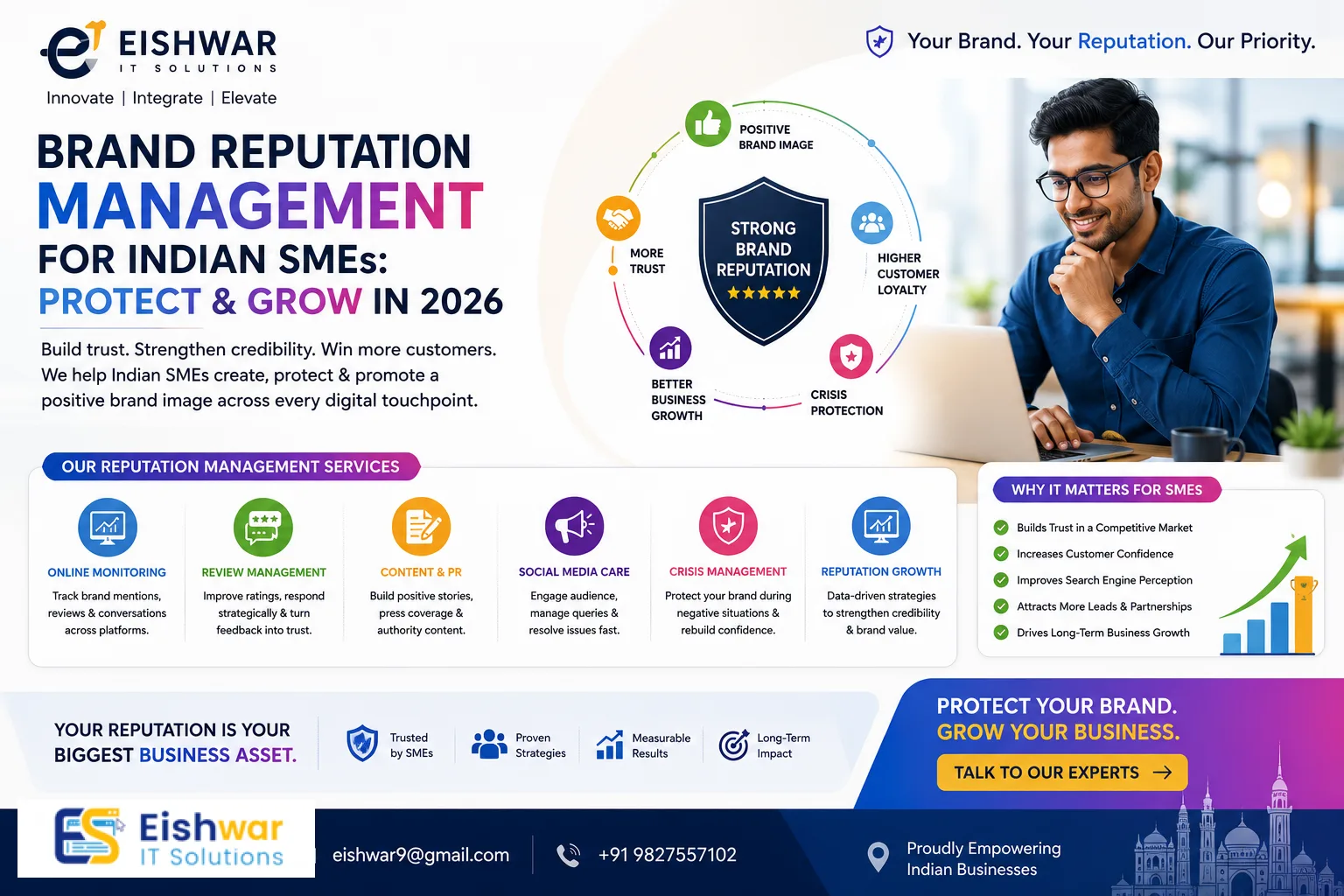
Brand Reputation Management for Indian SMEs: Protect & Grow in 2026
Introduction
In today's hyper-connected world, your brand's reputation is your most valuable asset. For Indian SMEs, where trust and word-of-mouth are critical drivers of business, managing brand reputation has become more important than ever. By 2026, as digital adoption accelerates and consumers become more discerning, a single negative review or social media mishap can significantly impact your bottom line. This guide will walk you through proven strategies to protect and grow your brand reputation, helping you build lasting trust with your audience.
Main Section 1: Why Brand Reputation Matters for Indian SMEs
Brand reputation isn't just about being liked; it's about being trusted. For Indian SMEs, a strong reputation can lead to increased customer loyalty, higher conversion rates, and better business partnerships. In a market where 70% of consumers trust online reviews as much as personal recommendations, a positive online presence is non-negotiable. Small businesses that actively manage their reputation see a 10-15% increase in revenue compared to those that don't. Additionally, a good reputation helps attract top talent and can reduce marketing costs, as satisfied customers become brand advocates.
Consider a small textile manufacturer in Surat: after implementing a reputation management strategy, they saw a 12% boost in repeat orders within six months. Or take the case of a Jaipur-based handicraft exporter who, by maintaining a 4.8-star rating on Google, secured a partnership with a major European retailer. These examples underscore that reputation isn't just a soft metric—it directly influences revenue, partnerships, and employee morale.
Main Section 2: Key Strategies for Reputation Management
Monitor Your Online Presence
Use tools like Google Alerts, Mention, or Brand24 to track mentions of your brand across the web. Respond promptly to both positive and negative feedback. For example, a local restaurant in Mumbai saw a 20% increase in repeat customers by addressing all reviews within 24 hours. Set up alerts not only for your brand name but also for common misspellings, competitor names, and industry keywords. Allocate at least 15 minutes daily to scan mentions—this small habit can prevent small issues from snowballing into crises.
Encourage Positive Reviews
Ask satisfied customers to leave reviews on Google My Business, Justdial, or industry-specific platforms. Offer incentives like discounts or loyalty points. A small e-commerce store in Delhi increased its rating from 3.8 to 4.5 stars by sending follow-up emails with review links. Be strategic about timing: request reviews immediately after a successful transaction or positive interaction. For service-based SMEs, consider using QR codes on invoices or receipts that link directly to your review page.
Handle Negative Feedback Gracefully
Never ignore or delete negative comments. Respond publicly with empathy and offer to resolve the issue offline. This shows potential customers that you care. A case in point: a Pune-based IT firm turned a complaint about delayed service into a loyal client by offering a free consultation. When crafting your response, acknowledge the customer's feelings, apologize sincerely, and provide a clear next step. Avoid generic replies—personalize each response to show you've read and understood the concern.
Build a Strong Brand Voice
Consistency in messaging across all channels builds credibility. Whether it's your website, social media, or customer service, ensure your tone aligns with your brand values. For instance, a sustainable fashion brand in Bangalore uses eco-friendly language everywhere, reinforcing their commitment to the environment. Develop a brand voice guide that includes your tone, vocabulary, and response protocols. Train every team member—from the receptionist to the CEO—to speak in that voice. This consistency makes your brand recognizable and trustworthy.
Main Section 3: Leveraging Content and Social Proof
Content is a powerful tool for shaping reputation. Publish case studies, testimonials, and behind-the-scenes stories that humanize your brand. Share user-generated content (UGC) to build community and trust. For example, a small bakery in Kolkata runs a weekly "Customer Spotlight" on Instagram, featuring photos of customers enjoying their products. This not only boosts engagement but also serves as authentic social proof. Additionally, collaborate with micro-influencers who align with your brand values to amplify positive messages.
Go beyond static content: create video testimonials, host live Q&A sessions, or publish detailed case studies that highlight your problem-solving abilities. For instance, a Chennai-based logistics SME created a series of short videos showing how they handled complex deliveries during monsoon season—this transparency built immense trust with potential clients. Remember, social proof isn't just about quantity; quality matters. A single detailed testimonial from a respected client can outweigh dozens of generic reviews.
Expert Tips
- Be Proactive, Not Reactive: Have a crisis communication plan in place before issues arise. Identify potential risks and prepare response templates. For example, a food processing SME in Gujarat pre-drafted responses for common complaints like delayed delivery or product quality, which helped them respond within minutes during a minor crisis.
- Invest in SEO: Optimize your website and content to ensure positive pages rank higher than negative ones. Use keywords like "best [your industry] in [city]" to control the narrative. A small hotel in Udaipur saw a 30% increase in bookings after optimizing for "best boutique hotel in Udaipur," pushing a negative review to the second page of search results.
- Train Your Team: Every employee is a brand ambassador. Provide training on handling customer interactions and social media etiquette. Conduct quarterly workshops where team members practice responding to difficult customer scenarios. Reward employees who receive positive customer feedback.
- Use Reputation Management Tools: Platforms like Reputation.com or Birdeye can automate monitoring and response processes, saving time and ensuring consistency. For budget-conscious SMEs, start with free tools like Google Alerts and Hootsuite, then scale up as your business grows.
- Leverage Local SEO: Claim and optimize your Google My Business listing with accurate hours, photos, and services. Encourage customers to leave reviews with location-specific tags. A small clinic in Nagpur increased walk-ins by 25% after regularly posting updates and responding to reviews on their GMB profile.
Common Mistakes
- Ignoring Negative Feedback: Ignoring complaints makes you appear indifferent. Always acknowledge and address issues. Even a simple "Thank you for your feedback, we are looking into this" can defuse tension.
- Buying Fake Reviews: This can backfire and damage trust. Focus on genuine feedback. Platforms like Google and Justdial are increasingly using AI to detect and remove fake reviews, and penalties can include listing suspension.
- Inconsistent Branding: Mixed messages confuse customers. Maintain a unified voice across all touchpoints. For example, if your brand is playful on social media but formal on your website, customers may question your authenticity.
- Overlooking Employee Advocacy: Employees can be your best promoters. Encourage them to share positive stories about your brand. Create an employee advocacy program where staff earn rewards for sharing company achievements on their personal social media.
- Neglecting Competitor Monitoring: Keep an eye on your competitors' reputation. Learn from their successes and mistakes. If a competitor mishandles a crisis, you can position your brand as the more reliable alternative.
Future Trends
By 2026, AI-driven sentiment analysis will become mainstream, allowing real-time reputation tracking. Voice search optimization will also play a role, as consumers ask smart speakers for recommendations. Additionally, blockchain technology could provide transparent review systems, reducing fake reviews. Indian SMEs that adopt these technologies early will gain a competitive edge.
For instance, a small electronics retailer in Mumbai is already experimenting with AI tools that analyze customer sentiment from chat transcripts and emails, flagging potential issues before they escalate. Similarly, a boutique hotel in Goa is using voice search optimization to appear in smart speaker recommendations for "best beachside stays." These early adopters are not just protecting their reputation—they're future-proofing their business.
FAQs
What is brand reputation management?
Brand reputation management involves monitoring and influencing how your brand is perceived by the public. It includes managing online reviews, social media presence, and customer feedback to build trust and credibility. For SMEs, it's about actively shaping the narrative around your brand rather than letting others define it.
Why is reputation management important for SMEs in India?
Indian SMEs often rely on local trust and word-of-mouth. A strong reputation helps attract customers, retain talent, and secure partnerships. In a competitive market, it can be the deciding factor for business growth. For example, a small business with a 4.5-star rating on Google is likely to be chosen over a competitor with a 3.5-star rating, even if prices are similar.
How can I monitor my brand's online reputation?
Use free tools like Google Alerts or paid platforms like Mention, Brand24, or Reputation.com. Set up alerts for your brand name, key products, and industry keywords to stay informed. Additionally, manually check review sites like Justdial, Google My Business, and industry-specific forums at least once a week.
What should I do if I receive a negative review?
Respond publicly with empathy, apologize if necessary, and offer to resolve the issue offline. Avoid being defensive. A thoughtful response can turn a negative experience into a positive one. For instance, a restaurant owner in Delhi responded to a complaint about cold food by inviting the customer for a complimentary meal—the customer later updated their review to 5 stars.
Can reputation management help increase sales?
Yes. A positive reputation builds trust, which leads to higher conversion rates and customer loyalty. Studies show that businesses with strong reputations can charge premium prices and enjoy repeat business. For example, a study by Harvard Business School found that a one-star increase on Yelp led to a 5-9% increase in revenue for independent restaurants.
How long does it take to see results from reputation management?
Results vary, but many SMEs see improvements in customer feedback and engagement within 3-6 months of consistent effort. For example, a small salon in Hyderabad saw their average rating rise from 3.2 to 4.0 in four months by actively requesting reviews and responding to feedback. Long-term benefits like increased revenue and brand loyalty typically take 6-12 months to materialize.
What are the costs associated with reputation management for SMEs?
Costs can range from zero (using free tools like Google Alerts and manual monitoring) to a few thousand rupees per month for paid platforms. For most Indian SMEs, a budget of ₹5,000-₹15,000 per month is sufficient for basic monitoring and response tools. Investing in employee training and content creation may add additional costs but yields high returns.
Conclusion
Brand reputation management is not a one-time effort but an ongoing commitment. For Indian SMEs, it's an investment that pays dividends in customer trust, business growth, and long-term success. By implementing the strategies outlined above, you can protect your brand from crises and build a reputation that stands the test of time. Remember, every interaction—whether online or offline—is an opportunity to reinforce your brand's values. Start small, stay consistent, and watch your reputation become your strongest competitive advantage.
CTA
Ready to take your brand reputation to the next level? Contact EishwarITSolution today for a free consultation and discover how we can help you build a brand that India trusts. Don't wait—start protecting your reputation now!