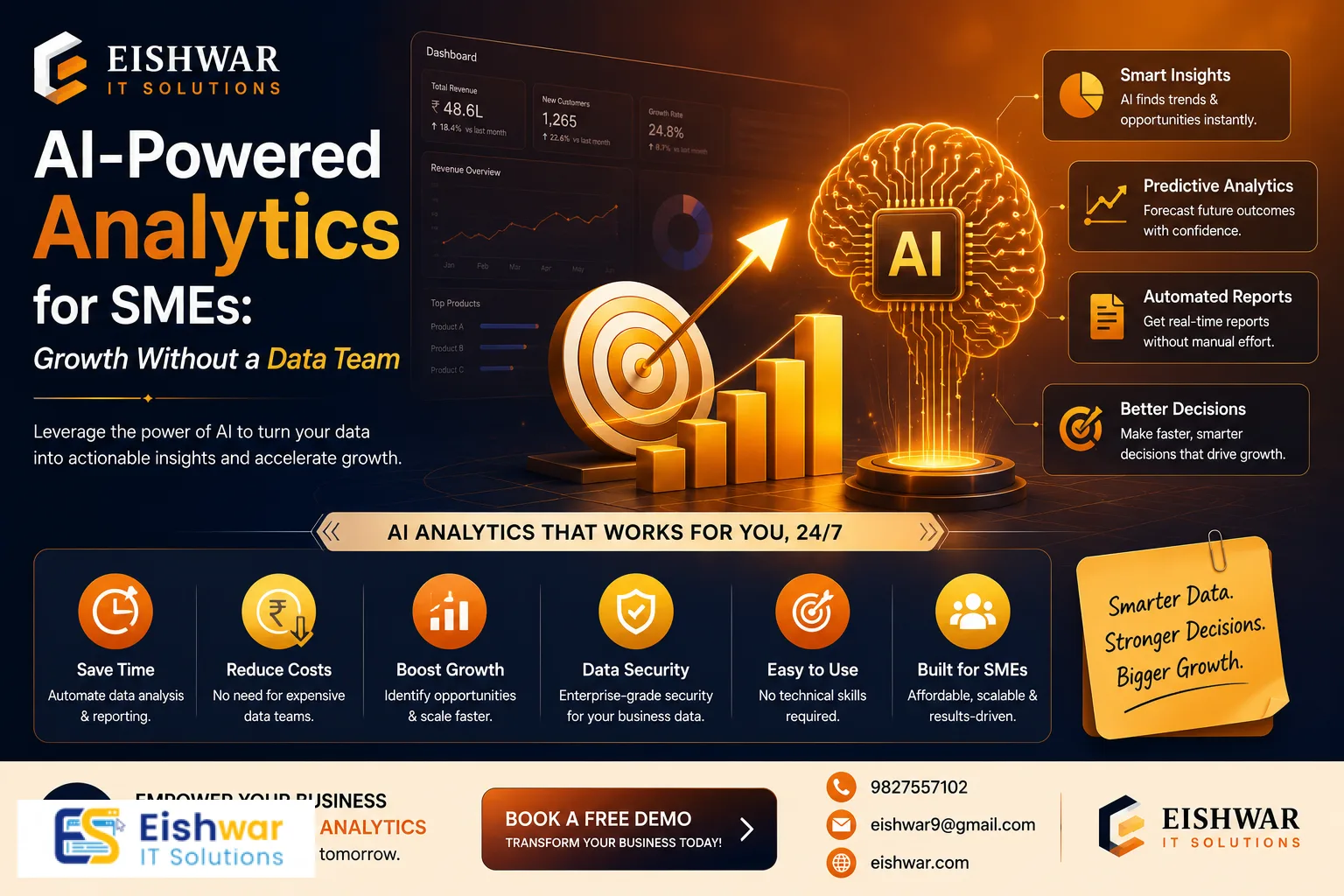
AI-Powered Analytics for SMEs: Growth Without a Data Team
Introduction
For years, data analytics has been the playground of large enterprises with deep pockets and dedicated data science teams. But the game has changed. Today, AI-powered analytics tools are democratizing data, putting powerful insights into the hands of small and medium enterprises (SMEs) across India. Imagine being able to predict customer churn, optimize inventory, or identify your most profitable customer segments—all without hiring a single data analyst. This isn't a distant future; it's happening right now. In this guide, we'll show you exactly how your SME can harness AI analytics to drive growth, improve decision-making, and stay competitive—all while keeping your team lean and your budget intact. We'll cover practical steps, real-world examples from Indian businesses, common pitfalls to avoid, and emerging trends that will shape the next wave of digital transformation for SMEs.
Main Section 1: Why AI Analytics Is a Game-Changer for SMEs
Traditional analytics often requires manual data cleaning, complex spreadsheets, and statistical expertise. AI analytics flips this model. It automates data processing, identifies patterns, and delivers insights in plain language. For an SME owner in India, this means you can finally answer critical questions like: Which marketing channel gives the best ROI? Which products are most likely to sell out next month? Which customers are at risk of leaving? AI tools handle the heavy lifting, so you can focus on action. A 2023 report by McKinsey found that businesses using AI-powered analytics see a 20-30% improvement in decision-making speed. For SMEs, this speed can be a decisive competitive advantage. Consider a small manufacturer in Pune: by using AI to analyze production data, they reduced downtime by 15% within two months, simply by identifying patterns in machine failures. This isn't just about efficiency—it's about survival in a fast-moving market. Moreover, AI analytics can level the playing field, allowing SMEs to compete with larger rivals by uncovering hidden opportunities in their own data. For instance, a local restaurant chain in Bangalore used AI to analyze customer feedback and social media mentions, leading to a menu redesign that boosted average order value by 18%. The key is that these tools are now accessible, affordable, and designed for non-experts.
Main Section 2: Practical Steps to Implement AI Analytics in Your SME
Implementing AI analytics doesn't have to be overwhelming. Start with these four steps:
Step 1: Identify Your Key Business Questions. Before diving into tools, list the top three questions you want answered. For example: "Why are some customers buying more than others?" or "Which products have the highest return rate?" Be specific. Instead of "How can we grow?" ask "What factors drive repeat purchases among our top 20% of customers?" This focus will guide your data collection and tool selection.
Step 2: Choose the Right Tool. Look for AI analytics platforms designed for non-technical users. Tools like Google Analytics 4 (with its AI-driven insights), Tableau's Ask Data (natural language query), or Zoho Analytics (affordable for Indian SMEs) are excellent starting points. Many offer free tiers or low-cost plans. For example, Zoho Analytics starts at around ₹1,500 per month for small teams, while Google Analytics 4 is free for most use cases. If you need predictive modeling, consider no-code platforms like Obviously AI or Akkio, which allow you to build models with a few clicks.
Step 3: Connect Your Data Sources. Most tools can integrate with your CRM, e-commerce platform, accounting software, and social media accounts. This creates a single source of truth. For instance, if you use Shopify for sales, QuickBooks for accounting, and Mailchimp for email marketing, ensure your analytics tool can pull data from all three. This integration often takes less than a day with modern connectors.
Step 4: Start with One Use Case. Don't try to analyze everything at once. Pick one area—like customer churn prediction or sales forecasting—and run a pilot. Learn from it, then expand. For example, a small online retailer in Delhi started by analyzing cart abandonment data. They discovered that 60% of abandoned carts were due to unexpected shipping costs. By offering free shipping on orders above ₹500, they recovered 22% of lost sales within a month.
Example: A Mumbai-based boutique clothing store used Zoho Analytics to connect their POS system and Instagram sales data. They discovered that 70% of their revenue came from repeat customers, prompting a loyalty program that boosted repeat purchases by 25% in three months. They also used predictive analytics to forecast demand for specific styles, reducing overstock by 30%.
Main Section 3: Overcoming Common Data Challenges for Indian SMEs
Data quality is often the biggest hurdle. Inconsistent formats, missing values, and scattered data sources can derail any analytics initiative. Here's how to tackle them:
Challenge 1: Dirty Data. AI tools can clean data automatically, but you must set basic standards. For example, ensure your sales team enters customer names consistently (e.g., "Mumbai" vs. "Mumbai, India"). Also, standardize date formats (DD-MM-YYYY) and currency symbols (₹). A simple data entry checklist can prevent many issues.
Challenge 2: Lack of Skills. No-code AI analytics platforms like Obviously AI or Akkio allow you to build predictive models with a few clicks. No coding required. Additionally, many tools offer built-in tutorials and community forums. Consider training one team member as an "analytics champion"—someone who can learn the basics and help others.
Challenge 3: Cost Concerns. Many Indian SMEs fear high costs. However, open-source tools like Apache Superset (free) or affordable SaaS options like Databox (starts at $50/month) make analytics accessible. Start small and scale. For example, a small logistics company in Chennai used the free tier of Google Data Studio (now Looker Studio) to visualize delivery times and identify bottlenecks, saving ₹2 lakh in operational costs annually.
Challenge 4: Data Privacy. With India's Digital Personal Data Protection Act, 2023, compliance is key. Use tools that offer data encryption and on-premise options if needed. For instance, if you handle sensitive customer data, choose a platform that allows data residency in India, such as Zoho Analytics (which has servers in India) or Microsoft Power BI (which offers local data centers). Always review the tool's privacy policy and ensure it aligns with your compliance requirements.
Expert Tips
We spoke with Priya Sharma, a digital transformation consultant who has helped over 50 Indian SMEs adopt AI analytics. Her top tips:
- Start with a hypothesis. Don't let the tool drive you; drive the tool. Ask a specific question first. For example, instead of "Show me all insights," ask "What factors correlate with high customer satisfaction?" This will yield more actionable results.
- Focus on actionable insights. A beautiful dashboard is useless if it doesn't tell you what to do next. Look for tools that offer recommendations. For instance, if the tool shows that sales dip on Tuesdays, it should also suggest running a promotion or adjusting staffing.
- Involve your team. Train one or two employees as "analytics champions" to spread data literacy across the organization. This could be a marketing manager or a operations lead who is curious about data. Provide them with access to online courses (many are free) and encourage them to share findings in weekly meetings.
- Measure ROI. Track how insights lead to decisions and outcomes. For instance, if you reduce customer churn by 10%, calculate the revenue saved. Use a simple spreadsheet to log each insight, the action taken, and the financial impact. This will help you justify further investment in analytics.
Common Mistakes
Avoid these pitfalls when adopting AI analytics:
- Mistake 1: Trying to boil the ocean. Don't analyze everything at once. Focus on one business problem. For example, if you're a retailer, start with inventory optimization rather than trying to analyze sales, marketing, and customer service simultaneously.
- Mistake 2: Ignoring data quality. Garbage in, garbage out. Invest time in cleaning your data. Set up automated validation rules in your CRM to catch errors early, like missing phone numbers or invalid email addresses.
- Mistake 3: Choosing tools based on hype. Pick a tool that fits your specific needs and budget. Read reviews and request demos. For instance, a tool with advanced NLP features may be overkill if you only need basic sales reports. Always test with a free trial before committing.
- Mistake 4: Over-relying on automation. AI can spot patterns, but human judgment is still needed to interpret context and make final decisions. For example, if the tool flags a sudden drop in sales, a human must investigate whether it's due to a seasonal trend, a competitor's promotion, or a data error.
- Mistake 5: Neglecting change management. Your team may resist new tools. Communicate the benefits and provide training. Hold a kickoff meeting to explain how analytics will make their jobs easier, and offer hands-on workshops. Celebrate early wins to build momentum.
Future Trends
The landscape of AI analytics for SMEs is evolving rapidly. Here's what to watch for in the next 2-3 years:
- Conversational AI Analytics: Soon, you'll be able to ask your analytics tool questions in natural language, like "What were our top-selling products last month?" and get instant answers. Tools like Tableau's Ask Data and ThoughtSpot already offer this, and it's becoming more affordable for SMEs.
- Predictive Analytics for Everyone: Tools will become even more accessible, allowing SMEs to forecast demand, cash flow, and customer behavior with minimal setup. For example, a small bakery could predict daily sales based on weather data and historical trends, reducing waste.
- Embedded Analytics: Expect AI insights to be built directly into your existing business software (CRM, ERP, etc.), eliminating the need for separate platforms. For instance, your accounting software might automatically flag unusual expense patterns without you having to export data.
- Real-Time Decision Making: With edge computing and faster AI models, SMEs will be able to act on insights in real-time—like adjusting pricing during a flash sale or rerouting deliveries based on traffic data. This is already happening in logistics and e-commerce.
- India-Specific Solutions: More Indian startups are building AI analytics tools tailored to local languages, regulations, and business practices, making adoption even easier. For example, tools that support Hindi or Tamil interfaces, or that integrate with popular Indian payment gateways like Razorpay.
FAQs
1. Do I need a data team to use AI analytics?
No. Modern AI analytics tools are designed for non-technical users. They offer drag-and-drop interfaces, natural language queries, and automated insights. You can start with just one person who is comfortable with basic data concepts. Many tools also provide customer support and onboarding assistance.
2. What is the cost of AI analytics tools for SMEs?
Costs vary widely. Many tools offer free tiers (e.g., Google Analytics 4) or low-cost plans starting at $20-$50 per month. Open-source options are free but may require more setup. Always start with a free trial to test fit. For Indian SMEs, Zoho Analytics offers plans starting at ₹1,500/month, while Databox starts at $50/month. Consider your budget and scale as you grow.
3. How long does it take to see results?
You can see initial insights within a few days of connecting your data. However, meaningful impact (e.g., improved sales or reduced churn) typically takes 2-3 months as you refine your use case and act on insights. For example, a small e-commerce store saw a 15% increase in conversion rates after two months of using AI to personalize product recommendations.
4. Is my data safe with AI analytics tools?
Reputable tools use encryption, access controls, and comply with data protection laws like India's DPDP Act. Always review the tool's privacy policy and choose options that allow data residency in India if needed. For instance, Zoho Analytics and Microsoft Power BI offer data centers in India. Also, ensure the tool supports role-based access to limit who can view sensitive data.
5. Can AI analytics help with customer retention?
Absolutely. AI can identify patterns in customer behavior that signal churn risk—like reduced purchase frequency or negative sentiment in support tickets. You can then proactively engage those customers with offers or personalized outreach. For example, a small SaaS company used AI to flag accounts that hadn't logged in for 30 days and sent automated re-engagement emails, reducing churn by 20%.
6. What if my data is messy or incomplete?
Many AI tools have built-in data cleaning features. They can handle missing values, detect outliers, and standardize formats. Start by cleaning the most critical data (e.g., customer names, sales amounts) and let the tool handle the rest. For example, Google Analytics 4 automatically fills in missing session data using machine learning. If your data is extremely messy, consider hiring a freelance data cleaner for a one-time project.
7. How do I choose the right AI analytics tool for my SME?
Start by listing your top three business questions and the data sources you use. Then, evaluate tools based on ease of use, integration capabilities, cost, and customer support. Request demos from at least two vendors. For instance, if you're a retailer using Shopify and QuickBooks, look for tools that have native connectors to both. Also, read reviews from other Indian SMEs to understand local experiences.
Conclusion
AI-powered analytics is no longer a luxury reserved for large corporations. Indian SMEs now have access to affordable, user-friendly tools that can unlock powerful insights and drive real growth. By starting small, focusing on actionable questions, and leveraging the right technology, you can make data-driven decisions that propel your business forward—without needing a data team. The future of your SME is data-driven, and the time to start is now. Whether you're a retailer, manufacturer, or service provider, the tools and strategies outlined here can help you turn data into a competitive advantage. Remember, the journey begins with a single question. What will yours be?
CTA
Ready to transform your SME with AI analytics? Contact EishwarITSolution today for a free consultation. Our experts will help you choose the right tools, set up your data pipelines, and train your team—so you can start making smarter decisions tomorrow. Book your free session now and take the first step toward data-driven growth.