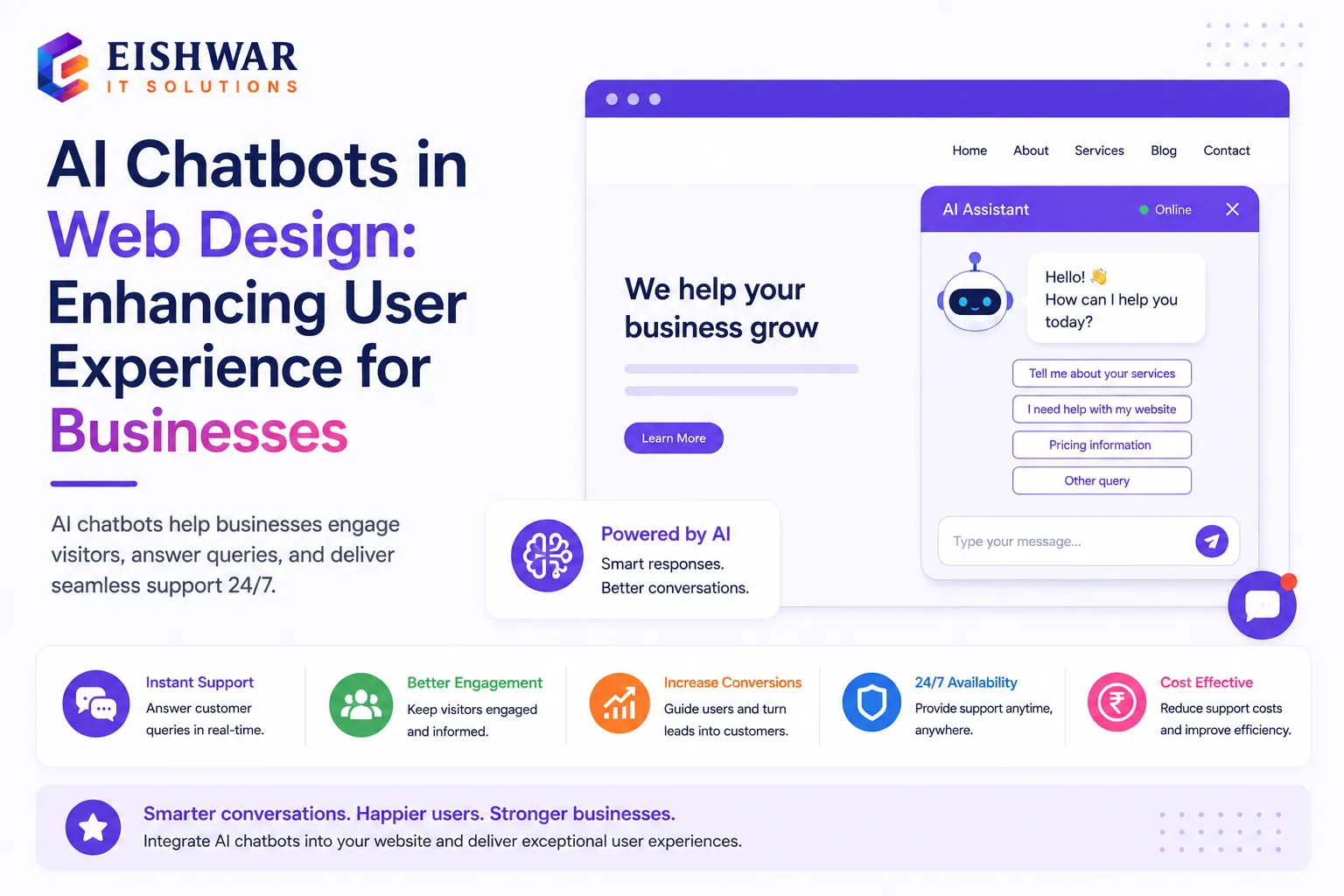
AI Chatbots in Web Design: Enhancing User Experience for Indian Businesses
Introduction
In 2026, the digital landscape in India is more competitive than ever. Business owners, marketers, and professionals are constantly seeking innovative ways to stand out. One of the most transformative trends is the integration of AI chatbots into website design. These conversational interfaces are not just a fancy add-on—they are reshaping how users interact with brands online. For Indian businesses, adopting AI chatbots can lead to higher engagement, better customer service, and increased conversions. This article explores the impact of AI chatbots on website design and provides actionable tips for seamless integration.
Main Section 1: Understanding AI Chatbots and Conversational UI
AI chatbots are software programs that use artificial intelligence to simulate human conversation. When integrated into a website, they create a conversational user interface (UI) that allows visitors to interact naturally. Unlike traditional chatbots that follow rigid scripts, AI-powered versions learn from interactions and improve over time. For Indian businesses, this means offering 24/7 support in multiple languages, including Hindi, Tamil, and Bengali. Conversational UI makes websites more intuitive, reducing the learning curve for users. By understanding the basics, you can appreciate why this technology is a game-changer for web design.
For example, a small e-commerce store selling handmade crafts in Jaipur can deploy a chatbot that answers questions about shipping, returns, and product materials in Hindi or English. The chatbot can also suggest items based on the user's browsing history, creating a personalized shopping experience. This level of responsiveness builds trust and encourages repeat visits. Furthermore, conversational UI can guide users through complex processes, such as booking a service or filling out a form, by breaking down steps into simple questions. This reduces abandonment rates and improves overall satisfaction.
Main Section 2: Benefits of AI Chatbots for Indian Businesses
Integrating AI chatbots into your website design offers numerous benefits tailored to the Indian market. First, they enhance user experience by providing instant responses to queries, which is crucial in a fast-paced digital environment. Second, chatbots can handle multiple conversations simultaneously, reducing the need for large customer support teams. Third, they collect valuable data on user preferences and behavior, enabling personalized marketing. For example, an e-commerce site can use a chatbot to recommend products based on past purchases. Additionally, chatbots improve lead generation by qualifying visitors before passing them to sales teams. These advantages directly impact your bottom line, making chatbot integration a smart investment.
Consider a real estate company in Mumbai that uses a chatbot to pre-screen potential buyers. The chatbot asks about budget, preferred location, and property type, then schedules a site visit with an agent. This saves the sales team hours of manual qualification and ensures they focus on high-intent leads. Similarly, a restaurant chain in Delhi can use a chatbot to take reservations, answer menu questions, and even process orders for delivery. By automating these tasks, the business reduces operational costs and improves customer service. Data collected by the chatbot can also reveal popular dishes or peak hours, informing marketing campaigns and inventory management.
Main Section 3: How to Integrate AI Chatbots into Your Website Design
Integrating an AI chatbot requires careful planning to ensure it complements your design. Start by defining the chatbot's purpose—whether it's customer support, lead generation, or sales assistance. Next, choose a platform that aligns with your technical capabilities, such as Dialogflow, ManyChat, or custom development. Design the chatbot's interface to match your brand's visual identity, using colors, fonts, and tones that resonate with your audience. Place the chatbot prominently but not intrusively, such as a floating button in the bottom right corner. Test the chatbot thoroughly with real users to refine its responses. For Indian businesses, consider adding support for regional languages and local cultural references to build trust. Finally, monitor performance metrics like response time and user satisfaction to continuously improve.
For a practical example, a financial services firm in Bangalore might use Dialogflow to build a chatbot that answers common queries about loan eligibility, interest rates, and documentation. The chatbot's interface could feature the company's brand colors and a friendly tone. During testing, the team might discover that users often ask about specific loan products, so they add quick-reply buttons for "Home Loan," "Personal Loan," and "Business Loan." After launch, they track metrics like average session duration and the number of queries resolved without human handoff. Based on this data, they refine the chatbot's responses to include more detailed information about interest rates and processing fees. This iterative approach ensures the chatbot remains useful and engaging.
Expert Tips
To maximize the impact of AI chatbots in web design, follow these expert tips:
- Start Small: Begin with a simple FAQ chatbot and expand as you learn. For instance, a local bakery in Chennai can start with a chatbot that answers hours, location, and menu questions, then later add order-taking capabilities.
- Human Handoff: Ensure seamless transition to human agents for complex issues. A chatbot for a telecom provider should escalate billing disputes or technical faults to a live agent without forcing the user to repeat themselves.
- Personalization: Use user data to tailor conversations and recommendations. An online clothing retailer can greet returning customers by name and suggest items based on past purchases or browsing history.
- Multilingual Support: Cater to India's diverse linguistic audience. A travel booking site can offer chatbot conversations in Hindi, Tamil, or Bengali, making it accessible to users who prefer regional languages.
- Regular Updates: Keep the chatbot's knowledge base current with new information. For a news portal, the chatbot should be updated daily with trending topics and breaking stories to provide relevant responses.
Common Mistakes
Avoid these pitfalls when integrating AI chatbots into your website design:
- Overcomplicating: Too many features can confuse users. A chatbot for a small business should focus on core tasks like answering FAQs and capturing leads, rather than trying to do everything.
- Ignoring Mobile: Ensure the chatbot works flawlessly on mobile devices. Many Indian users access websites via smartphones, so the chatbot should be responsive and easy to use on small screens.
- Lack of Personality: A robotic tone can alienate users. A chatbot for a children's toy store should use playful language and emojis, while a legal firm's chatbot should maintain a professional yet approachable tone.
- Poor Training: Insufficient training leads to irrelevant responses. Train the chatbot with real customer interactions and update its knowledge base regularly to handle new queries.
- Neglecting Privacy: Be transparent about data collection and usage. Display a clear privacy policy and allow users to opt out of data collection, especially in light of India's data protection regulations.
Future Trends
The future of AI chatbots in web design is exciting. Expect more advanced natural language processing (NLP) that understands context and emotions. Voice-enabled chatbots will become common, allowing users to speak instead of type. Integration with augmented reality (AR) could enable virtual try-ons for products. For Indian businesses, chatbots will increasingly support hyper-local content and payment options like UPI. As AI evolves, chatbots will become proactive, anticipating user needs before they ask. Staying ahead of these trends will give your website a competitive edge.
For example, a chatbot for a fashion retailer might use AR to let users "try on" clothes virtually, then suggest matching accessories. A food delivery service could use voice commands to place orders, integrating with UPI for seamless payments. In rural areas, chatbots might offer voice-based support in local dialects, bridging the digital divide. By 2027, we may see chatbots that analyze user sentiment in real-time, adjusting their tone to de-escalate frustration or amplify excitement. These advancements will make websites more intuitive and engaging, driving higher conversion rates and customer loyalty.
FAQs
- What is an AI chatbot? An AI chatbot is a software program that uses artificial intelligence to simulate human conversation, helping users interact with websites naturally. Unlike rule-based bots, AI chatbots learn from interactions and improve over time.
- How can AI chatbots improve my website's user experience? They provide instant responses, personalize interactions, and handle multiple queries simultaneously, making the site more engaging and efficient. For example, a chatbot can guide users through a product selection process, reducing bounce rates.
- Are AI chatbots expensive to implement? Costs vary based on complexity, but many affordable platforms exist for small and medium businesses in India. Basic chatbots can be built using free tiers of services like Dialogflow or ManyChat, while custom solutions may cost more.
- Can AI chatbots support multiple languages? Yes, modern AI chatbots can be trained to understand and respond in various languages, including Hindi, Tamil, and more. This is crucial for reaching India's diverse audience and building trust.
- How do I measure the success of an AI chatbot? Track metrics like response time, user satisfaction scores, conversion rates, and the number of queries resolved without human intervention. Regular analysis helps refine the chatbot's performance.
- What industries benefit most from AI chatbots in India? E-commerce, real estate, hospitality, healthcare, and financial services see significant benefits. For instance, a hospital chatbot can schedule appointments and provide preliminary symptom checks, reducing administrative workload.
- How do I ensure my chatbot complies with Indian data privacy laws? Implement clear privacy policies, obtain user consent for data collection, and store data securely. Follow guidelines from the Digital Personal Data Protection Act to avoid legal issues.
Conclusion
AI chatbots are revolutionizing website design by creating dynamic, conversational user experiences. For Indian businesses, this technology offers a powerful way to engage customers, streamline operations, and drive growth. By understanding the benefits, following integration best practices, and avoiding common mistakes, you can leverage AI chatbots to enhance your online presence. The future is conversational, and now is the time to embrace it.
CTA
Ready to transform your website with AI chatbots? Contact EishwarITSolution today for a free consultation and discover how we can help you integrate conversational UI seamlessly.