
Video SEO for Indian Businesses: Optimizing YouTube and Google Video R
Published on: 13 Jun 2026
Video SEO for Indian Businesses: Optimizing YouTube and Google Video Results in 2026
Introduction
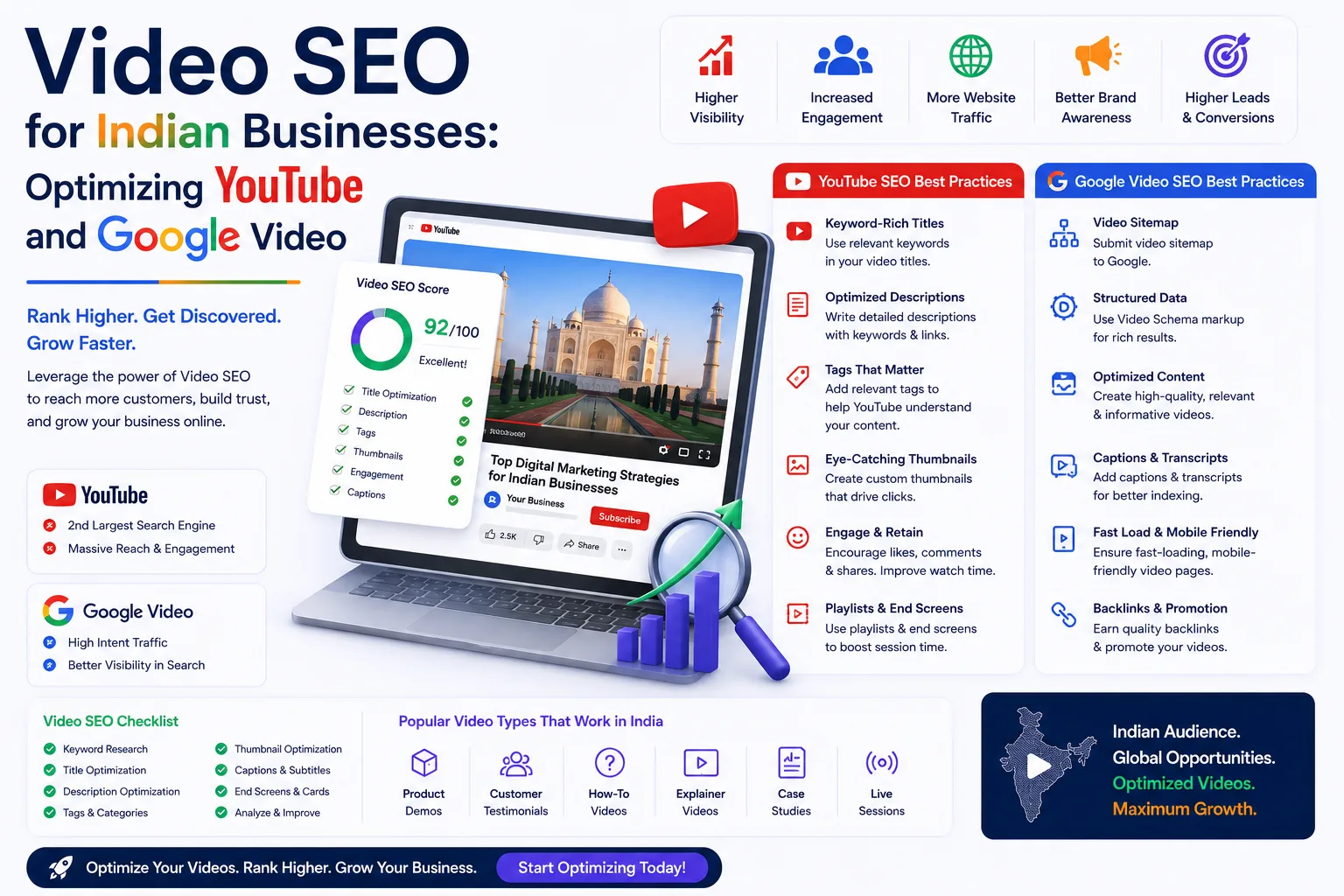
Video content is no longer a nice-to-have — it's a must for businesses aiming to capture attention in 2026. With YouTube being the second largest search engine and Google increasingly featuring video carousels, optimizing your videos for search is critical. For Indian businesses, where mobile video consumption is skyrocketing, video SEO can be a game-changer. In this guide, we'll walk you through practical steps to rank your videos higher on YouTube and Google, driving more organic traffic and leads.
Learn more about our Website services
Main Section 1: Why Video SEO Matters for Indian Businesses
India has over 600 million internet users, and a majority consume video content regularly. From product demos to customer testimonials, videos build trust and explain complex ideas quickly. But without SEO, your videos get lost in the noise. Video SEO helps you appear in YouTube search results, Google video tabs, and even featured snippets. For example, a local restaurant in Mumbai can rank for "best biryani recipe" by optimizing a cooking video — attracting both foodies and potential customers. Similarly, a small business in Bangalore offering IT services can create a video titled "Top 5 Cybersecurity Tips for Startups in India 2026" and, with proper optimization, appear in Google's video carousel for relevant queries. This not only drives targeted traffic but also establishes authority in a competitive market.
Main Section 2: Key Video SEO Factors You Must Optimize
2.1 Title and Description
Your video title should include the primary keyword naturally and be compelling. For instance, "How to Start a Small Business in India: Step-by-Step Guide 2026" works better than "Business Tips." The description should be at least 200 words, summarizing the video and including relevant keywords. Add timestamps for longer videos to improve user experience. For example, if your video is 15 minutes long, break it into sections like "0:00 Introduction," "2:30 Step 1: Register Your Business," "5:45 Step 2: Get Licenses," etc. This not only helps viewers navigate but also signals to YouTube that your content is well-structured. Additionally, include a link to your website or a relevant landing page in the first few lines of the description, as YouTube often truncates longer descriptions.
2.2 Tags and Categories
Use 5-10 relevant tags including broad and specific terms. For a video on "local SEO," tags like "SEO for small business," "local SEO India," and "Google My Business" help YouTube understand your content. Choose the most fitting category under "Education" or "How-to." For example, a video about "Digital Marketing Tips for Indian Startups" could also include tags like "startup marketing," "India business growth," and "2026 trends." Avoid using irrelevant tags just to gain views — YouTube's algorithm can detect and penalize this. Instead, focus on tags that accurately describe your content and target audience.
2.3 Thumbnails and Engagement
Custom thumbnails with high contrast, faces, and text overlays increase click-through rates. Encourage likes, comments, and shares — these engagement signals boost rankings. Ask viewers to subscribe and watch another video to increase session time. For instance, a thumbnail showing a person with an expressive face and text like "5 Secrets to Rank #1" can significantly outperform a generic screenshot. Use tools like Canva or Photoshop to create thumbnails that are 1280x720 pixels and under 2MB. Also, add a subtle border or drop shadow to make the thumbnail pop against YouTube's white background.
👉 Don't wait for the perfect moment; turn your vision into reality today.
Free Consultation2.4 Transcripts and Captions
Uploading a transcript or enabling auto-captions makes your video accessible and provides additional text for Google to index. Use SRT files for accuracy. This is especially useful for Indian languages — add Hindi or regional language captions to reach a wider audience. For example, if your video is in English, you can still add Hindi captions to attract non-English speakers. Tools like Rev.com or Descript can help generate accurate transcripts. Additionally, include a full transcript in the video description or as a separate blog post on your website to further boost SEO.
2.5 Video File Name and Hosting
Rename your video file before uploading — use hyphens and keywords, e.g., "video-seo-tips-india-2026.mp4." Hosting on YouTube is best for organic reach, but embedding on your website with schema markup can also drive Google rankings. For example, if you upload a video to YouTube, embed it on a relevant blog post and add VideoObject schema to the page. This tells Google that the page contains a video, increasing the chances of appearing in video results. Also, consider using a CDN for faster loading if you host videos on your own server.
Main Section 3: Advanced Video SEO Strategies for 2026
3.1 Structured Data (Schema Markup)
Add VideoObject schema to pages where you embed videos. This helps Google display rich snippets with thumbnails, duration, and publish date. Use Google's Structured Data Testing Tool to validate. For example, if you have a blog post about "How to Optimize for Voice Search in 2026" and embed a related video, adding schema markup can make the video appear as a rich result in search. Ensure you include properties like name, description, thumbnailUrl, uploadDate, and duration. This is a technical step but can significantly improve click-through rates.
3.2 Video Sitemaps
Create a video sitemap and submit it to Google Search Console. Include the video title, description, thumbnail URL, and duration. This ensures Google crawls and indexes your video content correctly. For example, if you have multiple videos on your site, a video sitemap helps Google discover them faster. You can generate a sitemap using plugins like Yoast SEO (for WordPress) or manually with XML. Update the sitemap whenever you add new videos to keep Google informed.
3.3 Optimize for Voice Search
Voice searches are often question-based. Include FAQ-style content in your video description and transcript. For example, "What is video SEO?" and "How to do video SEO in India?" can capture voice queries. In 2026, voice search is expected to account for a significant portion of searches, especially on mobile devices. Structure your video to answer common questions directly. For instance, if your video is about "Digital Marketing Trends," include a section that answers "What is the biggest trend in digital marketing for 2026?" This increases the chances of being featured in voice search results.
3.4 Leverage YouTube Shorts
Shorts are a separate feed on YouTube and can drive massive traffic. Create 15-60 second teasers of your longer videos with a hook. Use #Shorts and relevant keywords in the title. For example, a real estate agent can post "Top 3 Home Buying Tips in 2026 #Shorts" and link to the full video. Shorts are ideal for capturing attention quickly and can lead to increased channel subscriptions. Ensure your Shorts have a clear call-to-action, like "Watch the full video for more tips!" and include a link in the description.
👉 Free Website Audit
Get Free Audit3.5 Cross-Promote on Social Media
Share your videos on LinkedIn, Twitter, and Facebook with engaging captions. Embed them in blog posts to increase watch time. The more external views and embeds, the better your video ranks. For example, if you create a video about "SEO Tips for E-commerce in India," share it on LinkedIn with a caption like "Struggling with e-commerce SEO? Watch this video for actionable tips!" and tag relevant industry groups. Also, consider using platforms like Instagram Reels or Facebook Watch to repurpose content. Each external view signals to YouTube that your content is valuable, boosting its ranking.
Expert Tips
1. Focus on watch time — YouTube ranks videos with high retention. Keep intros under 10 seconds and deliver value fast. For example, start with a hook like "In this video, I'll show you how to double your traffic in 30 days."
2. Use end screens and cards to promote other videos and increase session time. For instance, add a card that links to a related video about "Advanced SEO Techniques" at the end of your video.
3. Analyze your competitors — see which keywords they rank for and create better content. Use tools like TubeBuddy to spy on competitor tags and titles.
4. Engage with your audience — reply to comments within 24 hours to boost community signals. This encourages more interaction and signals to YouTube that your channel is active.
5. Update old videos — refresh titles, descriptions, and thumbnails to maintain rankings. For example, if a video from 2024 is still relevant, update the title to include "2026" and add new keywords.
Common Mistakes
❌ Keyword stuffing in titles or descriptions — it hurts readability and may get penalized. For example, avoid titles like "SEO SEO SEO Tips 2026."
❌ Ignoring mobile optimization — most Indian users watch on phones; ensure your thumbnails and text are readable. Test your thumbnails on a mobile screen before uploading.
❌ Not adding a CTA — always ask viewers to subscribe, like, or visit your website. A simple "Subscribe for more tips" at the end can boost engagement.
❌ Using generic tags — be specific to your niche and location. Instead of just "marketing," use "digital marketing India 2026."
❌ Neglecting analytics — check YouTube Studio regularly to see what's working and adjust. For example, if a video has high impressions but low CTR, consider changing the thumbnail.
Future Trends
In 2026, AI-generated video summaries will become common. Google may prioritize videos with high engagement and accurate captions. Short-form videos will continue to dominate, but long-form educational content will also thrive. Expect more integration with Google Business Profile — adding videos to your GBP listing can boost local SEO. Voice search optimization will become even more critical for video content. Additionally, interactive videos (e.g., with clickable elements) may gain traction, allowing viewers to engage directly within the video. Indian businesses should also watch for regional language support — creating videos in Hindi, Tamil, or Bengali can tap into underserved audiences.
👉 Free Homepage Demo
Book DemoFAQs
What is video SEO?
Video SEO (Search Engine Optimization) is the process of optimizing video content to rank higher in search engine results pages (SERPs) and on video platforms like YouTube. It involves optimizing titles, descriptions, tags, thumbnails, transcripts, and technical elements like schema markup.
How long should my video be for SEO?
There's no fixed length, but videos between 5-15 minutes tend to perform well for educational content. For YouTube, watch time is key — ensure your video is engaging throughout. For Shorts, keep it under 60 seconds. However, for tutorials or deep dives, 10-20 minutes can work if the content is valuable.
Do I need to upload videos to YouTube for SEO?
YouTube is the most effective platform for organic video SEO because Google owns it and often prioritizes YouTube videos. However, you can also embed videos on your website with proper schema markup to rank in Google video results. For example, hosting a video on your own server and adding VideoObject schema can help it appear in search, but YouTube typically has better reach.
How can I rank my video for local searches in India?
Include location-specific keywords in your title, description, and tags. For example, "best digital marketing agency in Delhi." Also, add your business location in the video description and use local hashtags. Creating videos about local events or landmarks can also help. Additionally, embed the video on your Google Business Profile to boost local SEO.
What tools can I use for video SEO?
Popular tools include TubeBuddy and vidIQ for keyword research and optimization, Google Search Console for monitoring video sitemaps, and Canva for creating custom thumbnails. Also use YouTube Studio for analytics. For transcripts, tools like Rev.com or Descript are helpful. For schema markup, use Google's Structured Data Markup Helper.
Is video SEO worth it for small businesses in India?
Absolutely. Video SEO is cost-effective and can drive targeted traffic. A small business can create simple videos using a smartphone, optimize them properly, and start appearing in search results. It's a great way to compete with larger brands. For instance, a local bakery in Pune can create a video titled "How to Make the Perfect Chocolate Cake at Home" and rank for related queries, attracting customers.
How often should I upload videos for SEO?
Consistency matters more than frequency. Aim for at least one video per week to keep your channel active. However, quality should never be sacrificed for quantity. If you can only produce one high-quality video per month, that's better than weekly low-quality uploads. Use a content calendar to plan topics in advance.
Conclusion
Video SEO is an essential part of any digital marketing strategy in 2026. By optimizing your videos for YouTube and Google, you can reach a wider audience, build trust, and generate more leads. Start with the basics — titles, descriptions, and thumbnails — then move to advanced tactics like schema markup and voice search optimization. The key is consistency and monitoring your performance. Remember, video SEO is not a one-time task; it requires ongoing effort to adapt to algorithm changes and audience preferences. With the right approach, Indian businesses can leverage video content to stand out in a crowded digital landscape.
CTA
Ready to boost your business with video SEO? Contact EishwarITSolution today for a free consultation. Our experts will help you create and optimize video content that ranks and converts. Don't let your videos get lost — start optimizing now!