
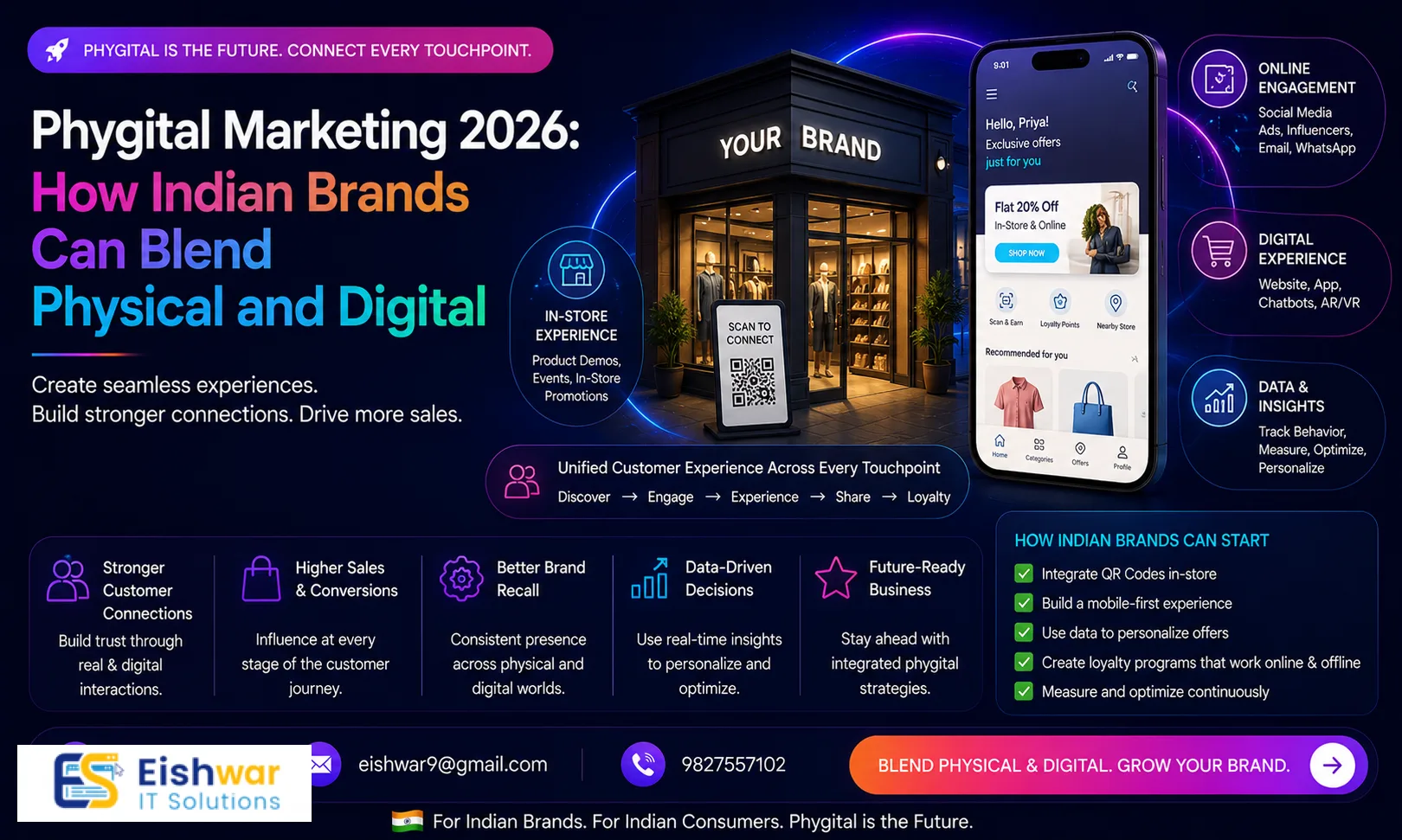
Phygital Marketing 2026: How Indian Brands Can Blend Physical and Digi
Published on: 12 Jun 2026
Phygital Marketing 2026: How Indian Brands Can Blend Physical and Digital Experiences
Introduction
Remember when online and offline shopping felt like two separate worlds? Those days are fading fast. In 2026, the smartest Indian brands are tearing down the walls between physical stores and digital screens. This isn't just omnichannel—it's phygital, a seamless blend of physical and digital experiences that feels natural, not forced.
Learn more about our Website services
For business owners, marketers, and professionals across India, phygital marketing isn't a buzzword; it's a necessity. Customers now expect to research online, try in-store, buy via app, and get support through WhatsApp—all without friction. This article walks you through what phygital really means, why it matters for Indian audiences, and how you can implement it today.
Main Section 1: What Is Phygital Marketing and Why It Matters in India
Phygital marketing integrates digital technology into physical spaces to create a unified customer journey. Think of a clothing store where you scan a QR code on a shirt tag to see styling videos, check availability in other sizes, and pay via UPI—all while standing in the aisle. This approach bridges the gap between the convenience of online shopping and the tangible trust of in-store experiences.
India is uniquely positioned for phygital growth. With over 800 million internet users and a booming smartphone penetration, even tier-2 and tier-3 cities are digitally active. Yet, trust in physical touchpoints remains high. According to a 2025 report by Deloitte, 73% of Indian consumers prefer brands that offer both online and offline experiences. This blend builds confidence and reduces purchase hesitation. For example, a customer in a small town might browse a brand's Instagram, visit a local store to touch the product, and then order via the brand's app for home delivery—all within the same day.
Practical examples abound. Reliance Retail's JioMart allows customers to order online and pick up from nearby stores within hours, reducing delivery costs and wait times. Similarly, Titan Eye+ uses virtual try-on tools online while encouraging in-store visits for precise fittings. These brands understand that phygital isn't about replacing one channel with another—it's about making every channel work together. For Indian businesses, this means tapping into the vast potential of a digitally savvy yet relationship-driven consumer base.
Main Section 2: Key Strategies to Implement Phygital Marketing
2.1 Leverage QR Codes and Smart Labels
QR codes are the simplest entry point. Place them on product packaging, shelf talkers, or window displays. Link them to product demos, customer reviews, or exclusive discounts. For instance, a spice brand like MDH could link to recipe videos featuring their masala, while a clothing brand like FabIndia might link to styling tips. Ensure the landing pages are mobile-optimized and load quickly—under 2 seconds—to avoid drop-offs. A practical tip: use dynamic QR codes that allow you to update the linked content without reprinting labels, making it easy to test different offers.
2.2 Augmented Reality (AR) Try-Ons
AR is no longer a gimmick. Furniture brands like Pepperfry let customers visualize sofas in their living rooms via smartphone cameras, reducing the guesswork of size and color. Beauty brands like Nykaa offer virtual lipstick try-ons, which have been shown to increase conversion rates by 30%. For Indian brands, AR can be particularly effective for categories like jewelry (e.g., CaratLane), where customers want to see how a piece looks before purchasing. Start with simple AR filters on Instagram or a dedicated app feature to keep costs low.
👉 Don't wait for the perfect moment; turn your vision into reality today.
Free Consultation2.3 Unified Loyalty Programs
Reward customers regardless of channel. If a customer buys online but returns in-store, the loyalty points should sync automatically. Use a single customer view to track preferences and offer personalized recommendations. For example, Starbucks India allows customers to earn stars via app orders and in-store purchases, with a seamless experience across both. Implement a cloud-based CRM like Zoho or Salesforce to unify data, and ensure your loyalty app integrates with your POS system for real-time updates.
2.4 Click-and-Collect and BOPIS
Buy Online, Pick up In-Store (BOPIS) is exploding in India. It combines the convenience of online ordering with instant gratification of physical pickup. Brands like Decathlon have seen a 20% increase in in-store visits through BOPIS, as customers often make additional purchases during pickup. Ensure your POS system updates inventory in real time to avoid disappointments. A practical tip: offer a small discount or free sample for customers who choose BOPIS, incentivizing them to visit the store.
2.5 In-Store Digital Kiosks
Set up touchscreens in stores where customers can browse extended catalogues, check stock at other locations, or place orders for home delivery. This is especially useful for small retail spaces with limited shelf area. For example, a Westside store in a mall might use kiosks to showcase the full range of ethnic wear, allowing customers to order sizes not available on the floor. Ensure the kiosk interface is intuitive, with large buttons and multilingual support for Hindi, Tamil, and other regional languages.
Main Section 3: Real-World Indian Success Stories
Case Study 1: Lifestyle Stores
Lifestyle, a retail chain, introduced 'Scan & Shop' in 2025. Customers scan barcodes with their phone, see product details, and pay via the app while still in the store. This reduced checkout queues by 40% and increased average basket size by 15%, as customers discovered complementary items through digital recommendations. The key was integrating the app with the store's inventory system, so customers could see real-time stock levels.
Case Study 2: Tata Cliq
Tata Cliq's 'Phygital Stores' in Mumbai allow customers to try electronics and fashion, then order online for home delivery. The store also offers exclusive app-only discounts, driving digital adoption among walk-in customers. By using QR codes on product tags, customers can access detailed specs and reviews, reducing the need for sales staff. This approach has increased customer satisfaction scores by 25%.
Case Study 3: Local Kirana Stores
Small neighbourhood stores in Bengaluru now use WhatsApp ordering combined with physical delivery. Customers can browse a digital catalogue, place an order, and collect from the store or get it delivered. This simple phygital approach increased repeat purchases by 25%. The store owner uses a WhatsApp Business account to send personalized offers based on past orders, creating a loyal customer base without heavy investment.
👉 Free Website Audit
Get Free AuditExpert Tips
- Start small, scale fast: Pilot one phygital feature, like QR codes on product tags, then expand based on customer feedback. For example, a small boutique could test QR codes on 10 products and measure engagement before rolling out store-wide.
- Data integration is key: Ensure your CRM, POS, and e-commerce platforms talk to each other. Use APIs to sync inventory and customer data. Tools like Unicommerce or Vinculum can help Indian retailers manage this integration.
- Train your staff: Employees should be comfortable guiding customers through digital tools. Gamify training to boost adoption—for instance, reward staff who help the most customers use the app.
- Focus on mobile-first: Most Indian users access digital tools via smartphones. Design all phygital interactions for mobile screens, with responsive layouts and fast loading times.
- Measure what matters: Track footfall, digital engagement in-store, conversion rates, and customer satisfaction scores. Use tools like Google Analytics for digital and FootfallCam for physical metrics.
Common Mistakes
- Treating phygital as two separate strategies: Don't run online and offline teams in silos. Create a unified team with shared goals, such as increasing overall customer lifetime value rather than channel-specific sales.
- Ignoring data privacy: Indian consumers are becoming privacy-conscious. Be transparent about data collection and comply with DPDP Act 2023. For example, always get explicit consent before using customer data for personalization.
- Overcomplicating technology: Avoid flashy tech that adds friction. If a customer needs a tutorial to scan a QR code, it's too complex. Stick to familiar tools like UPI payments and WhatsApp.
- Neglecting the human touch: Phygital should enhance, not replace, personal interaction. Use digital tools to empower staff, not sideline them. For instance, equip sales associates with tablets to look up customer preferences in real time.
Future Trends
By 2027, expect AI-powered personalization to become standard in phygital. Stores will use facial recognition (with consent) to greet repeat customers and suggest items based on past purchases. IoT sensors will track foot traffic and adjust digital signage in real time—for example, promoting umbrellas when it starts raining. Voice commerce will integrate with in-store assistants via smart speakers, allowing customers to ask for product recommendations hands-free. India's phygital market is projected to grow at 25% CAGR, driven by rising smartphone usage and government initiatives like ONDC (Open Network for Digital Commerce), which enables small retailers to join digital marketplaces. Brands that invest early in these technologies will have a competitive edge.
FAQs
What is phygital marketing in simple terms?
Is phygital marketing suitable for small businesses in India?
How does phygital marketing improve customer loyalty?
What technology do I need to start phygital marketing?
How do I measure ROI of phygital campaigns?
What are the biggest challenges in implementing phygital marketing in India?
Can phygital marketing work for service-based businesses like salons or clinics?
Conclusion
Phygital marketing is not a futuristic concept—it's happening right now in India. Brands that successfully merge physical and digital experiences will win customer trust, loyalty, and revenue. Start with one small integration, learn from data, and scale. Your customers will thank you with their repeat business.
👉 Free Homepage Demo
Book DemoCTA
Ready to build your phygital strategy? Contact EishwarITSolution today for a free consultation. Our experts will help you integrate digital tools into your physical spaces, creating a seamless experience your customers will love.