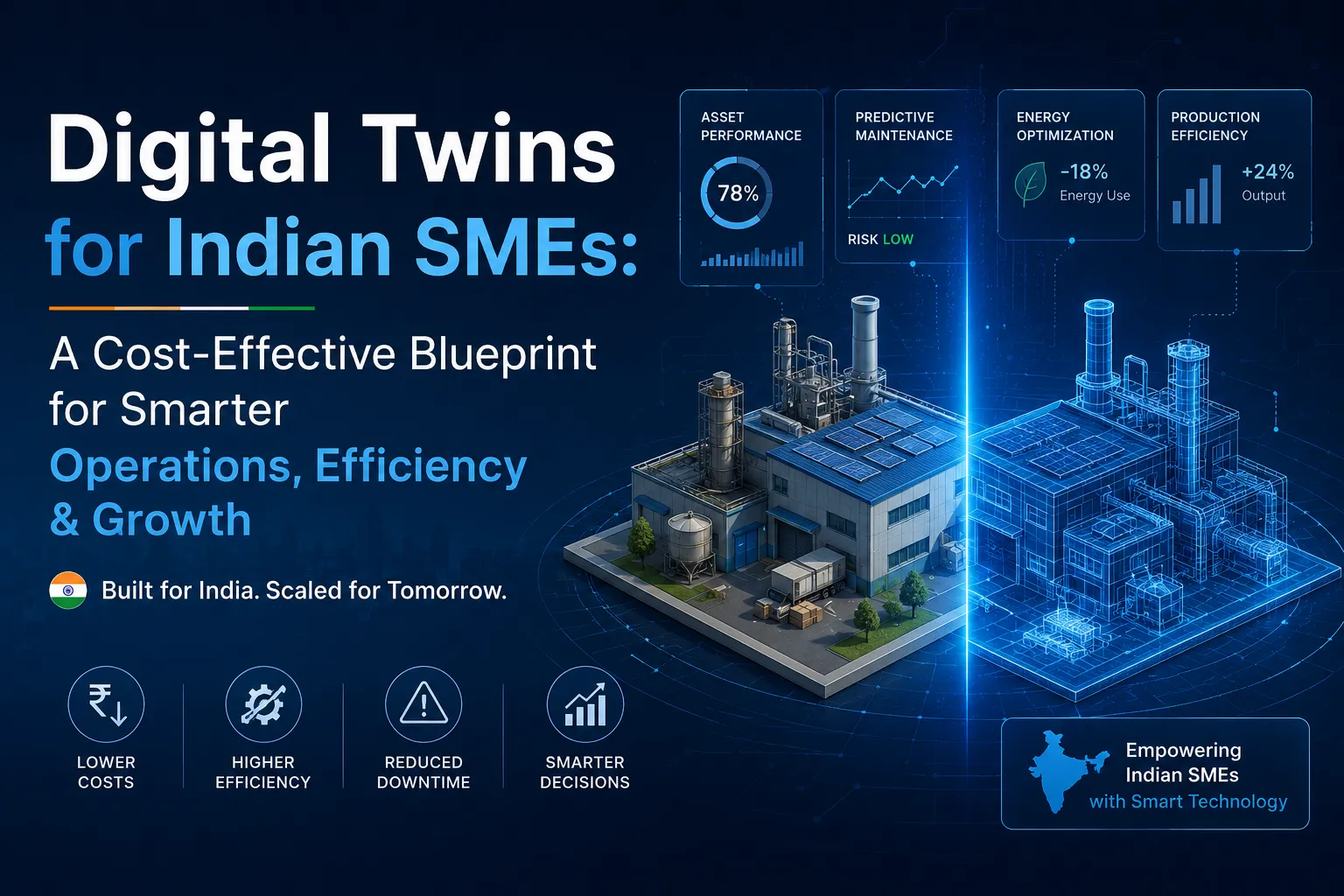
Digital Twins for Indian SMEs: A Cost-Effective Blueprint for Smarter
Published on: 18 Jun 2026
Digital Twins for Indian SMEs: A Cost-Effective Blueprint for Smarter Operations
Introduction
Imagine having a virtual replica of your factory floor, supply chain, or even your entire business that runs simulations in real time. You can test changes, predict failures, and optimize processes—all without touching your actual operations. This is the power of a digital twin. While once the domain of large corporations with deep pockets, digital twin technology is now accessible to Indian SMEs thanks to cloud computing, affordable IoT sensors, and open-source platforms.
Learn more about our Website services
In this guide, we'll break down what digital twins are, why they matter for SMEs in India, and how you can implement one on a budget. You'll get practical examples, actionable tips, and a clear roadmap to start your digital twin journey today.
Main Section 1: What is a Digital Twin and Why Should Indian SMEs Care?
A digital twin is a virtual model of a physical object, process, or system. It uses real-time data from sensors, IoT devices, and other sources to mirror its real-world counterpart. By analyzing this data, you can simulate scenarios, predict outcomes, and make informed decisions.
For Indian SMEs, digital twins offer several compelling benefits:
- Cost Reduction: Identify inefficiencies before they become costly problems. For example, a small manufacturing unit in Pune used a digital twin to reduce energy consumption by 15%.
- Predictive Maintenance: Avoid unexpected downtime. A textile SME in Surat predicted machine failures 48 hours in advance, saving ₹5 lakhs annually.
- Improved Quality: Simulate production changes to ensure quality standards without wasting raw materials.
- Faster Decision-Making: Test 'what-if' scenarios instantly. For instance, a logistics SME in Delhi optimized delivery routes using a digital twin, cutting fuel costs by 12%.
- Scalability: Start small and expand as your business grows.
The best part? You don't need a massive IT budget. With cloud-based platforms like AWS IoT TwinMaker, Microsoft Azure Digital Twins, or open-source options like Eclipse Ditto, you can get started for as little as ₹50,000.
Main Section 2: Building Your Digital Twin on a Budget – A Step-by-Step Blueprint
Here's a practical, phased approach to implementing a digital twin for your SME:
Phase 1: Identify Your Use Case (1-2 weeks)
Choose a single process or asset that has the highest impact on your business. Examples:
- Manufacturing: A critical machine (e.g., CNC, injection molding).
- Logistics: Your delivery fleet or warehouse.
- Retail: Customer footfall in a store.
- HVAC: Your office or factory cooling system.
Action: List the top 3 pain points (e.g., frequent breakdowns, high energy bills) and pick the one with the highest ROI.
Phase 2: Collect Data with Affordable IoT Sensors (2-4 weeks)
You don't need expensive industrial sensors. Use low-cost options:
- Temperature/Humidity: DHT22 sensor (₹500).
- Vibration: SW-420 sensor (₹200).
- Energy Monitoring: PZEM-004T (₹800).
- GPS: NEO-6M module (₹600).
Connect these to an Arduino or Raspberry Pi (₹2,000-₹5,000) and send data to the cloud via Wi-Fi or GSM.
Tip: If you're not tech-savvy, partner with a local IoT service provider (many offer packages under ₹25,000).
Phase 3: Choose a Digital Twin Platform (1-2 weeks)
Start with a free tier or low-cost option:
👉 Don't wait for the perfect moment; turn your vision into reality today.
Free Consultation- AWS IoT TwinMaker: Free for first 30 days, then pay-as-you-go. Ideal for manufacturing.
- Microsoft Azure Digital Twins: Free for 1,000 operations per month. Great for supply chain.
- Eclipse Ditto (Open Source): Free, but requires some technical expertise.
- ThingsBoard: Open-source IoT platform with digital twin capabilities.
Action: Sign up for a free trial and follow their quickstart guide.
Phase 4: Build and Simulate (2-4 weeks)
Using your platform, create a 3D model or a simple dashboard. Import your sensor data and set up alerts. For example, if vibration exceeds a threshold, send an SMS or email.
Example: A small packaging SME in Mumbai built a digital twin of their filling machine. They simulated different speeds and found the optimal setting that reduced spillage by 8%.
Phase 5: Iterate and Expand (Ongoing)
Once your first digital twin is running, analyze the insights and apply changes. Then, add more assets or processes. Over time, you'll have a comprehensive digital replica of your entire operation.
Main Section 3: Real-World Success Stories from Indian SMEs
Case 1: Precision Engineering in Coimbatore
A small CNC workshop had frequent spindle breakdowns. They installed vibration sensors on three machines and created a digital twin using Azure. Within a month, they identified a pattern: bearings failed after 800 hours of operation. They now schedule replacements proactively, reducing downtime by 60%.
Case 2: Cold Storage in Nashik
A farmer cooperative used a digital twin to monitor temperature and humidity across 10 cold storage units. They used low-cost DHT22 sensors and an open-source platform. The system alerted them when a unit's temperature rose, preventing spoilage worth ₹3 lakhs in the first year.
Case 3: E-commerce Fulfillment in Bangalore
A small e-commerce company created a digital twin of their warehouse. They simulated different layouts and pick paths. The optimized layout reduced order processing time by 20% and saved ₹1.2 lakhs annually in labor costs.
Expert Tips
- Start with a single pain point. Don't try to digitize everything at once. Focus on one area where you can see quick wins.
- Use open-source tools first. Platforms like Eclipse Ditto or ThingsBoard are free and have active communities. Upgrade to paid plans only when you need advanced features.
- Involve your team. Train your operators and maintenance staff. They are the ones who will benefit most from the insights.
- Set clear KPIs. Measure things like downtime reduction, energy savings, or quality improvement. This helps you justify the investment.
- Consider a hybrid approach. If you don't have in-house expertise, partner with a digital transformation consultant like EishwarITSolution for a pilot project.
Common Mistakes
- Overcomplicating the model: Start with a simple 2D dashboard. 3D models are cool but not always necessary.
- Ignoring data quality: Garbage in, garbage out. Ensure your sensors are calibrated and data is clean.
- Not acting on insights: A digital twin is only valuable if you use it to make decisions. Set up automated alerts and review dashboards weekly.
- Underestimating the learning curve: Allocate time for training. Consider hiring a part-time IoT expert for the first few months.
- Forgetting cybersecurity: Even small devices can be hacked. Use strong passwords, update firmware, and segment your network.
Future Trends
The digital twin landscape is evolving rapidly. Here's what's coming next for Indian SMEs:
👉 Free Website Audit
Get Free Audit- AI-Powered Twins: Machine learning will predict failures with greater accuracy, even suggesting optimal maintenance schedules automatically.
- Edge Computing: Processing data locally on devices will reduce latency and cloud costs, making digital twins even more affordable.
- Industry-Specific Solutions: Expect pre-built digital twin templates for sectors like textiles, food processing, and logistics.
- Digital Twin as a Service (DTaaS): Subscription-based models will lower the entry barrier further, with monthly plans starting under ₹10,000.
- Integration with Digital Payments & E-Invoicing: Digital twins will connect with your accounting software to provide a holistic view of operations and finances.
FAQs
1. What is the minimum budget needed to implement a digital twin for my SME?
2. Do I need to be a tech expert to use digital twins?
3. What are the best low-cost sensors for SMEs?
4. How long does it take to see ROI from a digital twin?
5. Can I use digital twins for non-manufacturing businesses like retail or services?
6. Is digital twin technology secure for small businesses?
7. What if my business doesn't have internet connectivity all the time?
Conclusion
Digital twins are no longer a luxury reserved for big enterprises. With affordable sensors, open-source platforms, and cloud computing, Indian SMEs can now harness this technology to optimize operations, reduce costs, and stay competitive. The key is to start small, focus on a specific problem, and iterate. Whether you're a manufacturer in Pune, a logistics provider in Delhi, or a retailer in Bangalore, a digital twin can give you the edge you need to thrive in 2026 and beyond.
👉 Free Homepage Demo
Book DemoCTA
Ready to build your first digital twin? Contact EishwarITSolution for a free consultation. Our experts will help you identify the best use case, select the right tools, and implement a cost-effective digital twin in under 8 weeks. Don't let your SME fall behind—embrace the future of smart operations today.