How to Choose the Right MVP Development Partner for Your Startup in In
Published on: 13 Jun 2026
How to Choose the Right MVP Development Partner for Your Startup in India
Introduction
Building a Minimum Viable Product (MVP) is the first big step for any startup. It helps you test your idea, gather feedback, and iterate quickly. But here's the catch: your MVP is only as good as the team that builds it. Choosing the right MVP development partner in India can make or break your startup journey. With hundreds of agencies and freelancers offering web solutions, how do you pick the one that aligns with your vision, budget, and timeline?
Learn more about our Website services
In this guide, we'll walk you through everything you need to know—from evaluating technical expertise to understanding cultural fit. Whether you're a first-time founder or a seasoned entrepreneur, these insights will help you make an informed decision. Let's dive in.
Main Section 1: Why the Right MVP Partner Matters for Your Startup
Your MVP is more than just a product; it's a validation tool. A skilled development partner brings not only technical know-how but also strategic thinking. They can help you prioritize features, avoid over-engineering, and launch faster. In India's competitive startup ecosystem, speed and quality are everything. A wrong partner can lead to missed deadlines, budget overruns, and a flawed product that fails to attract early adopters. For instance, a startup that rushed to launch with a poorly coded MVP might face security issues that scare away users, while a well-built MVP can secure early traction and investor interest.
Key benefits of a great MVP partner:
- Rapid prototyping and iteration cycles—they can turn your idea into a clickable prototype in days, not months.
- Cost-efficient development without compromising quality—they know where to cut corners (like using third-party APIs for non-core features) and where to invest.
- Access to diverse tech stacks and industry best practices—from React and Node.js to Python and AWS, they bring the right tools for the job.
- Ongoing support for post-launch improvements—bug fixes, feature tweaks, and scaling advice are part of the package.
For example, a fintech startup in Bangalore partnered with a local MVP agency that specialized in secure payment integrations. The result? A functional MVP in 6 weeks that secured seed funding. The right partner understands your domain and can anticipate challenges, such as regulatory compliance or user onboarding friction.
Main Section 2: Key Factors to Evaluate When Selecting an MVP Development Partner
Not all development partners are created equal. Here are the critical factors to assess, with practical tips to guide your evaluation:
Technical Expertise and Tech Stack
Does the partner have experience with the technologies you need? Whether it's React, Node.js, Python, or low-code platforms like Bubble, ensure they can deliver. Ask for case studies or past projects—look for examples that match your complexity level. A partner proficient in modern frameworks can build scalable MVPs that grow with you. For instance, if you're building a real-time chat app, they should have experience with WebSockets or Firebase. Tip: Request a short technical interview with their lead developer to gauge depth.
Portfolio and Industry Experience
Review their portfolio. Have they built MVPs for startups in your industry? Experience in e-commerce, SaaS, or healthcare brings valuable insights, such as understanding user behavior or compliance needs (e.g., HIPAA for healthtech). Look for diversity in projects—it shows adaptability. A partner who has worked on both a food delivery app and a project management tool likely knows how to handle different user flows and data models.
👉 Don't wait for the perfect moment; turn your vision into reality today.
Free ConsultationCommunication and Collaboration
Clear communication is non-negotiable. Will you have a dedicated project manager? How often will you get updates—daily standups, weekly demos? Tools like Slack, Jira, or Trello should be part of their workflow. A partner that values transparency reduces friction. For example, if they provide a shared roadmap and regular progress reports, you can catch issues early. Tip: During the interview, note how quickly they respond to your emails—it's a sign of their responsiveness.
Pricing and Value
Lowest cost isn't always best. Compare quotes but also evaluate what's included—post-launch support, testing, revisions. A fixed-price contract might seem safe, but hourly models can be more flexible for iterative development. For instance, a fixed price for a simple MVP might be ₹5 lakhs, but if you need to pivot after user feedback, an hourly model allows you to adjust scope without renegotiation. Tip: Ask for a detailed breakdown of costs—design, development, testing, and deployment—to avoid hidden fees.
Cultural Fit and Time Zone Alignment
India has a diverse talent pool. Working with a partner in the same time zone (or close) can speed up feedback loops. Cultural alignment ensures smoother collaboration, especially for UI/UX preferences—for example, an Indian audience might prefer vibrant colors and local language support, which a local partner understands intuitively. Tip: Schedule a video call to see if you have a rapport; a good cultural fit means fewer misunderstandings.
Main Section 3: Step-by-Step Process to Find and Vet Your MVP Partner
Follow this actionable process to zero in on the right partner:
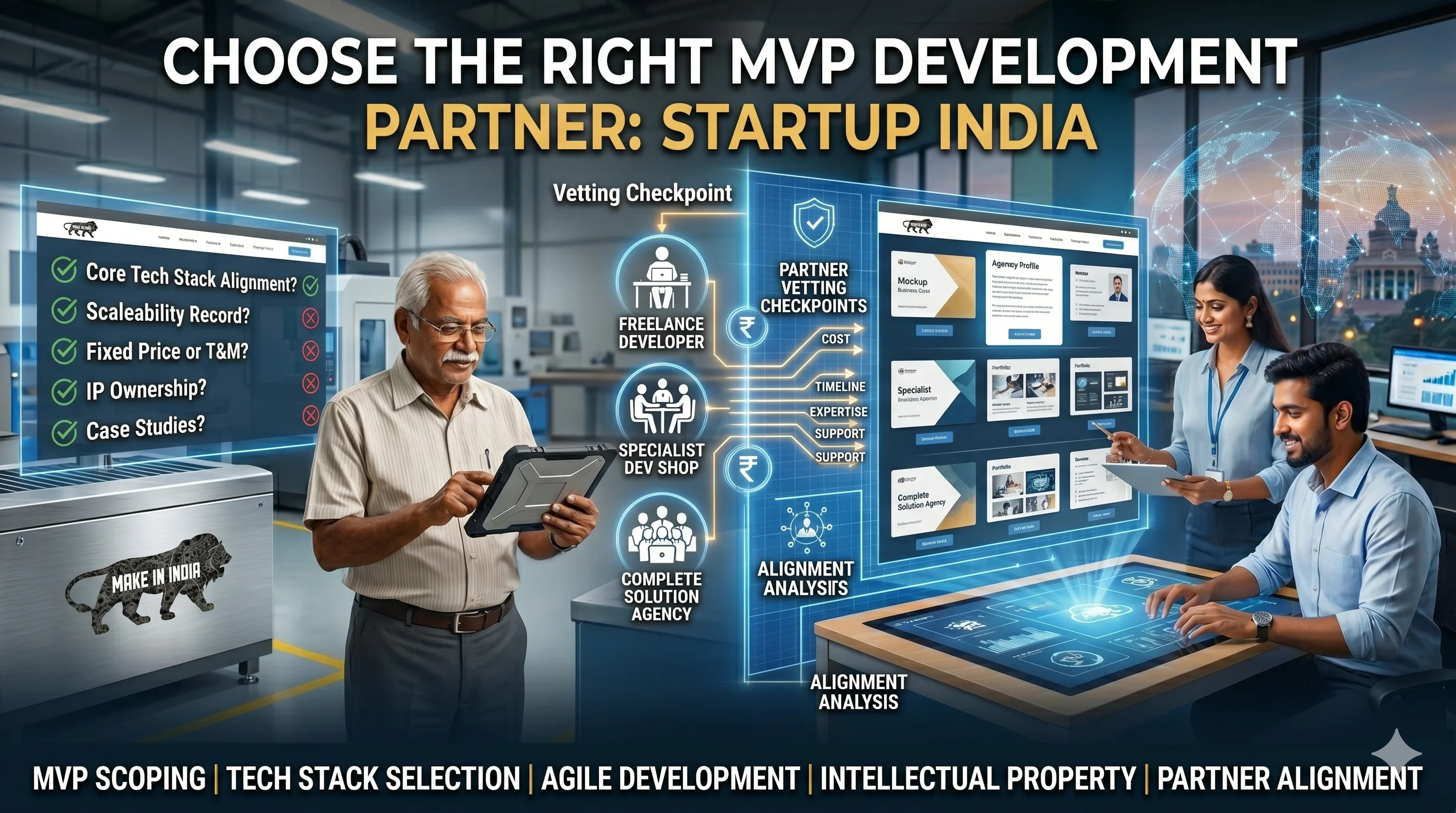
- Define Your Requirements: Write a clear brief—features, target users, timeline, budget. Include non-negotiables like security or scalability. This helps partners give accurate proposals. For example, specify if you need a payment gateway or social login.
- Research and Shortlist: Use platforms like Clutch, GoodFirms, or LinkedIn. Look for agencies with strong reviews in MVP development. Filter by location, size, and tech stack. Aim for 5-10 candidates.
- Conduct Interviews: Ask about their process, past failures, and how they handle scope creep. Gauge their enthusiasm for your idea. A good partner will ask probing questions about your target market and competition.
- Request a Test Project: A small paid pilot (like a landing page or API integration) can reveal their actual capabilities. For instance, ask them to build a single feature, like a user login system, and evaluate code quality and turnaround time.
- Check References: Talk to previous clients. Ask about deadlines, communication, and post-launch support. Specific questions: "Did they deliver on time?" "How did they handle bugs after launch?"
- Evaluate Legal and Security: Ensure they sign an NDA and have data protection policies. IP ownership should be clearly defined in the contract. For example, you should own the source code and any custom designs.
For instance, a healthtech startup in Mumbai used this process to select a partner from Pune. The pilot project—a simple appointment booking feature—helped them realize the agency's strength in HIPAA compliance, which was critical for their MVP. They then negotiated a contract with clear milestones and a 30-day post-launch support period.
👉 Free Website Audit
Get Free AuditExpert Tips
- Start with a discovery workshop: Many top agencies offer a 2-day sprint to align on goals and scope. It's worth the investment—typically ₹50,000 to ₹1 lakh—as it prevents costly misunderstandings later.
- Look for a product mindset: Your partner should challenge assumptions and suggest improvements, not just code blindly. For example, they might recommend using a third-party service for email notifications instead of building from scratch.
- Don't ignore design: A great MVP isn't just functional—it's user-friendly. Ensure your partner has UX/UI expertise. A poorly designed MVP can turn away early adopters, even if the backend is solid.
- Plan for scalability: Choose a partner who uses modular architecture so your MVP can evolve into a full product. For instance, they should use microservices or a well-structured codebase that allows adding features without rewriting everything.
Common Mistakes
- Choosing based solely on price: Cheap development often leads to technical debt, bugs, and rework costs later. A ₹2 lakh MVP might end up costing ₹10 lakh in fixes.
- Skipping the discovery phase: Jumping straight to coding without proper planning results in misaligned expectations. For example, you might end up with features no one uses.
- Ignoring post-launch support: Your MVP will need bug fixes and feature tweaks. Ensure your contract includes a support period—typically 30 to 90 days.
- Overlooking cultural fit: Even if the technical skills are great, poor communication can derail the project. For instance, a partner that doesn't share progress regularly can leave you in the dark.
Future Trends
The MVP development landscape in India is evolving. Here's what to watch:
- AI-driven development: Tools like GitHub Copilot are speeding up coding, but human oversight remains crucial for quality and security. Some agencies now use AI for code generation, reducing development time by 20-30%.
- No-code and low-code rise: Platforms like Bubble and Webflow allow faster MVPs, but they may have limitations for complex logic or scalability. They're ideal for simple apps like marketplaces or directories.
- Remote-first collaboration: With distributed teams, tools like Figma and Miro enable seamless design and planning. This trend allows startups to hire talent from anywhere in India, not just major cities.
- Focus on sustainability: Green hosting and efficient code are becoming selling points for eco-conscious startups. Some partners now offer carbon-neutral hosting options.
FAQs
What is the typical cost of MVP development in India?
Costs vary widely based on complexity and partner. A basic MVP can range from ₹3 lakhs to ₹15 lakhs. Always get multiple quotes and compare value, not just price. For example, a simple landing page with a form might cost ₹3-5 lakhs, while a full-fledged marketplace with payments could be ₹10-15 lakhs.
👉 Free Homepage Demo
Book DemoHow long does it take to build an MVP?
Typically 4 to 12 weeks. Simple MVPs can be done in 4-6 weeks, while more complex ones may take 8-12 weeks. A good partner will give a realistic timeline based on your feature list. For instance, a social media app with user profiles and feeds might take 8 weeks, while a basic e-commerce site could be 6 weeks.
Should I hire a freelancer or an agency for my MVP?
It depends on your needs. Freelancers are cost-effective for simpler projects, but agencies offer a full team (designers, developers, QA) and are better for complex or scalable MVPs. For example, a freelancer might charge ₹2-3 lakhs for a basic app, but an agency with a team of 4-5 people can deliver a more polished product in the same time frame.
What should I look for in an MVP development contract?
Key clauses: IP ownership, confidentiality (NDA), payment milestones, scope of work, revision limits, and post-launch support. Always have a lawyer review it. For example, ensure the contract specifies that you own the source code and that there's a limit on free revisions (e.g., 2 rounds) to avoid scope creep.
Can I build an MVP without technical knowledge?
Yes, with the right partner. Many agencies guide you through the process. However, having basic understanding of MVP principles helps in effective collaboration. For instance, knowing that an MVP should focus on core features (not bells and whistles) allows you to prioritize effectively.
How do I ensure my MVP gets traction?
Focus on solving a real problem, get early user feedback, and iterate. Your development partner should also help with launch strategy and analytics setup. For example, they can integrate tools like Google Analytics or Mixpanel to track user behavior, and suggest a soft launch to a small group for initial feedback.
What are the red flags when choosing an MVP partner?
Red flags include: vague pricing, lack of portfolio, poor communication, no NDA, and reluctance to provide references. For instance, if a partner can't show a past project similar to yours, it's a warning sign. Also, be wary of those who promise unrealistic timelines, like a full MVP in 2 weeks.
Conclusion
Choosing the right MVP development partner in India is a strategic decision that impacts your startup's trajectory. By focusing on technical expertise, communication, and cultural fit, you can find a partner who turns your vision into a market-ready product. Remember to vet thoroughly, start small, and plan for the long term. The right partner doesn't just build your MVP—they help you build a foundation for growth. With the insights from this guide, you're now equipped to make a choice that sets your startup up for success.
CTA
Ready to build your MVP? Contact EishwarITSolution today for a free consultation. Our team specializes in MVP web solutions for Indian startups. Let's turn your idea into reality. We'll help you define your MVP scope, choose the right tech stack, and launch in weeks—not months. Get in touch now to start your journey.