
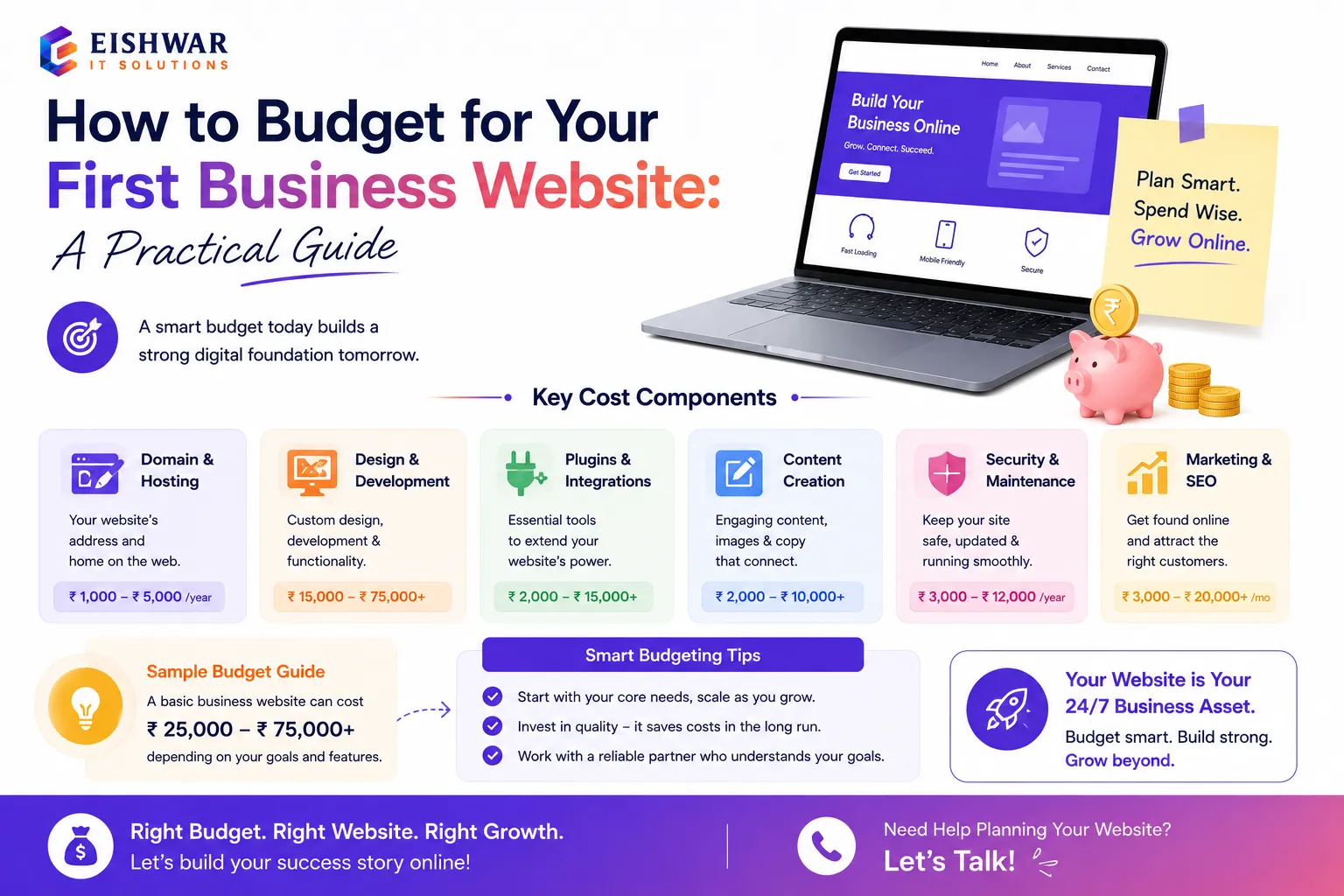
How to Budget for Your First Business Website: A Practical Guide
Published on: 14 Jun 2026
How to Budget for Your First Business Website: A Practical Guide for Indian Entrepreneurs
Introduction
Building a website is one of the most important investments you can make for your business. But if you're a first-time entrepreneur in India, figuring out how much to spend can feel overwhelming. Do you go with a budget-friendly DIY builder or invest in a custom site? What about hosting, domain, maintenance, and SEO? In this guide, we'll walk you through a realistic website budget for Indian businesses, covering everything from domain registration to ongoing updates. By the end, you'll have a clear roadmap to allocate your resources wisely and avoid common financial pitfalls. We'll also share practical examples, such as how a small bakery in Mumbai saved 30% by opting for a shared hosting plan with a local provider, or how a startup in Bangalore avoided a ₹50,000 rework cost by planning for scalability upfront.
Learn more about our Website services
Main Section 1: Understanding the Core Components of a Website Budget
Before you start comparing prices, you need to understand what you're paying for. A website isn't just a one-time expense—it's an ongoing cost. Here are the key components every business owner should factor in:
1. Domain Name
Your domain name is your online address. In India, popular TLDs like .com, .in, or .co.in cost between ₹500 to ₹1,500 per year. Premium domains can be higher. Choose a name that's short, memorable, and reflects your brand. For example, a Delhi-based consultancy might choose 'delhibusinesssolutions.in' for ₹800 per year, while a generic .com could cost ₹1,200. Tip: Avoid hyphens and numbers—they confuse users and hurt credibility.
2. Web Hosting
Hosting is where your website lives on the internet. For a small business website, shared hosting plans start at around ₹200–₹500 per month. As your traffic grows, you may need VPS or dedicated hosting, which can cost ₹1,000–₹5,000 per month. Always check for Indian data centers for faster loading speeds. For instance, a Chennai-based textile store using a local host saw a 40% reduction in page load time compared to a US-based server. Practical tip: Look for hosts that offer free SSL and daily backups—these can save you ₹2,000–₹5,000 annually.
3. Website Design & Development
This is the biggest variable. A DIY website builder like Wix or WordPress.com can cost ₹500–₹2,000 per month. Hiring a freelancer in India might range from ₹10,000 to ₹50,000 for a basic site. A professional agency like EishwarITSolution can deliver a custom, scalable website starting from ₹30,000 to ₹1,00,000+ depending on complexity. Remember: you get what you pay for. A well-designed site converts better and saves you money in the long run. For example, a Jaipur jewelry store invested ₹60,000 in a custom WordPress site and saw a 25% increase in online inquiries within three months.
4. Content Creation
Professional copywriting, photography, and graphics add credibility. Budget at least ₹5,000–₹20,000 for quality content that speaks to your audience. Consider hiring a freelance writer from platforms like Upwork or Fiverr for ₹3,000–₹5,000 per page. For product photography, a local photographer might charge ₹2,000–₹5,000 per session. Example: A Pune-based café used original photos and saw a 15% boost in social media shares, indirectly driving website traffic.
👉 Don't wait for the perfect moment; turn your vision into reality today.
Free Consultation5. Maintenance & Updates
Websites need regular updates, security checks, and backups. Monthly maintenance fees typically range from ₹1,000 to ₹5,000. Some agencies include this in a yearly package. For instance, a basic maintenance plan might cover plugin updates, security scans, and weekly backups for ₹1,500 per month. Skipping maintenance can lead to vulnerabilities—a Kolkata-based retailer lost ₹20,000 in sales due to a two-day downtime from an outdated plugin.
6. Marketing & SEO
Your website is useless if nobody visits it. Basic SEO setup and ongoing marketing (Google Ads, social media) can cost ₹5,000–₹25,000 per month. Start small and scale as you see results. For example, a small business in Hyderabad allocated ₹8,000 per month for local SEO and Google My Business optimization, leading to a 50% increase in organic traffic over six months.
Main Section 2: Realistic Budget Ranges for Indian Businesses
To make this practical, let's break down three common scenarios:
Scenario A: The Ultra-Budget Approach (₹5,000–₹15,000 upfront)
Use a platform like Wix, Squarespace, or a basic WordPress theme with shared hosting. You'll do everything yourself. This works for a simple one-page site or a portfolio. However, you may lack customization, scalability, and professional support. Example: A freelance graphic designer in Delhi launched a one-page portfolio on Wix for ₹7,000 (including domain and hosting for one year). While functional, she later spent ₹12,000 to migrate to WordPress for better SEO control.
Scenario B: The Balanced Investment (₹25,000–₹60,000 upfront)
Hire a freelancer or a small agency for a custom design using WordPress or a similar CMS. This includes a responsive design, basic SEO, and 5–10 pages. Ideal for most small businesses and startups. For instance, a coaching center in Pune paid ₹40,000 for a 5-page WordPress site with a contact form, Google Maps integration, and basic SEO. They recouped the cost within two months through new student inquiries.
Scenario C: The Premium Build (₹75,000–₹2,00,000+ upfront)
Work with a professional agency like EishwarITSolution to get a fully custom website with advanced features, integrations, and a dedicated project manager. Perfect for e-commerce, membership sites, or businesses that need a strong online presence from day one. Example: A Mumbai-based online boutique invested ₹1,50,000 in a WooCommerce site with custom product filters, payment gateway integration, and a blog. Within six months, they generated ₹3,00,000 in sales directly attributed to the website.
Remember to add 20–30% for unexpected expenses or revisions. A good rule of thumb: your first website should cost about 5–10% of your annual marketing budget.
Main Section 3: Hidden Costs to Watch Out For
Many first-time website owners overlook these expenses. Plan for them to avoid surprises:
- SSL Certificate: Some hosts include it free; others charge ₹1,000–₹3,000 per year. Essential for security and SEO. For example, a free SSL from Let's Encrypt works, but paid options offer better support.
- Theme & Plugin Licenses: Premium themes cost ₹2,000–₹5,000 one-time. Plugins for forms, booking, or e-commerce may have yearly fees. A booking plugin for a salon might cost ₹3,000 per year.
- Backup Services: Automated backups cost ₹500–₹2,000 per year. Don't skip this—data loss can be devastating. A restaurant in Bangalore lost all customer reviews due to a server crash without backups.
- Email Hosting: Professional email (like yourname@yourdomain.com) adds ₹500–₹1,500 per year per mailbox. For a team of five, this could be ₹2,500–₹7,500 annually.
- Training: Learning to manage your own site may require training sessions (₹2,000–₹5,000). Many agencies offer a one-hour training session included in the package.
- Revisions & Add-ons: Scope creep happens. Set a clear contract to avoid hourly charges for extra features. For instance, adding a gallery after launch might cost ₹3,000–₹5,000 extra.
Expert Tips
Here are actionable insights from our team at EishwarITSolution:
👉 Free Website Audit
Get Free Audit- Start with a minimum viable product (MVP). Launch a simple site with core pages, then add features based on customer feedback. A real estate agent in Gurgaon launched with just a property listing page and contact form, then added a blog and virtual tours after six months.
- Invest in good hosting. Cheap hosting leads to slow load times and downtime, hurting your SEO and user experience. A local host with Indian servers can cost ₹300–₹500 per month but ensures faster speeds for Indian visitors.
- Negotiate annual plans. Many hosts and agencies offer discounts if you pay yearly instead of monthly. For example, a ₹500/month hosting plan might be ₹5,000/year, saving you ₹1,000.
- Prioritize mobile responsiveness. Over 70% of Indian internet users access the web via mobile. Ensure your site looks great on phones. Test using Google's Mobile-Friendly Test tool—free and quick.
- Get everything in writing. A clear contract prevents misunderstandings about costs, timelines, and deliverables. Include a clause for revision limits (e.g., two rounds of revisions included).
Common Mistakes
Learn from others' mistakes to save time and money:
- Underestimating ongoing costs. A website is not a one-time purchase. Budget for hosting, maintenance, and marketing every year. A startup in Noida spent ₹30,000 on development but ignored maintenance, leading to a ₹10,000 emergency fix after a security breach.
- Choosing the cheapest option. You often get what you pay for. A poorly built site can cost more in lost revenue and fixes later. A ₹5,000 DIY site might look unprofessional, costing you credibility.
- Ignoring SEO from the start. Building a site without SEO foundation means you'll pay more to fix it later. Include basic SEO in your initial budget. For example, adding meta tags and alt text during development costs ₹2,000–₹5,000, but retrofitting can cost ₹10,000+.
- Not planning for scalability. Your business will grow. Choose a platform that can handle more products, traffic, or features without a complete rebuild. A small e-commerce site on a basic shared host might need to migrate to VPS when traffic spikes, costing ₹5,000–₹10,000.
- Skipping user testing. Test your site with real users before launch. Fixing issues after launch is more expensive. A simple usability test with five friends can reveal navigation problems that save you ₹3,000 in fixes.
Future Trends
Stay ahead of the curve with these emerging trends that will affect website budgets:
- AI-powered personalization: Tools that tailor content to individual visitors will become standard. Budget for AI integration in the next 2–3 years. For example, chatbots can cost ₹10,000–₹30,000 to implement.
- Voice search optimization: With the rise of voice assistants, optimizing for conversational queries will be essential. This may require content restructuring, costing ₹5,000–₹15,000 for a content audit.
- Progressive Web Apps (PWAs): PWAs offer app-like experiences on the web. They can be cost-effective alternatives to native apps for Indian businesses. A PWA can cost ₹20,000–₹50,000 to develop, compared to ₹1,00,000+ for a native app.
- Sustainability: Green hosting and energy-efficient design are gaining importance. Some customers prefer brands with eco-friendly websites. Green hosting plans are often similar in cost to regular ones, starting at ₹300/month.
- No-code and low-code platforms: These are reducing development costs, but professional oversight is still needed for complex projects. Platforms like Webflow or Bubble can cost ₹1,000–₹5,000 per month, but custom coding may still be required for advanced features.
FAQs
What is the minimum budget for a business website in India?
You can start with as little as ₹5,000–₹10,000 using a DIY platform like Wix or a basic WordPress theme. However, for a professional, scalable website, plan for at least ₹25,000–₹50,000. For example, a freelancer might build a simple one-page site for ₹8,000, but a 5-page business site with custom design typically starts at ₹30,000.
👉 Free Homepage Demo
Book DemoHow much does website maintenance cost per year?
Maintenance costs typically range from ₹12,000 to ₹60,000 per year, depending on the complexity of the site and the services included (updates, backups, security, support). For a basic WordPress site, expect ₹12,000–₹24,000 annually. For an e-commerce site with frequent updates, it can go up to ₹60,000.
Should I hire a freelancer or an agency for my first website?
Freelancers are more affordable (₹10,000–₹40,000) but may lack reliability and scalability. Agencies like EishwarITSolution offer end-to-end service, accountability, and long-term support, making them a safer choice for businesses that want a professional result. For instance, a freelancer might deliver a site in two weeks but disappear for updates, while an agency provides ongoing support.
What are the hidden costs of building a website?
Common hidden costs include SSL certificates (₹1,000–₹3,000/year), premium themes/plugins (₹2,000–₹5,000 one-time or yearly), email hosting (₹500–₹1,500/year per mailbox), backup services (₹500–₹2,000/year), training (₹2,000–₹5,000), and revision fees (₹3,000–₹5,000 per round). Always ask for a detailed quote upfront to avoid surprises.
How can I reduce website development costs without sacrificing quality?
Start with an MVP (minimum viable product), use a pre-designed theme, provide your own content and images, and choose a scalable platform like WordPress. Also, consider annual payment discounts. For example, a business saved ₹10,000 by using a ₹2,000 premium theme instead of a custom design, and another ₹5,000 by writing their own copy.
Is it worth investing in SEO from the beginning?
Absolutely. Building SEO into your website from day one is far more cost-effective than retrofitting it later. Basic on-page SEO can be included in your initial development budget for a few thousand rupees. For instance, a business that invested ₹5,000 in SEO during development saw a 30% increase in organic traffic within three months, compared to a competitor who spent ₹15,000 on fixes later.
How often should I update my website content?
Ideally, update your website content at least once a month to keep it fresh for both users and search engines. For blogs, aim for weekly posts. If you lack time, budget for a content writer (₹2,000–₹5,000 per month) or use a maintenance plan that includes content updates.
What platform is best for a small business website in India?
WordPress is the most popular and flexible platform for small businesses in India, with thousands of themes and plugins. It's cost-effective (free core software) and scalable. Alternatives like Wix or Squarespace are easier for beginners but less customizable. For example, a WordPress site with shared hosting costs ₹5,000–₹10,000 per year, while Wix plans start at ₹6,000 per year.
Conclusion
Budgeting for your first business website doesn't have to be confusing. Start by understanding the core components, choose a realistic budget range based on your business needs, and always plan for hidden costs. Remember, your website is a long-term asset—invest wisely. Whether you choose a DIY route or partner with a professional agency like EishwarITSolution, the key is to align your budget with your business goals. A well-planned website will pay for itself many times over through increased visibility, credibility, and sales. Take the time to research, ask for detailed quotes, and prioritize features that drive results. With careful planning, you can build a website that not only fits your budget but also sets the foundation for your online success.
CTA
Ready to build a website that fits your budget and grows your business? Contact EishwarITSolution today for a free consultation and a transparent quote. Let's turn your vision into a powerful online presence. Our team will help you choose the right plan, avoid hidden costs, and create a site that delivers results from day one.