AI-Powered Security Automation: Protecting Web & Apps in 2026
Published on: 18 Jun 2026
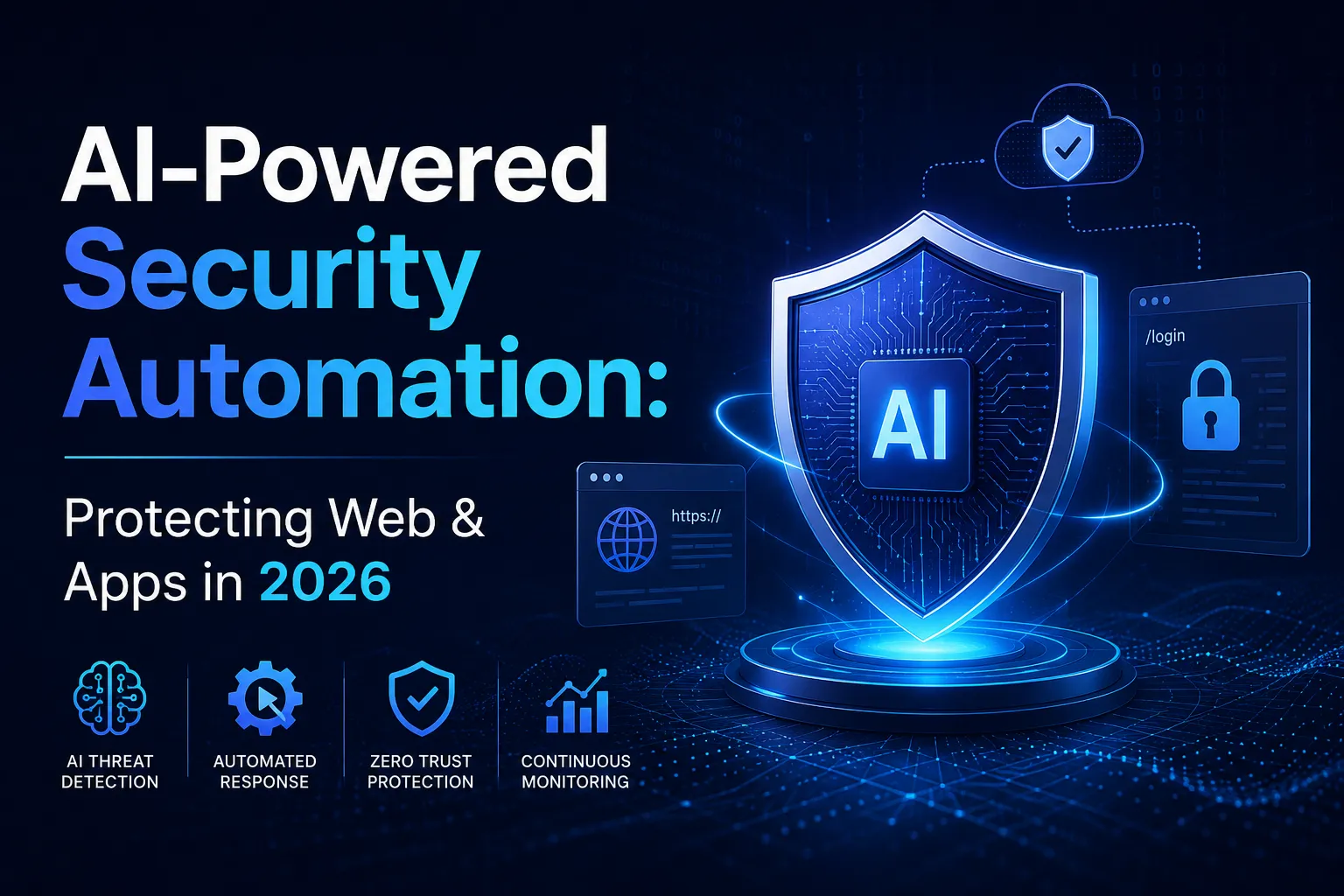
AI-Powered Security Automation: Protecting Web & Apps in 2026
Introduction
In 2026, the digital landscape is more perilous than ever. Cyber threats are evolving at an unprecedented pace, with attacks becoming more sophisticated, targeted, and frequent. Traditional security measures—firewalls, manual monitoring, and periodic scans—can no longer keep up with the sheer volume and complexity of modern threats. This is where AI-powered security automation steps in as a game-changer. At EishwarITSolution, we help business owners, marketers, and professionals in India safeguard their digital assets using cutting-edge automation and AI. In this blog, we'll explore how AI can automatically detect, prevent, and respond to threats in real time, saving you time, money, and stress. Whether you run an e-commerce store in Mumbai, a SaaS startup in Bangalore, or a marketing agency in Delhi, understanding and implementing AI-driven security is no longer optional—it's essential for survival.
Learn more about our Website services
Main Section 1: What is AI-Powered Security Automation?
AI-powered security automation is the integration of artificial intelligence (AI) and machine learning (ML) into security systems to monitor, analyze, and respond to cyber threats without human intervention. Unlike traditional rule-based systems that rely on predefined signatures, AI systems learn from data, identify patterns, and adapt to new threats in real time. For example, an AI system can automatically block suspicious IP addresses, flag unusual login attempts from unfamiliar locations, and patch vulnerabilities as soon as they are discovered. This is especially crucial for web and app developers who need to ensure their platforms are secure 24/7, often with limited resources.
Consider a practical scenario: A fintech app in India processes thousands of transactions daily. An AI-powered security system can analyze each transaction's behavior—such as amount, location, and time—and instantly flag or block those that deviate from normal patterns. In one case, a client of ours detected a zero-day exploit within minutes of its emergence, thanks to an AI model that recognized anomalous network traffic. The system automatically isolated the affected server, preventing data exfiltration. This level of automation is what sets AI apart: it doesn't just react; it anticipates and neutralizes threats before they cause harm.
Main Section 2: Key Benefits for Indian Businesses
Indian businesses face unique security challenges, from rampant phishing scams targeting small enterprises to ransomware attacks that can cripple operations. AI automation offers several compelling benefits:
- Cost Savings: Reduce the need for large, expensive security teams by automating routine tasks like log analysis, vulnerability scanning, and incident response. For a mid-sized e-commerce company, this can save up to 40% on security operational costs annually.
- Speed: AI can respond to threats in milliseconds—far faster than any human. In a DDoS attack, for instance, an AI system can reroute traffic and block malicious sources in under a second, keeping your site online.
- Accuracy: Minimize false positives by leveraging ML models that learn from historical data. This means your team focuses on real threats, not noise. For example, an AI system can distinguish between a legitimate user logging in from a new device and a credential-stuffing attack with over 99% accuracy.
- Scalability: Easily protect multiple websites, apps, and cloud environments as your business grows. A marketing agency in Pune, for instance, can use a single AI dashboard to monitor security across 50+ client sites, automatically applying patches and blocking threats without manual effort.
For example, an e-commerce site in Mumbai can use AI to automatically detect and block fraudulent transactions, protecting both the business and its customers. In one implementation, a client reduced chargeback fraud by 60% within three months by deploying an AI model that analyzed purchase patterns and flagged anomalies in real time.
👉 Don't wait for the perfect moment; turn your vision into reality today.
Free ConsultationMain Section 3: Practical Implementation Steps
Ready to implement AI-powered security? Here's a simple, actionable roadmap:
- Assess Your Current Security: Conduct a thorough audit of your existing infrastructure. Identify gaps such as unpatched software, weak authentication, or lack of monitoring. Tools like vulnerability scanners can help, but an AI-driven assessment tool can prioritize risks based on likelihood and impact.
- Choose the Right Tools: Look for AI-driven solutions that align with your needs. For web apps, consider platforms like EishwarITSolution's automated security suite, which integrates seamlessly with popular frameworks like React, Angular, and Node.js. For mobile apps, choose tools that offer runtime protection and API security.
- Integrate with Your Workflow: Ensure seamless integration with your CI/CD pipeline. For example, set up AI-powered security scanning as a step in your deployment process. This way, every code commit is automatically tested for vulnerabilities before going live. Tools like GitHub Actions or Jenkins can trigger these scans.
- Monitor and Optimize: Regularly review AI-generated reports and dashboards. Fine-tune your models based on new threat intelligence and false positive feedback. For instance, if your AI flags too many legitimate login attempts from a specific region, adjust the sensitivity threshold or whitelist trusted IPs.
For instance, a marketing agency in Delhi can automate vulnerability scanning for all its client websites, ensuring no site is left exposed. They set up a weekly scan that automatically patches known vulnerabilities in WordPress plugins, reducing their clients' risk of compromise by 80%.
Expert Tips
- Start Small: Begin with automating one area, like login monitoring or email phishing detection, before expanding. This allows your team to learn the system and build confidence. For example, start by deploying AI to monitor failed login attempts and block brute-force attacks.
- Combine AI with Human Oversight: AI handles the routine, but humans should review critical alerts. Set up an escalation process where high-severity incidents are automatically sent to a security analyst for confirmation. This hybrid approach balances efficiency with judgment.
- Keep Learning: Cyber threats evolve; regularly update your AI models with new data. Subscribe to threat intelligence feeds and retrain your models quarterly. For example, if a new phishing technique emerges, feed examples into your AI to improve detection.
- Use Multi-Layered Defense: AI is powerful but works best with firewalls, encryption, and backups. Think of AI as the brain, but you still need the skeleton—firewalls, intrusion detection systems, and regular backups. For instance, even if AI blocks a ransomware attack, having offline backups ensures you can recover data if needed.
Common Mistakes
- Over-Reliance on AI: Don't assume AI is infallible. Always have a backup plan, such as manual incident response procedures. In one case, a company's AI missed a sophisticated attack because it was trained on outdated data. A human review caught it just in time.
- Ignoring False Positives: Regularly review alerts to fine-tune your system. If you ignore false positives, your team may become desensitized and miss real threats. Set up a feedback loop where analysts mark false positives, and the AI learns from them.
- Neglecting Updates: Outdated AI models can miss new threats. Schedule automatic updates for your AI models and threat databases. For example, ensure your AI's signature database is updated daily.
- Skipping Employee Training: Even the best AI can't stop a phishing attack if staff click malicious links. Conduct regular training sessions and simulate phishing campaigns. Use AI to track employee responses and identify those who need additional training.
Future Trends
By 2027, we predict AI will be able to predict attacks before they happen, using predictive analytics and behavioral modeling. For example, AI could analyze social media chatter, dark web forums, and historical attack patterns to forecast a ransomware campaign targeting a specific industry. Additionally, AI-driven security will become more accessible to small businesses, with affordable subscription models that offer enterprise-grade protection. At EishwarITSolution, we are already exploring these innovations, such as integrating AI with blockchain for immutable audit trails and using generative AI to simulate attacks for training purposes. The future is proactive, not reactive, and we're committed to keeping your business ahead of threats.
👉 Free Website Audit
Get Free AuditFAQs
1. What is AI-powered security automation?
It's the use of artificial intelligence to automatically detect, prevent, and respond to cyber threats without human intervention. This includes tasks like monitoring network traffic, analyzing user behavior, and blocking malicious activities in real time.
2. Is AI security automation expensive?
Not necessarily. Many tools offer scalable pricing based on your needs, and the cost savings from preventing breaches often outweigh the investment. For small businesses, entry-level plans start as low as $50 per month, while enterprise solutions can cost thousands but provide comprehensive protection.
3. Can AI replace human security teams?
No, AI augments human teams by handling routine tasks like log analysis and threat detection, but humans are still needed for strategic decisions, complex incident response, and ethical oversight. The best approach is a hybrid model where AI handles 80% of the workload, and humans focus on the remaining 20%.
4. How quickly can AI respond to a threat?
In milliseconds—far faster than any human. This speed is critical for stopping attacks like DDoS or ransomware in real time. For example, an AI system can block a malicious IP address in under 100 milliseconds, compared to minutes for a human analyst.
5. Is AI security suitable for small businesses?
Absolutely. Many AI security tools are designed for small to medium businesses, offering affordable, easy-to-implement solutions. For instance, cloud-based AI security services require no hardware setup and can be deployed in minutes, making them ideal for businesses with limited IT resources.
👉 Free Homepage Demo
Book Demo6. How does AI handle zero-day attacks?
AI can detect zero-day attacks by identifying anomalous behavior that deviates from normal patterns, even if the attack signature is unknown. For example, an AI model trained on normal network traffic can flag unusual data exfiltration attempts, blocking them before damage occurs.
7. What are the best AI security tools for Indian businesses?
Popular options include EishwarITSolution's suite, Darktrace, CrowdStrike, and SentinelOne. For Indian businesses, look for tools that offer local data residency, support for regional languages, and compliance with Indian regulations like IT Act 2000 and upcoming data protection laws.
Conclusion
AI-powered security automation is no longer a luxury—it's a necessity for any business with an online presence. By embracing this technology, you can protect your web and mobile apps, save resources, and stay ahead of cybercriminals. The key is to start small, choose the right tools, and continuously optimize. With the right approach, AI can transform your security posture from reactive to proactive, ensuring your business thrives in 2026 and beyond. Start your journey today with EishwarITSolution.
CTA
Ready to secure your digital assets with AI? Contact EishwarITSolution today for a free consultation and demo. Let's build a safer future together.